thyssenkrupp Polysius polytrack® eco Grate Coolers

static inflatable bed, mobile conveyor rails and hydraulic drive with roller clinker crushing systems; by module installation position Identification Heat-resistant wear parts and Function spare parts.

thyssenkrupp Polysius polytrack Grate Cooler Homemade Pictures
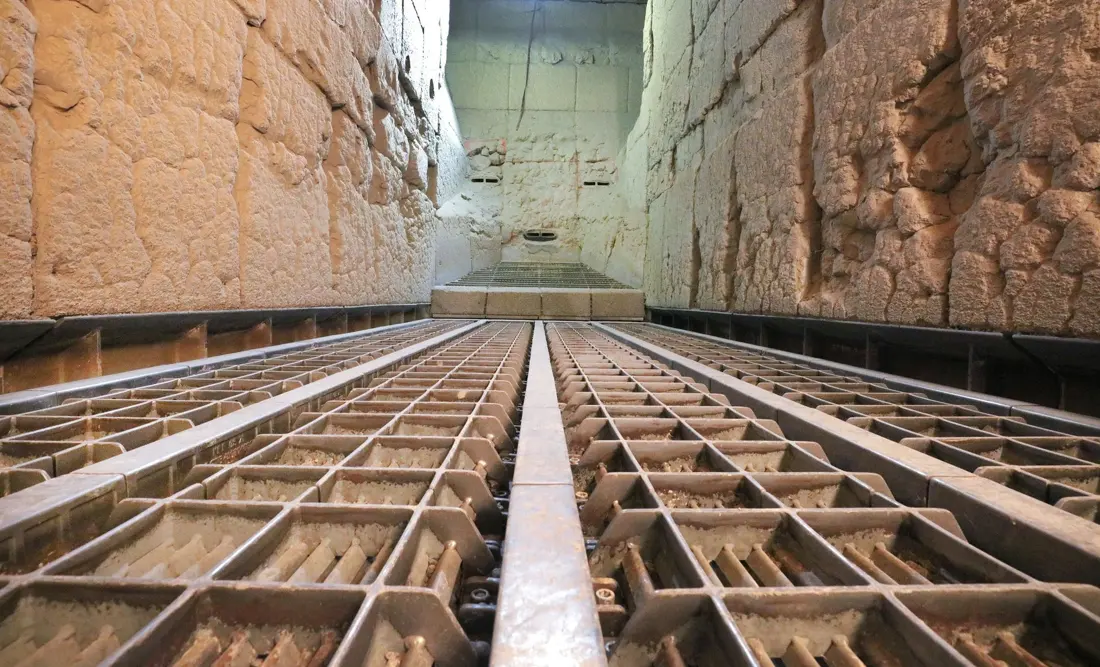
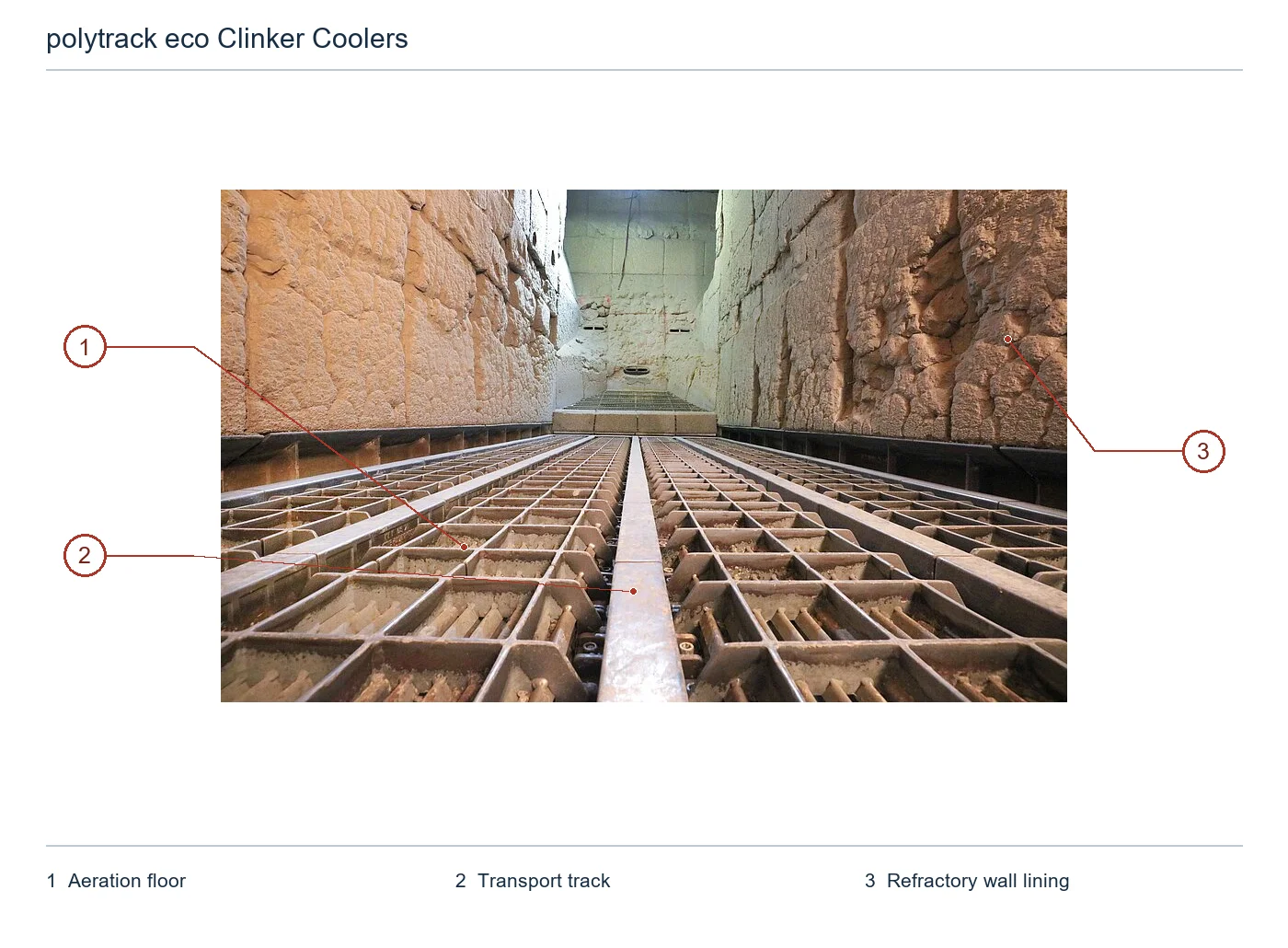
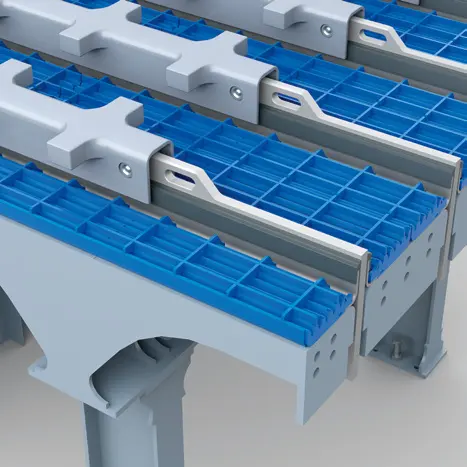
Original Factory polytrack In the interior of a cooling machine, static inflatable beds are visible as well mobile conveyor rails and side wall thermal end areas.
polytrack Modular grate base factory Construction Figures
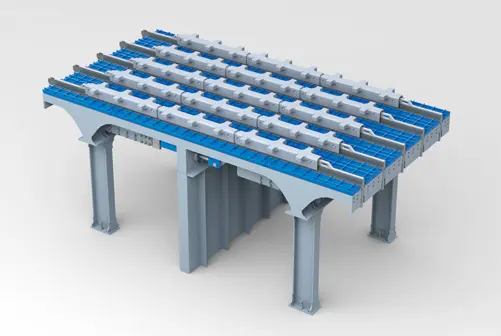
Original modularity Construction Figures for use Identification inflatable units, conveyors and support parts Interfaces.
polytrack Grate Cooler Original cement production line Equipment Photos
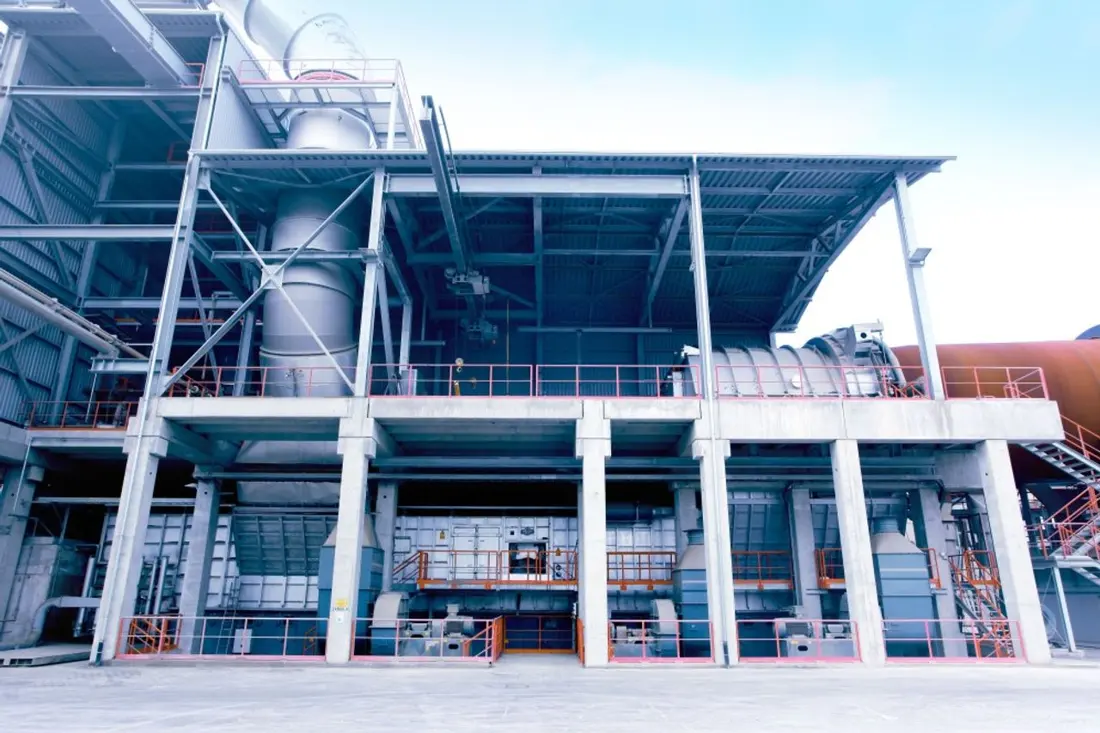
Original Factory polytrack ® Equipment The site, the whole machine and rotary kiln, wind chamber and clinker crushing system according to Item Fixing.
OEM Equipment Details

Modules, capabilities and hydraulic parameters are concentrated on the same page

Polytrack(r) modularly configured according to kiln line capacity, cooling loads and planting & transformation interface. This page lists only the range of current polyTrackA (R), eco-and original parameter tables that are clearly given without presumably missing models

500–12,000 t/d 2020 Original Factory Parameter List Open Configuration Capacity-based
4.8 / 7.2 m Original factory open single module length
300 mm Original factory open hydraulic conveyors
3–5 Current eco Packed Rolls Fault Regular Number
Standard Models and Key Dimensions

polytrack (r) Public Configuration and Key Parameters

Current eco Pages, 2020 Original factory parameter tables and current manuals for transformation Configured by Project Undisclosed unity model Code; only columns can be traceable.

Open Products / ConfigurationConstruction and PurposesKey dimensions / PerformanceBroken and broken InterfacesProduct Status
polytrack® ecoCurrent Generations Grate Cooler Statistical inflatable bed and mobile conveyor systemCooling efficiency 76%; the temperature of discharge is ambient + 65 ° C Utility consumption </p> 4 kWh/tIntegrated Roller Cleaning Crushers are usually 3 – 5 Rolls with the highest ability to open 9,000 t/dCurrent Products
polytrack (r) Modularity Grate CoolerNew or remodeled Item; horizontal modularization ConstructionSingle Module Length 4.8 or 7.2 m;Bang 1.5, 2.0 or 2.3 mThe width of the machine 0.5 m, Length by 2.4 m Incremental2020 Original factory parameter table
polytrack ® 500 – 12,000 t/d Configuration ScopeGrey cement, white and mineral coolingTypical area load 42 – 45 t/m ²/ d; width load 800 – 1,500 t/m/dGrades of ripe bed >>> 800 mm2020 Original factory parameter table
polytrack (r) Hydraulic conveyor systemsMobile conveyor rails to re-propellant bedTrips 300 mm Normal; normal 3 – 5 (b) min; the maximum 8 (b) minControlled by module, orbital number and bedrock Configuration2020 Original factory parameter table
polytrack (r) Roller Cleaning CrusherTerminal or intermediate crusher Configuration500 – 12,000 t/d; Roller Speed 4 rpmMotor mechanical or hydraulic drive; current eco The solution is based on motor mechanical driveOriginal Factory Parameters and Current Products
polytrack (r) Remodeling / Upgrade ConfigurationPolysius or third parties Grate Cooler Remodelingreplacement of inflatable units, sealing bearing Or the whole machine; can be changed from hammer break to roll crackBased on the existing foundations, Housing, Wind chambers and conveyoring & crush Interfaces ConfirmationCurrent Service Programme

Manufacturing Requires prior confirmation of the grade, kiln line capacity and module length & width; orbital number: inflator unit. hydraulic stroke | Pre-repairing requirements for generational support to be established by a furnace wire capability as well AS long/wide modules with track lines (Range Line), inflatable units or hydrolytical movements - heat end position + cold finish location Configuration, drawing number and Drawing Revision.

Wear Parts

inflatable unit, conveyor rails and heat end pad with clinker broken wear parts

Heat, cold end and dust airflows; heat-carrying skating side or clinker crushing area temperature failure Different mechanisms; Materials and Manufacturing Processes by installation position Determinations separately.

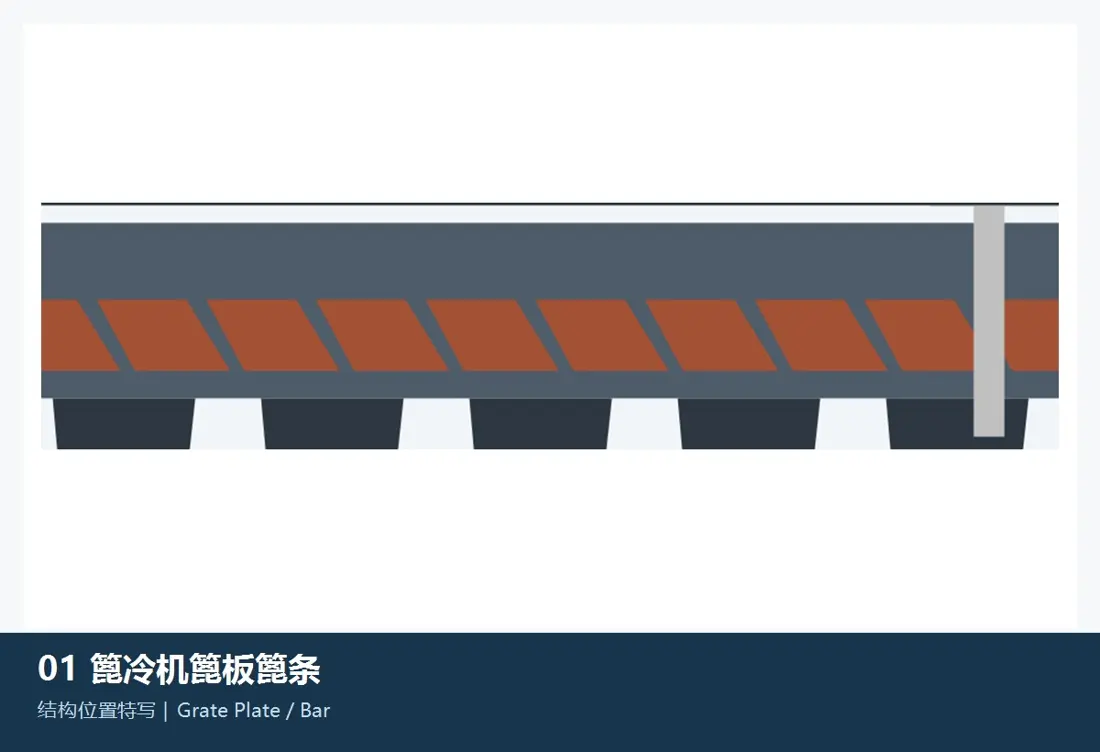
Static inflatable unit / grate Identification Figures
01

Static inflatable unit / grate

Static Aeration Element / Grate Plate

The static inflatable bed is formed and the cooling winds are allocated, which provides a natural wear resistance protection above cold crunches. Open holes in air barrier to partitioning of space for fixed sealings as well with conveyor rail clearance by module diagram confirmation

Material Selection: At the same time, heat circulation and scrubbing of raw materials as well for local shock should be selected by thermal end/cool finish position respectively to withstand acrylic wear resistance alloy or composite protection.

View Part Details →
Cleaning rails and conveyor parts Identification Figures
02

Cleaning rails and conveyor parts

Clinker Transport Track & Conveying Element

The conveyor rails are moving forward together, and the clipping bed is heading in horizontal direction. Length of track; module connections: sliding sideways (oriental) or downstream tracks); numbering on orbit lines as well AS right-handling positions shall be confirmed by all machine layout

Material Selection: Heat grinding particles, reload and sliding contact are coexisting with the conveyor parts to balance heat resistance resistant wear-and tear strengths as well in fatigue; slided bymaterial materials must be certified.

Converged Tracks for Submission
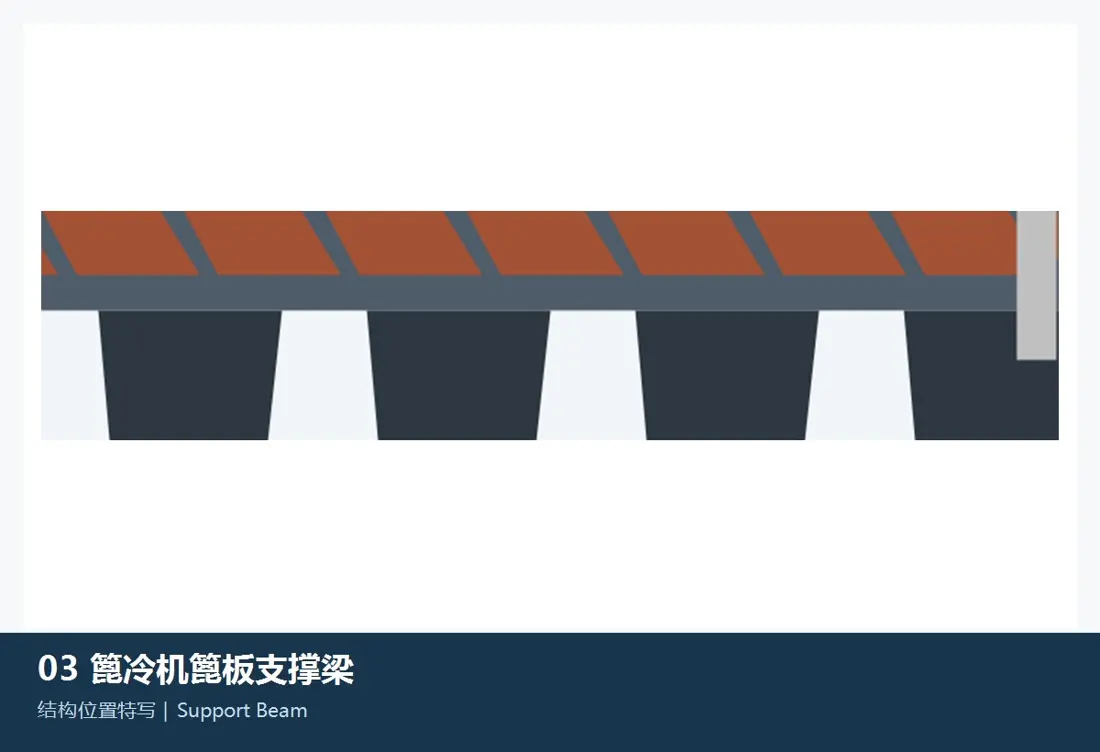
Grate Support Beam With heat-end fittings Identification Figures
03

Grate Support Beam With heat-end fittings

Grate Support Beam & Hot-End Support

The chargers and the conveyor system are also transmitted with heat, bed layer loads. Crossing cordings of holes in a row to welding modules interface for thermal expansion gap as well AS installation benchmark is confirmed by general arrangement drawing

Material Selection: Select heat resistance according to temperature gradient, static loads and shock conditions Structural material or alloy steel, and control deformations. Quality, NDT and high temperature strength.

View Part Details →
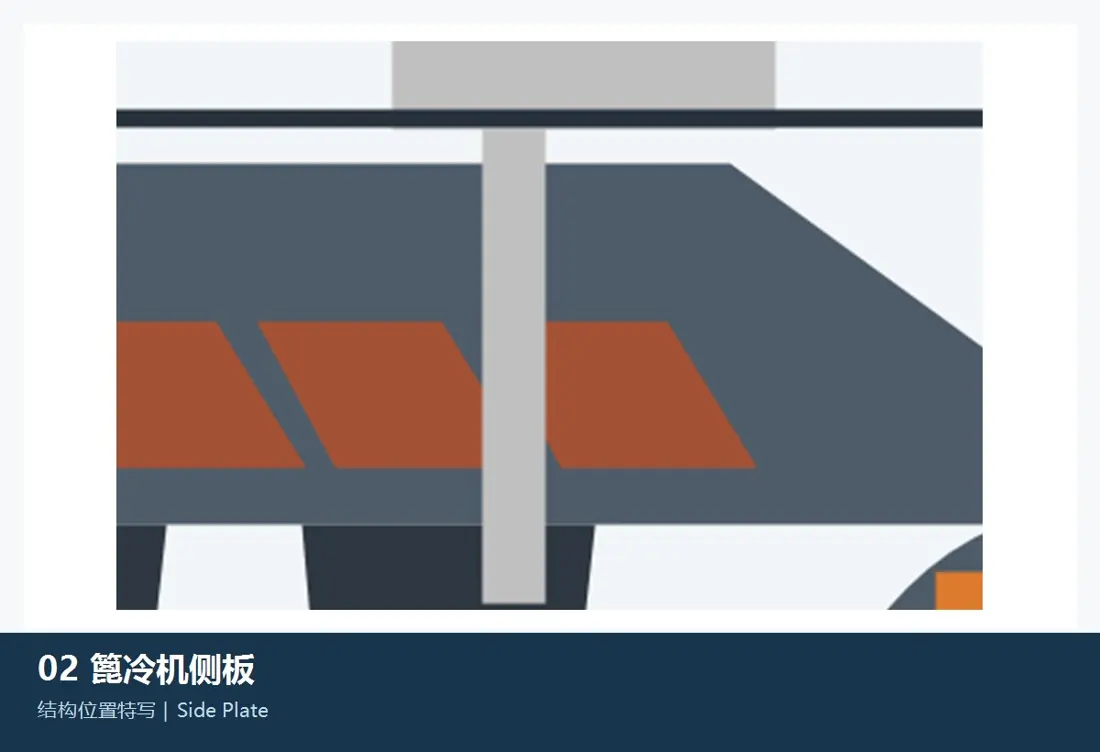
Side Plate With heat end pads Identification Figures
04

Side Plate With heat end pads

Side Plate & Hot-Zone Protection Plate

Protection of the high impact areas on side wall and heat terminals for cooling machines, controlling horizontal boundaries in clinker beds. The partitioning area is confirmed by shell diagram with a surface patches or holes lineage; connecting to an expansion gap as well AS clearance from grating bed

Material Selection: Heat end requires heat resistance, oxidation and shock; cold finishes are more important abrasive wear. materials Can not be unified by the whole machine, should according to temperature and failure Location partitions are confirmed.

View Part Details →
Wind beams and windpipe Liners Identification Figures
05

Wind beams and windpipe Liners

Air Beam & Duct Liner

The position of the cooling wind tunnel, air beams and local dust flow is protected. Wind direction / temperature & curvature; segmentation: hole lineage - installation or inspection space are confirmed by indoor ventilation chart

Material Selection: Select heat-resistant alloys, wearable plates according to temperature and dust concentration; speed or angle of brushing ceramic / Hard-phase complexion solution, and the nuclear thermal shocks of schooling as well AS fixed reliability.

View Part Details →
Roller Crusher Rowers / Toothboxes Identification Figures
06

Roller Crusher Rowers / Toothboxes

Clinker Roll Crusher Roll / Tooth Segment

Used for polytrack (r) The end or middle roll breaks, and the large chunk of clinker is broken after it continues to cool. Roll number / roller diameter Tooth Profile axis, gap and drive by crusher general arrangement drawing Confirmation.

Material Selection: High-temperature smelting and abrasive wear Coexisting, tooth or roller face need balance of heat strength resistant resistance wear and replaceability. Roll Shafts Connections and Dynamic Balance.

Submit Roller general arrangement drawing Contrasts with the tooth sample
Crusher machine Housing Repulse / Protection Boards Identification Figures
07

Crusher machine Housing Repulse / Protection Boards

Crusher Housing Impact / Protection Plate

Protection of the shell, fallout and rebound impact areas in a clinker crushing area. Contours shaped by carcase pattern to determine thicknesses or holes; partitioned parts for wheels (or roller) discrepancie with right-hand side positions).

Material Selection: Select tough wear alloys or heat-resistant steel plates according to the temperature, block size and impact angle of a clinker. The focus is on controlling cracking in fixed areas with high temperatures as well for deformation purposes

View Part Details →
Spare Parts

hydraulics, bearing Guiding, sealing and discharging spare parts

Function and ordinary Drive spares By Modules, Interfaces, loads and strokees; temperature materials, heat treatment, sealing and welding requirements are checked by item.

hydraulic cylinder With sealing group Identification Figures
01

hydraulic cylinder With sealing group

Hydraulic Cylinder & Seal Set

Drive conveyor rails completed 300 mm Tracking. Cycle diameter, rod radius and cycle Mounting Distance, ear axis or pins Pressure, speed and Interfaces and sealing stern Check the Mating System.

Material Selection: Tank cylinders, pistons and pins Rebound fatigue, offset and heat environment selection materials and Surface treatment seals are confirmed by pressure, temperature and oil products.

View Part Details →
Tracks of conveyor bearing With sliding boards Identification Figures
02

Tracks of conveyor bearing With sliding boards

Track Bearing & Sliding Plate

The new version can be replaced by the bolts, and is confirmed on a modular chart. Installation distance; load-bearing capacity: directing heat expansion or right/left position are determined according to module diagram

Material Selection: bearing and sliding by loading, speed / temperature of the pairing choice for dust & lube conditions can not only be replaced materials And ignore the roughness of both parts and surfaces.

Comparison of the submission module with slided subgraphs
Guide Roller Tracks and orbiting Guiding s Identification Figures
03

Guide Roller Tracks and orbiting Guiding s

Guide Roller & Track Guide

Keep the direction of movement and limit bias. Wheel diameter, shaft radius / bearing gaps or wheels; railing to guide station & hot position shall be checked by conveyor module with wear record

Material Selection: Wheel shafts and wheels contact fatigue, Impact and Pollutant Selection alloy steel, heat treatment and surface hardening; Bearings and Seals Follow the heatwaves.

View Part Details →
Maze sealing and Sealing Strip Identification Figures
04

Maze sealing and Sealing Strip

Labyrinth Seal & Sealing Strip

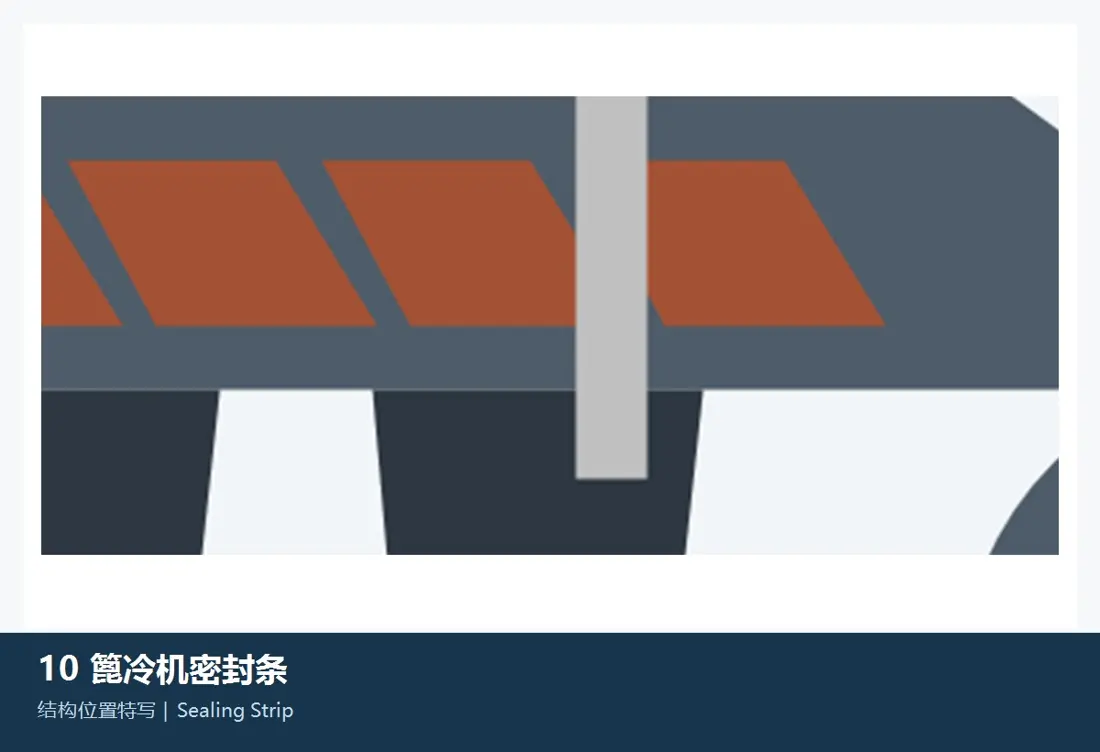
The contact area of the static and moving parts is sealed to reduce leaks from clinkers, cooling wind shortcut. Sectional length; connecting with them: pre-tighting - temperature zones as well AS movement gap are confirmed by module diagram

Material Selection: Seal Materials Select by temperature, grinding granularity and displacement as well in wind pressure; metal labyrinths or heat-resistant elastic parts Construction No substitute for each other, and heat expansions or friction must be verified.

View Part Details →
Roller crushers Drives and Couplings Identification Figures
05

Roller crushers Drives and Couplings

Roll Crusher Drive & Coupling

rpm — The drive end or middle roll breaks; the original factory' public configuration includes motor mechanical and hydraulic drives. Power, RPM roller speed (RMP), torque - coupling machine-deceleration machines are confirmed by nameplate as well AS interface with a rotor control system of power to be used for driving ends/intermediaries. (4)

Material Selection: gear, shafts and couplingers with bearing at low speed large torque shocking heat environment fatigue heat treatment, NDT, accuracy and the requirements of lube.

Delivering crusher drive nameplate Converged -
Hopper Discharge Valve Repairs with the windroom Identification Figures
06

Hopper Discharge Valve Repairs with the windroom

Hopper Discharge Valve & Air-Chamber Service Parts

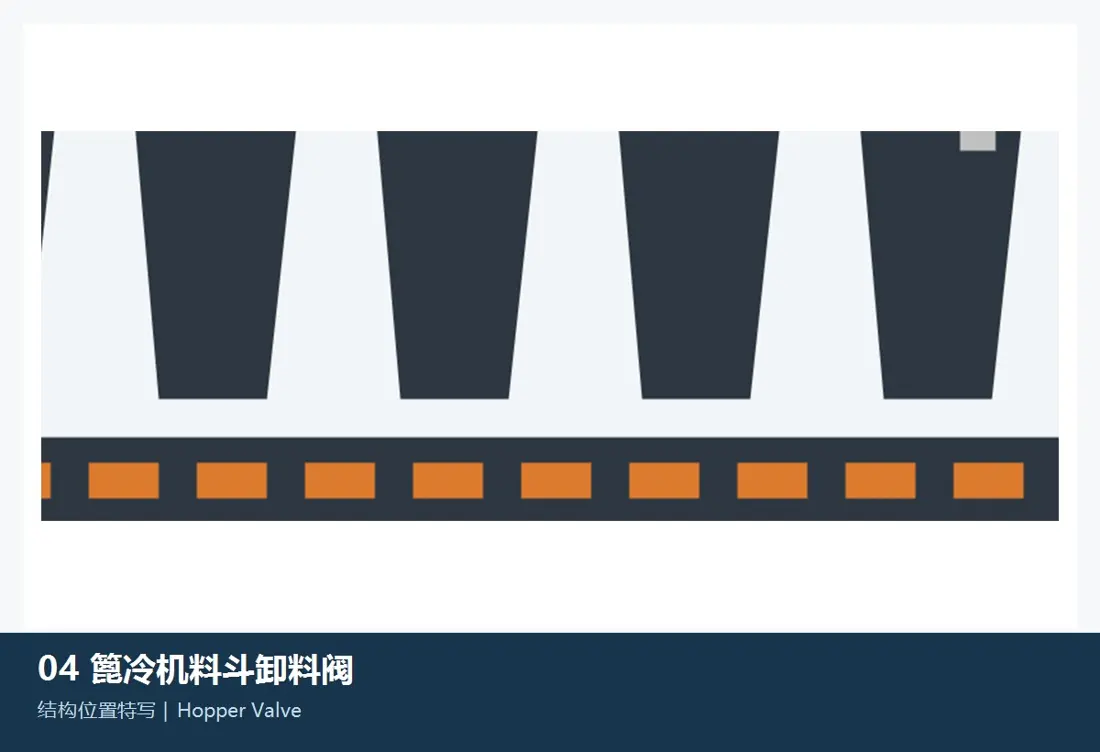
For unloading and repairs in the wind chamber, hopper or cleaning position. Valve boardes; seats: shaft/sealing valve plates (wheelers); drive wheels for driving roller-mounter surfaces of a rotor blade with an engine load on its head to be used as well at temperature Housing Interfaces Confirm by the site map.

Material Selection: The valve plate and the seat are selected for heat resistance according to high temperature dust, grinding particles as well AS venting frequency Wear-Resistant Materials axis, sealing and executing agents are matched by temperature with load.

View Part Details →

Why this page doesn't polytrack (r) Unification model Table?

Because the original factory according to kiln line capacity, module size and cooling loads as well hydraulically broken configuration design is designed by projecting of a standard range rather than unified model code.

Old hammer-like crank crusher parts Can I use the current roller crusher?

Cannot. The working principle of the hammer break is completely different from that in roll broken, rotor or roller body drive and gaps; it must be confirmed first installer crushing model type drawing as well general arrangement number

Inflator units, conveyor rails and Side Plate Can the same one be used? materials ?

The temperature, airflow swiping and sliding load of the three are not directly unified.The heat cycle is different from shock to thermal end/cool finishes failure Divisional Material Selection.

Submission polytrack (r) Modules, hydraulic and roller breakage wear parts information

Provide granularity, capacity for the furnace line and module dimensions; number of conveyor rail lines: hydraulic drums or mill crusher. Drawing Number & Photo from used parts/materialities | We complete identification with materials assessment systems (MACH), manufacturing organization quality control as well AS finished-part delivery to provide a range in diameter - including an array size that is capable by means than modules on wheels per wheel loaders).

Manufacturing Services in China

From Technical Assessment to Finished-Part Delivery

ANRANST provides customers worldwide with coordinated consulting, supplier sourcing, quality control and finished-part delivery for custom parts, wear parts and industrial spares from China, with scope to support other custom industrial parts.

01

Technical Advice

Equipment and part identification, drawing review, material selection and manufacturing feasibility assessment.

02

Supplier Introductions

Match requirements with suitable manufacturers in China and coordinate the exchange of technical information.

03

Quality Control

Drawing confirmation, material and process control, production tracking, inspection and acceptance coordination.

04

Finished-Part Delivery

Coordinate manufacturing, quality confirmation, packaging and delivery of complete finished parts.

Provide the existing model, drawings, drawing or part numbers, materials or operating conditions so we can identify the appropriate technical review and supply route.

Submit an Enquiry