thyssenkrupp Polysius مبردات الكلنكر polytrack® eco

Static aeration floors, moving conveying tracks, hydraulic drives and clinker roll crushers: identify heat/wear-resistant and functional spares by module and position.

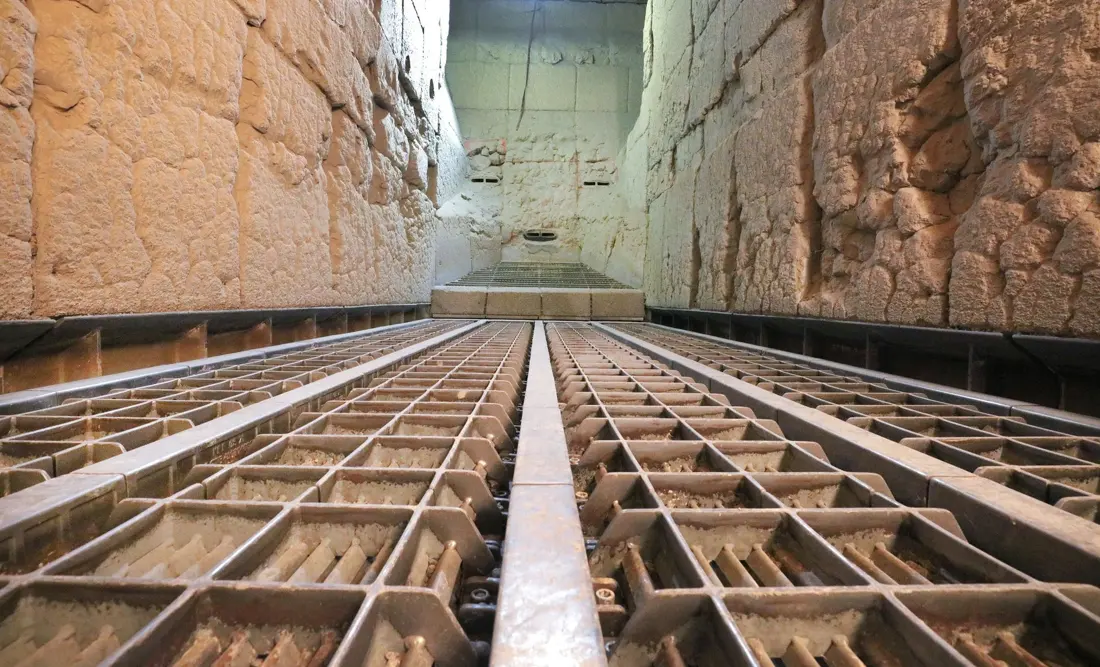
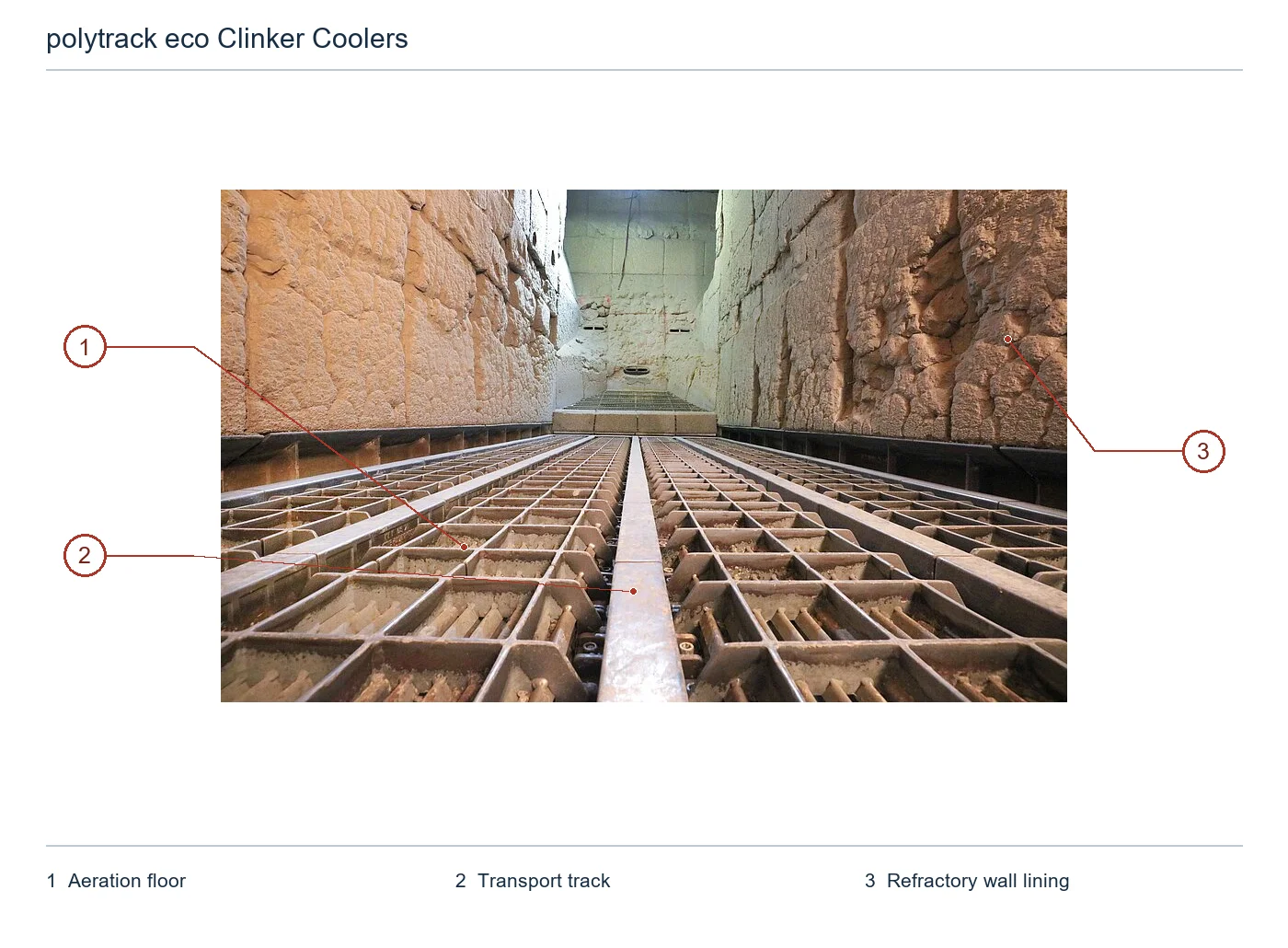
Polysius polytrack cooler interior manufacturer photo
Manufacturer polytrack® interior showing static aeration floor, moving tracks and hot-end sidewalls.
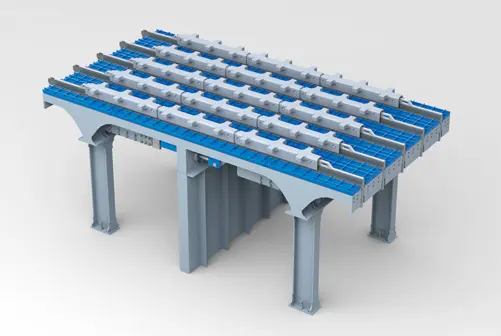
polytrack modular grate-bed manufacturer diagram
Manufacturer modular structure drawing locating aeration elements, conveying parts, supports and module interfaces.
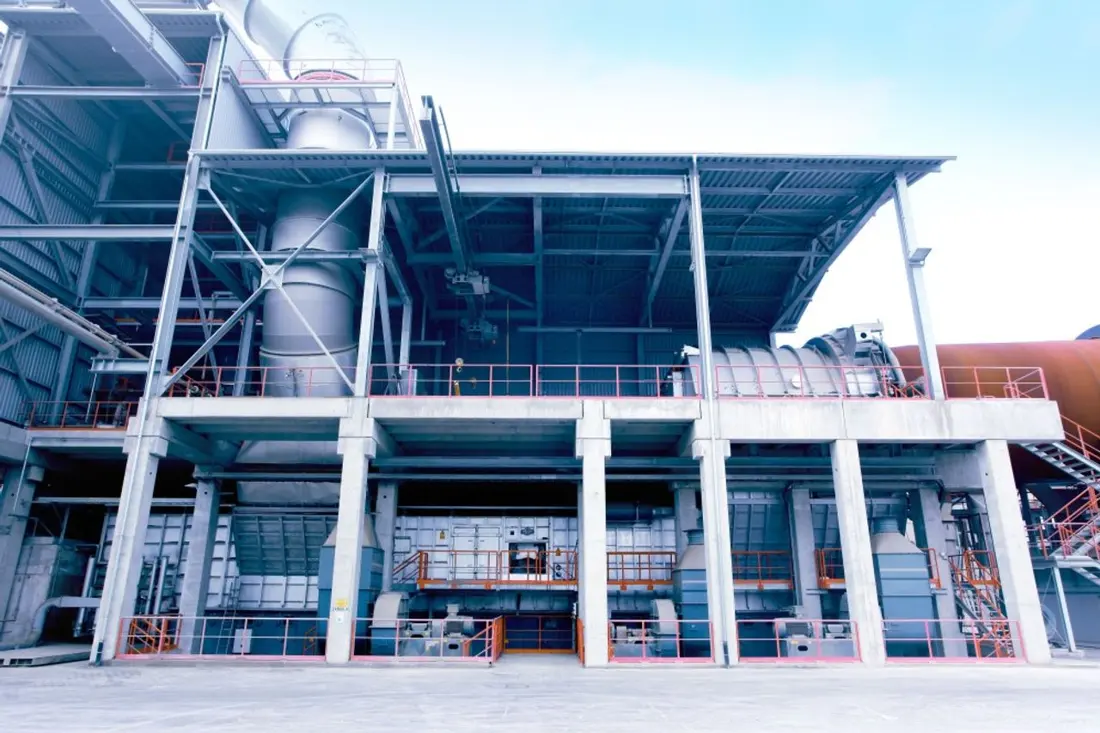
polytrack cooler installed in a cement line
Manufacturer polytrack® site image. The cooler, rotary kiln, air chambers and clinker crusher follow project layout.
OEM المعدات Reference

Module, capacity, hydraulic and roll-crusher parameters on one page

polytrack® is modularly configured for kiln output, cooling load, building and retrofit interfaces. No uniform model codes are published. This page lists only ranges explicitly given for current polytrack® eco and in manufacturer parameter tables.

500–12,000 t/d Capacity range in the 2020 manufacturer table
4.8 / 7.2 m Published individual module lengths
300 mm Published hydraulic conveying stroke
3–5 Typical roll count in current eco integrated crusher
Standard Models and Key Dimensions

Published polytrack® configurations and core parameters

The current eco page, 2020 manufacturer table and retrofit brochure all describe project configurations rather than uniform model codes; only traceable ranges are listed.

Published product / configurationStructure and applicationCore dimensions / performanceCrushing and interfacesProduct status
polytrack® ecoCurrent next-generation cooler with static aeration floor and moving conveying systemCooling efficiency 76%; discharge temperature ambient +65°C; power consumption < 4 kWh/tIntegrated clinker roll crusher typically has 3–5 rolls, with published capacity up to 9,000 t/dCurrent product
polytrack® modular clinker coolerNew-build or retrofit projects; horizontal modular structureModule length 4.8 or 7.2 m; width 1.5, 2.0 or 2.3 mOverall width increases in 0.5 m increments and length in 2.4 m increments2020 manufacturer parameter table
polytrack® 500–12,000 t/d rangeGrey cement, white cement and mineral coolingTypical area loading 42–45 t/m²/d; width loading 800–1,500 t/m/dClinker bed depth ≥ 800 mm2020 manufacturer parameter table
polytrack® hydraulic conveying systemReciprocating tracks advance the clinker bedStroke 300 mm; normal 3–5 cycles/min; maximum 8 cycles/minConfigured by modules, track rows and bed control2020 manufacturer parameter table
polytrack® clinker roll crusherEnd or intermediate crusher configuration500–12,000 t/d; roll speed 4 rpmElectromechanical or hydraulic drive; current eco mainly uses electromechanical driveManufacturer parameters and current product
polytrack® retrofit / upgrade configurationsRetrofit of existing Polysius or third-party coolersReplace aeration elements, seals, bearings or the complete cooler; convert hammer crusher to roll crusherConfirm existing foundations, casing, air chambers, conveying and crusher interfacesCurrent service offering

Before manufacture, confirm generation, kiln capacity, module length/width, track rows, aeration elements, hydraulic stroke, hot/cold position, crusher configuration, drawing numbers and revisions.

قطع الغيار المستهلكة

Aeration elements, tracks, hot-end guards and clinker-crusher wear parts

Hot/cold ends, dusty airflow, sliding conveying pairs and crushing zones differ in temperature and failure mechanisms. Confirm materials and manufacture by position.

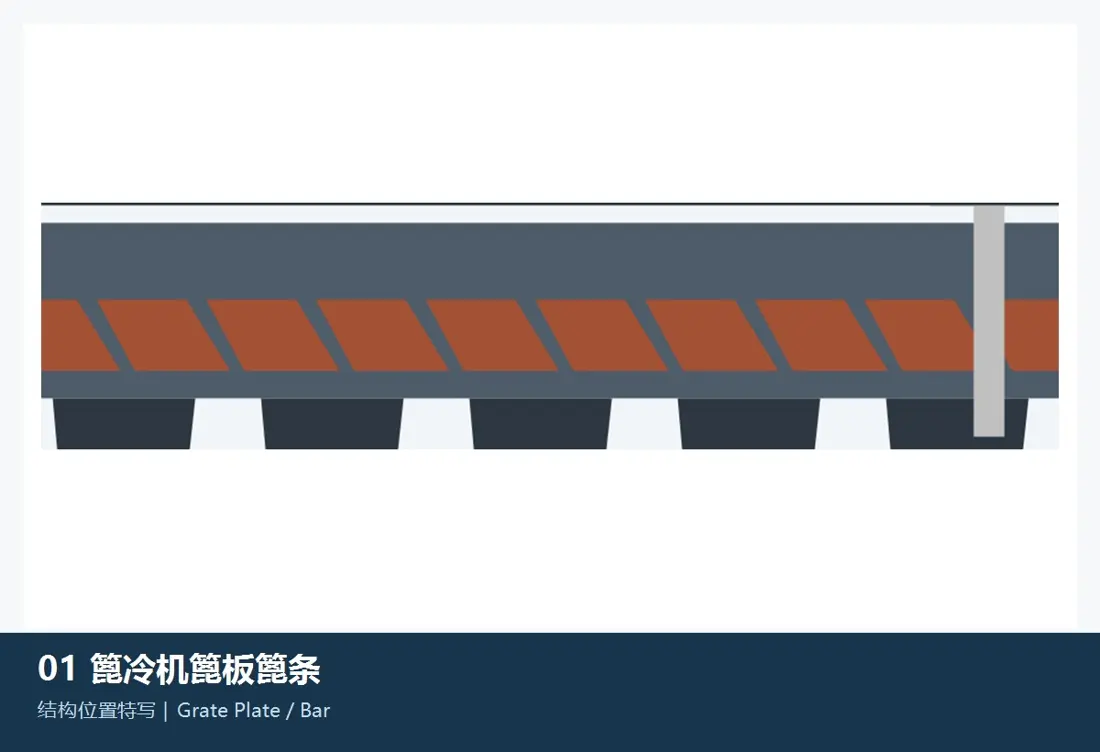
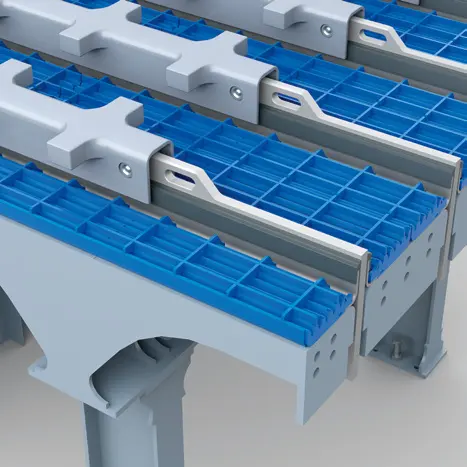
Static aeration element and grate-plate identification image
01

Static Aeration Elements / Grate Plates

Static Aeration Element / Grate Plate

Form the fixed aeration floor and distribute cooling air; cooled clinker above provides autogenous protection. Check openings, airflow resistance, zones, fastening, seals and track clearances against module drawings.

Material selection: Thermal cycles, clinker abrasion and local impact act together. Select heat/wear-resistant alloys or composite protection separately for hot/cold zones and verify high-temperature dimensional stability.

View the common part page →
Clinker conveying tracks and elements identification image
02

Clinker Tracks and Conveying Elements

Clinker Transport Track & Conveying Element

Tracks advance together and return row by row to move the clinker bed horizontally. Confirm length, modules, connections, sliding pairs, stroke, rows and left/right position against machine layout.

Material selection: Hot abrasion, reciprocating loads and sliding contact require heat resistance, wear resistance, toughness and fatigue strength. Validate sliding-pair materials and surfaces together.

Submit conveying-track drawings →
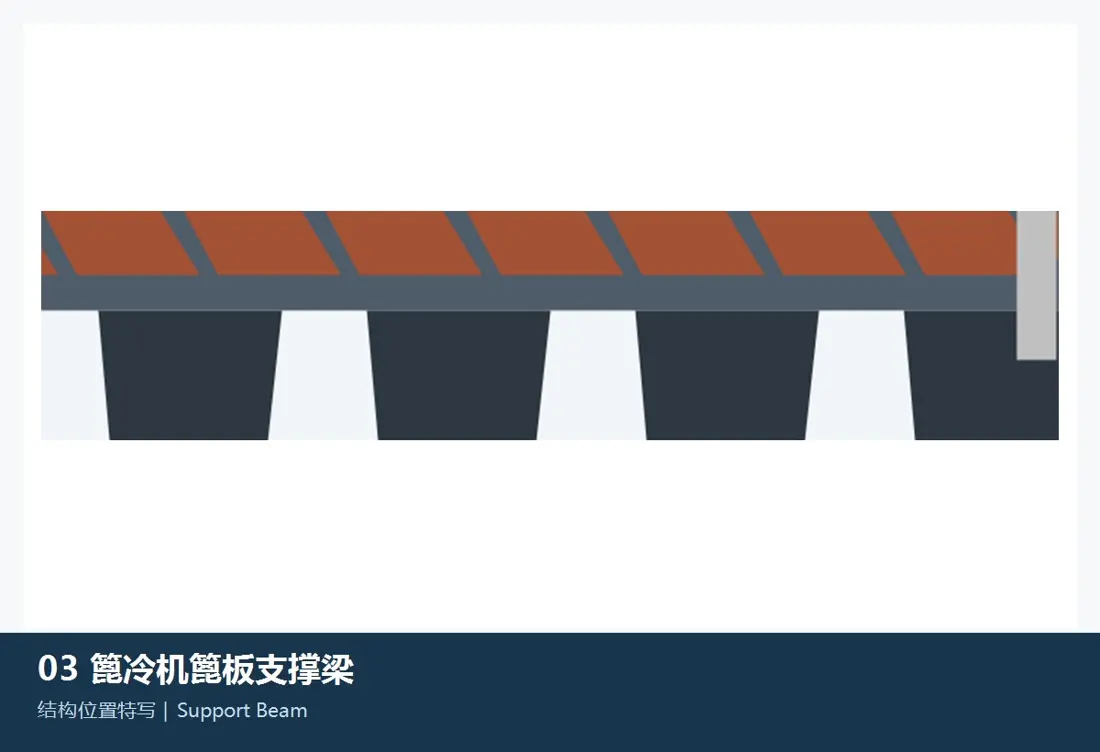
Grate support beam and hot-end support identification image
03

Grate Support Beams and Hot-End Supports

Grate Support Beam & Hot-End Support

Support aeration and conveying systems under thermal, bed and reciprocating loads. Check sections, holes, welds, module interfaces, expansion gaps and datums against general arrangements.

Material selection: Select heat-resistant structural materials or alloy steels for thermal gradients, static loads, impact and welding; control distortion, weld quality, flaw detection and hot strength.

View the common part page →
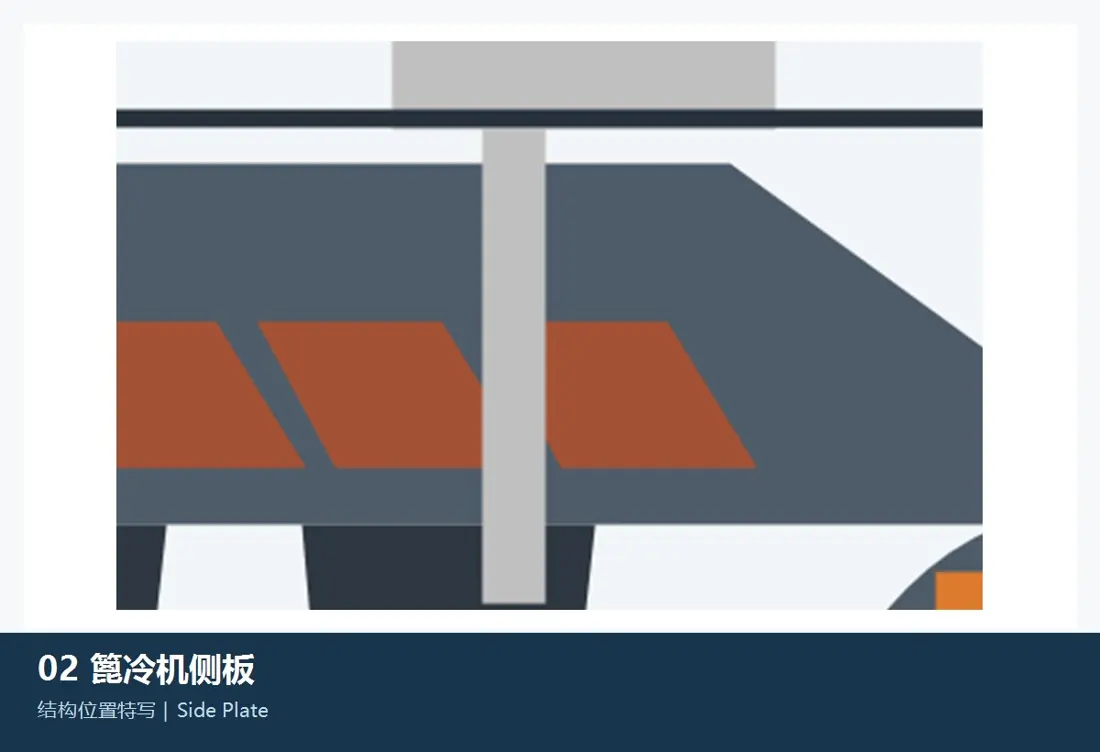
Side plate and hot-end guard identification image
04

Side Plates and Hot-Zone Guards

Side Plate & Hot-Zone Protection Plate

Protect sidewalls and high-impact hot zones while containing the bed laterally. Confirm zones, contours, holes, overlaps, expansion and grate clearances against casing drawings.

Material selection: Hot ends require heat, oxidation and impact resistance; cold ends emphasize abrasion. Do not assign one material throughout; select by temperature and failure zone.

View the common part page →
Air beam and duct-liner identification image
05

Air Beams and Duct Liners

Air Beam & Duct Liner

Protect cooling-air passages and dusty-flow erosion areas. Confirm airflow, temperature, curvature, sections, holes, overlaps and access against chamber and duct drawings.

Material selection: Select heat-resistant alloys, wear plate or ceramic/hard-phase composites against temperature, dust concentration, velocity and erosion angle; check thermal shock and fastening.

View the common part page →
Machine image locating clinker-crusher rolls and tooth segments
06

Clinker Crusher Rolls / Tooth Segments

Clinker Roll Crusher Roll / Tooth Segment

End or intermediate polytrack® crushers break large clinker for further cooling. Check roll count, diameter, length, teeth, shafts, gaps and drive against crusher assembly drawings.

Material selection: Hot-clinker impact and abrasion require hot strength, toughness, wear resistance and replaceability, with controlled shaft connections and dynamic balance.

Submit roll-crusher drawings and tooth samples →
Crusher housing protection-plate identification image
07

Crusher Housing Impact / Protection Plates

Crusher Housing Impact / Protection Plate

Protect crushing housings, drop and rebound zones. Confirm profile, thickness, holes, segments, rotor/roll clearance and left/right position against housing drawings.

Material selection: Select tough wear alloys or heat-resistant plate for clinker temperature, size, impact angle and wear patterns; control fastening-zone cracking and hot distortion.

View the common part page →
قطع الغيار

Hydraulic, bearing, guide, seal, drive and discharge spares

Check functional and drive parts by module, interfaces, loads, stroke, temperature, material, heat treatment, sealing, lubrication and tests.

Hydraulic cylinder and seal-set identification image
01

Hydraulic Cylinders and Seal Sets

Hydraulic Cylinder & Seal Set

Drive tracks through a 300 mm reciprocating stroke. Check bore, rod diameter, stroke, mounting distance, trunnions/pins, pressure, speed, interfaces and seals as a set.

Material selection: Select barrel, rod and pin materials/surfaces for reciprocating fatigue, side loads and heat; confirm seals by pressure, temperature, oil and contamination class.

View the common part page →
Module image locating track bearings and sliding plates
02

Track Bearings and Sliding Plates

Track Bearing & Sliding Plate

Support and guide reciprocating tracks; newer designs allow sliding-plate replacement by removing two bolts. Confirm spacing, loads, guidance, thermal expansion and left/right position against module drawings.

Material selection: Select bearings and sliding pairs together for load, speed, temperature, dust and lubrication. Replacing one material without considering its counterface and roughness is insufficient.

Submit module and sliding-pair drawings →
Guide roller and track-guide identification image
03

Guide Rollers and Track Guides

Guide Roller & Track Guide

Maintain travel direction and limit lateral motion. Check wheel/shaft diameter, bearings, gaps, flanges, rails, mounts and hot position against module drawings and wear records.

Material selection: Select axle/wheel alloy steels, heat treatment and surface hardening for contact fatigue, impact and abrasive contamination; match bearings and seals to hot clearances.

View the common part page →
Labyrinth seal and sealing-strip identification image
04

Labyrinth الموانع and Sealing Strips

Labyrinth Seal & Sealing Strip

Seal static/moving interfaces to reduce clinker leakage and cooling-air bypass. Confirm section, length, overlap, preload, temperature zone and moving clearance against module drawings.

Material selection: Select seals for temperature, abrasive particles, displacement and air pressure. Metal labyrinths, heat-resistant elastic parts and composites are not interchangeable; verify expansion and friction.

View the common part page →
Machine image locating roll-crusher drive and coupling
05

Roll Crusher Drives and Couplings

Roll Crusher Drive & Coupling

Drive end or intermediate crushers; published options include electromechanical and hydraulic drives. Confirm power, 4 rpm roll speed, torque, coupling, gearbox, rotation and interfaces against nameplates.

Material selection: Match gears, shafts, couplings and supports to low-speed high torque, impact, heat, fatigue, heat treatment, flaw detection, accuracy and lubrication.

Submit crusher-drive nameplates →
Hopper discharge valve and air-chamber service-part identification image
06

Hopper Discharge Valves and Air-Chamber Service Parts

Hopper Discharge Valve & Air-Chamber Service Parts

For discharge and maintenance in air chambers, hoppers and cleanout points. Confirm plate, seat, shaft, seals, drive, opening size, direction, temperature and casing interfaces against site drawings.

Material selection: Select heat/wear-resistant plate and seat materials for hot dust, abrasion and cycling frequency; match shafts, seals and actuators to temperature and loads.

View the common part page →

Why is there no uniform polytrack® model table?

The manufacturer engineers each project for kiln output, modules, cooling load, hydraulics and clinker crushing. Public information gives ranges rather than uniform model codes.

Can old hammer clinker-crusher parts be used in the current roll crusher?

No. Working principles, rotors/rolls, drives, gaps, wear parts and drawing numbers differ completely. First confirm the installed crusher type and general arrangement.

Can aeration elements, tracks and side plates use one material?

Not by default. Temperatures, airflow erosion, sliding loads, thermal cycles and impact differ. Select materials by hot/cold zone and actual failure.

Submit polytrack® module, hydraulic, crusher and wear-part records

Provide generation, kiln output, module dimensions, track rows, cylinders, roll or hammer crusher, drawing number, used-part photos, material and conditions for identification, material assessment, manufacture, quality control and delivery.

Submit التفاصيل for a Quote

رقم الهاتف: +86 156 3797 3199
zzx@anranst.com

خدمات صنع في الصين

من التقييم الفني إلى تسليم المنتج بالكامل

توفر شركة ANRANST للعملاء العالميين تقييمات هندسية، واختيار التصنيع الصيني، ومراقبة الجودة، وتسليم الأجزاء النهائية لقطع الغيار الصناعية المقاومة للتآكل حسب الطلب، ويمكنها أيضًا دعم قطع الغيار الصناعية الأخرى حسب الطلب.

01

مراجعة الرسومات والهندسة

قم بمراجعة أسطح التزاوج وأبعاد الواجهة، وقم بتقييم جدوى المواد والمعالجة الحرارية والتصنيع.

02

تحديد المادة والمعالجة الحرارية

تُحدَّد درجات المواد وعمليات المعالجة الحرارية لكل طلب على حدة، وتُثبَّت في الاتفاقية الفنية وتُتابَع أثناء الإنتاج.

03

ضبط الجودة

يشمل ذلك تأكيد الرسم، ومراقبة المواد والعمليات، وتتبع الإنتاج، وتنسيق عمليات الفحص والقبول.

04

تسليم المنتج النهائي

تنظيم عمليات التصنيع والتحقق من الجودة والتعبئة والتغليف وتسليم المنتجات النهائية الكاملة لتشكيل حلقة إمداد قابلة للتنفيذ.

قم بتزويدنا بالنماذج الحالية، والرسومات، وأرقام الرسومات، وأرقام الأجزاء، والمواد، أو معلومات ظروف التشغيل، وسنقوم بتحديد التحقق الفني ومسار التوريد وفقًا لذلك.

إرسال طلب