
TAKRAF Mobile Transfer Conveyors

Use published BRs project models, belt widths and transfer dimensions to check drawings, materials and supply for chute liners, conveyor drives, slew systems and crawler components.

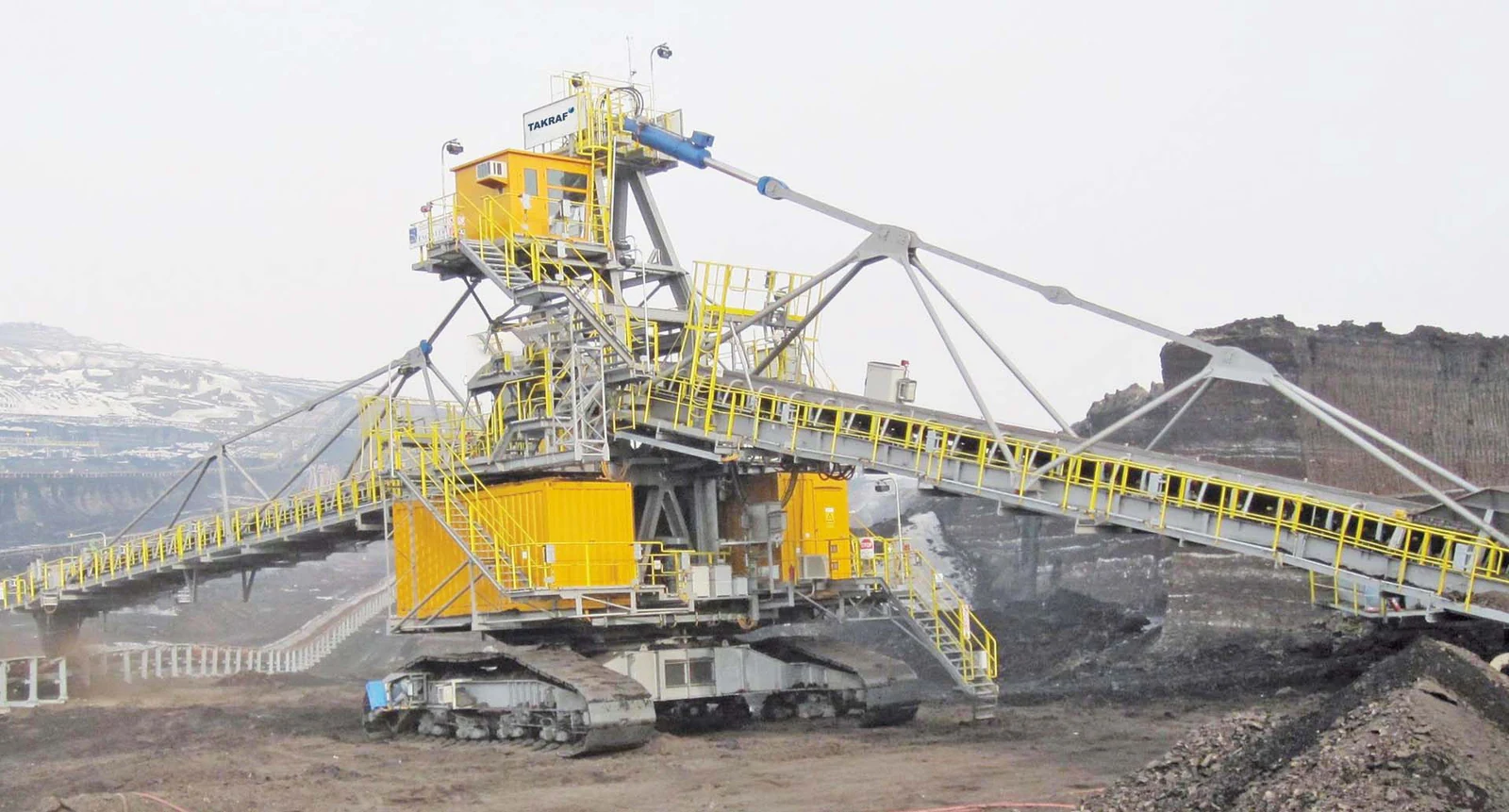
TAKRAF mobile transfer conveyor manufacturer image, Kazakhstan project
TAKRAF product gallery: crawler-mounted mobile transfer conveyor and boom-position reference.
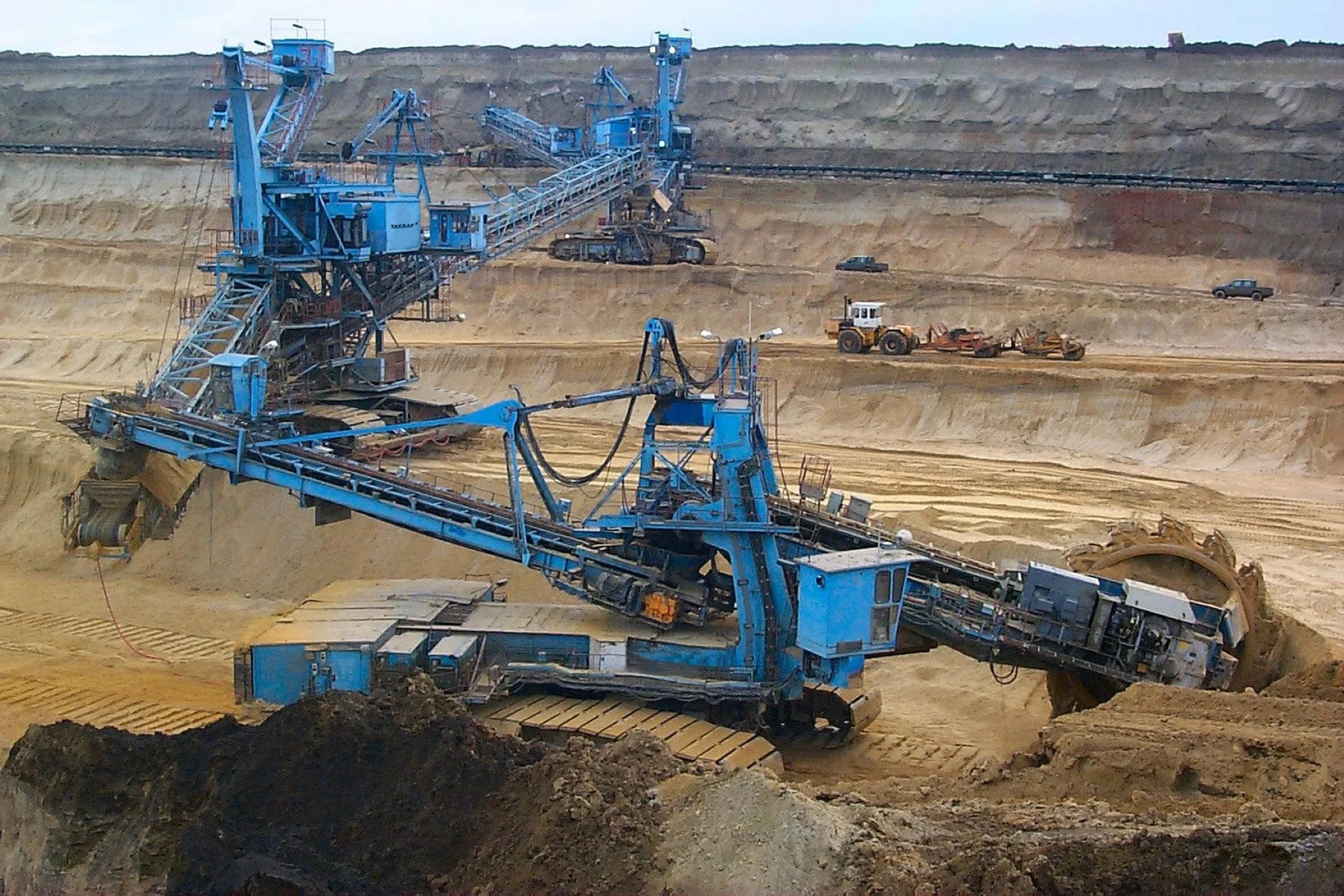
TAKRAF bucket-wheel excavator and MTC in multibench operation
TAKRAF product gallery: bucket-wheel excavator and MTC relationships in a multibench conveying system.
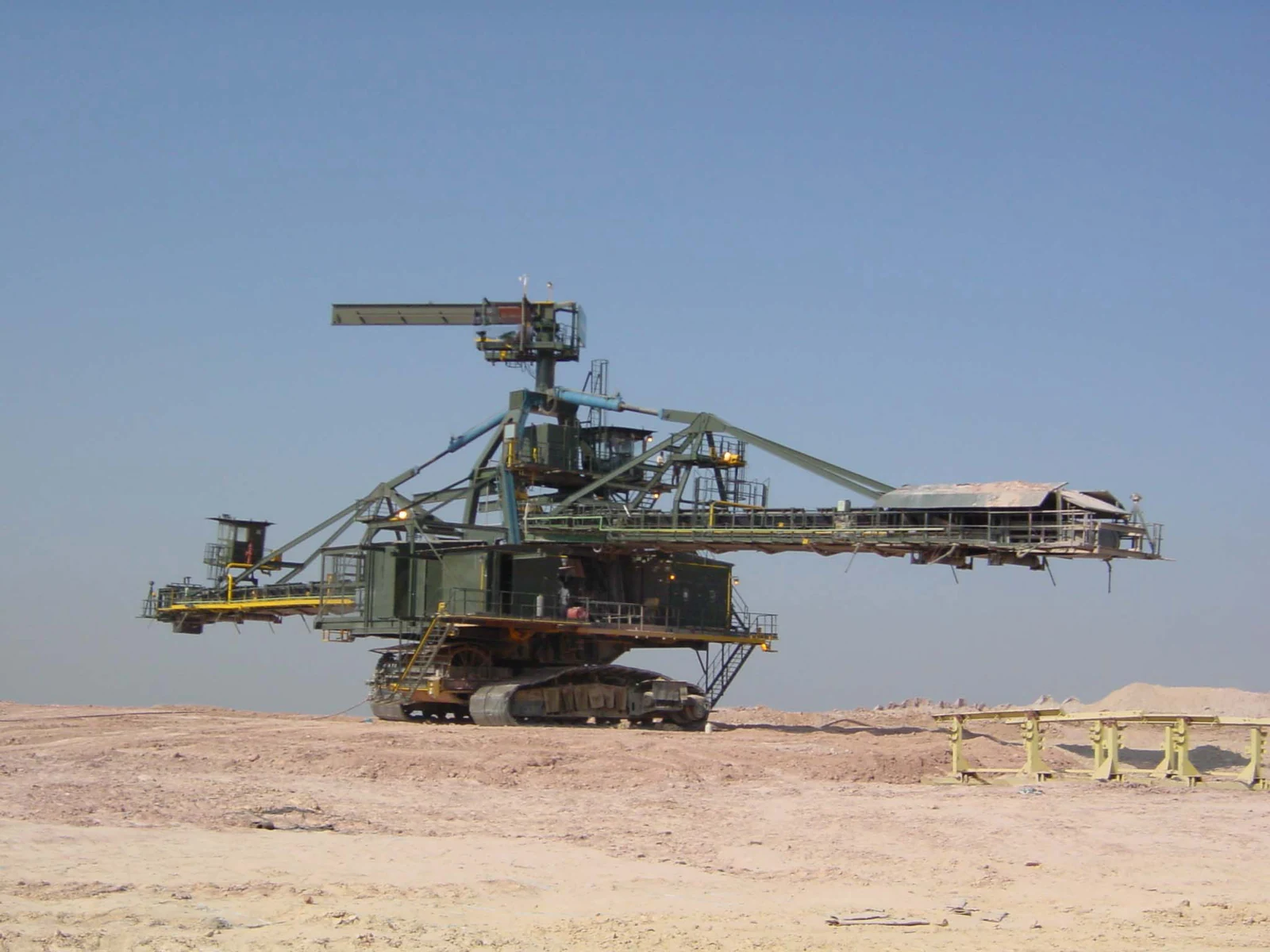
TAKRAF mobile transfer conveyor manufacturer image, Neyveli project
TAKRAF product gallery: MTC receiving/discharge conveyor routes and crawler undercarriage.
OEM Equipment Reference

Use BRs project models to identify transfer liners, conveyor and crawler spares

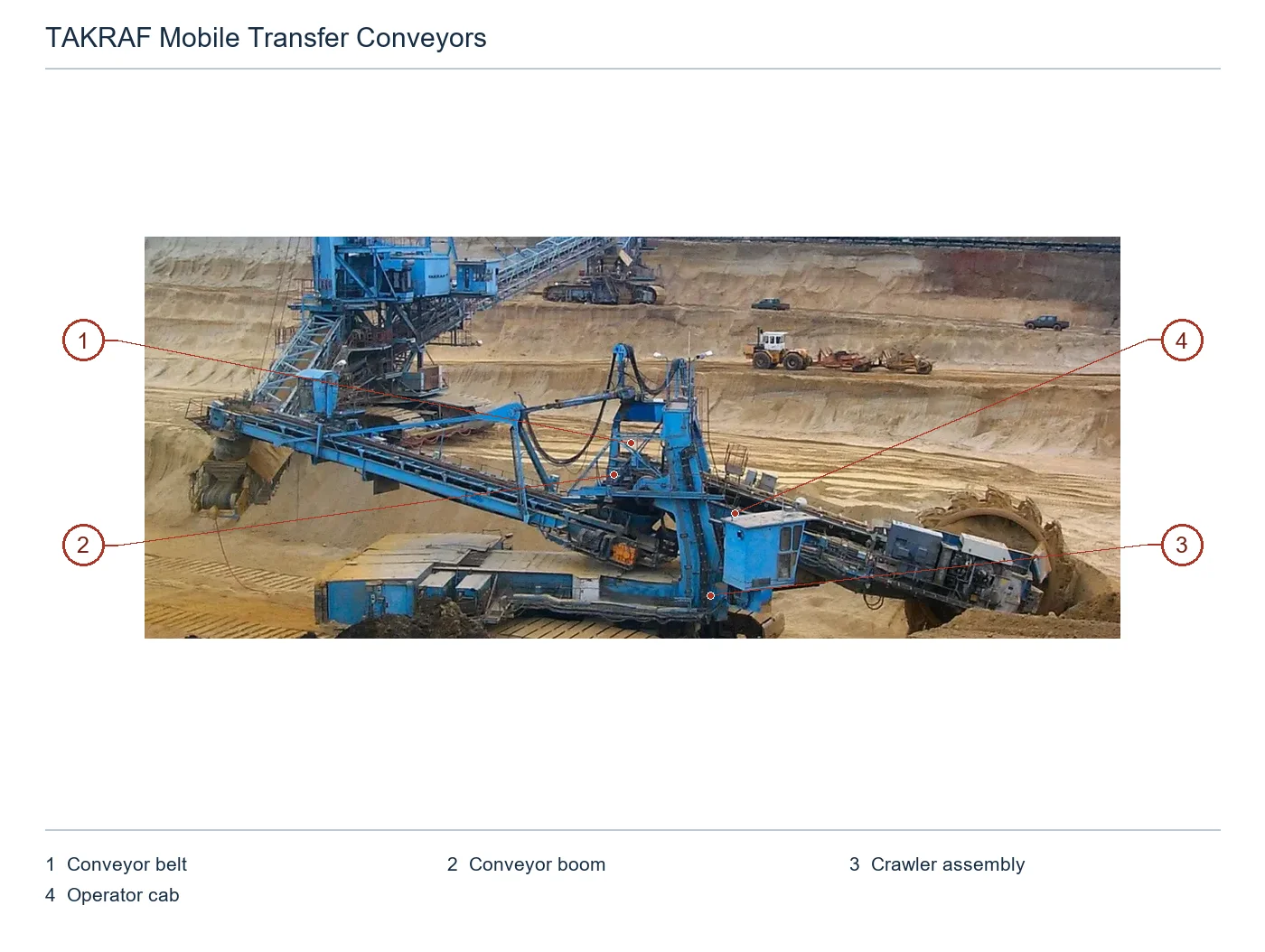
Mobile transfer conveyors are crawler-mounted machines connecting mining equipment to bench conveyors. Published designs use either one conveyor or independent receiving and discharge conveyors. As project-engineered machines, parts enquiries require belt width, boom arrangement, slew and crawler structure, project number, serial number, drawing number and actual position.

1,000–12,000 t/h Manufacturer-published capacity range
0.8–2.2 m Manufacturer-published belt-width range
Up to 70 m Manufacturer-published discharge reach
3 models Published BRs project models
Standard Models and Key Dimensions

Published project models, key dimensions and capacity ranges

The table retains BRs models and parameters traceable to current manufacturer product and project pages. MTC machines are project-engineered; equal or similar names do not establish interchangeability of belts, booms, slew systems, undercarriages or spares.

Published model / seriesPublished dimensions or capacityProject and identification detailsProduct status
TAKRAF MTC product rangeCapacity 1,000–12,000 t/h; belt width 0.8–2.2 m; transfer height up to 23 mSingle conveyor or independent receiving/discharge conveyors; confirm project crawler, boom, receiving and discharge configurationCurrent product range
BRs 1600.42/72Twin-boom design; other parameters require project recordsPublished Bulgarian project; check both conveyor routes, boom interfaces, slew and crawler numbersPublished project installation
BRs 1800.30/34Published project model; other parameters require project recordsNeyveli Mine 1A, India; published commissioning year 2006Historical installation / service identification
BRs 1400.29/32Design capacity 3,000 t/hSibovc open pit, Kosovo; published commissioning year 2011Historical installation / service identification

Provide full BRs model, project or serial number, belt width, receiving/discharge boom arrangement, position, OEM drawing number or general arrangement, used-part photos and key interface dimensions.

Wear Parts

Identify transfer-chute, skirt-seal and belt-cleaning wear parts

Identify wear parts by drop point, flow speed, lump size, impact, wet adhesion, dust and removal space. The entries locate parts within the machine; candidate materials and generic structures are not fixed OEM supply configurations for a BRs project.

TAKRAF MTC image locating receiving and transfer chutes
01

Receiving and Transfer Chute Liners

Receiving & Transfer Chute Liners

Identify segmented liners at receiving, drop, guide and transfer points. Check flow, impact zones, thickness, holes, bent or cast construction, access openings and adjacent skirt interfaces.

Material selection: Select materials by impact and abrasion zones. Confirm exact material, thickness, fastening and drawing number against project drawings and used parts.

View the common part page →
TAKRAF multibench MTC image locating skirts and guiding areas
02

Skirt Seals and Guiding Liners

Skirt Seals & Guiding Liners

Identify skirts, sealing strips, guide liners and clamps in receiving, guiding and enclosed areas. Confirm belt direction, particle size, dust, wet material and maintenance space.

Material selection: Select flexible seals and low-friction liners separately against temperature, medium, impact, wear and mounting interfaces; one polymer does not suit every position.

View the common part page →
TAKRAF MTC image locating discharge conveyor and unloading areas
03

Belt Scraper Blades and Discharge Protection

Belt Scraper Blades & Discharge Protection

Identify scraping, guiding and protection parts at discharge points, near pulleys and on the return belt. Provide cleaner layout, blade interfaces, belt width, running direction and wear photos.

Material selection: Confirm blades, rubber/polyurethane parts and metal guards separately against belt, material and operating temperature. Do not infer material or interchangeability from appearance.

View the common part page →
Spare Parts

Conveyor drives, pulleys, idlers, slew and crawler spares

Transmission and load-bearing parts require project general arrangements, interfaces, mating relationships and modification records. These systems support identification and enquiry; unverified OEM numbers are not published.

TAKRAF MTC image locating conveyor drive and boom
01

Conveyor Drives and Gearbox Interfaces

Conveyor Drive & Gearbox Interface

Confirm motor, gearbox, coupling, brake, backstop, shaft ends, mounting flanges, speed and rotation. Modified machines also require original drawings and site electrical/mechanical interface records.

Material selection: Gear, shaft and connector materials, heat treatment, accuracy and inspection requirements follow drawings and actual loads.

View the common spare-parts catalogue →
TAKRAF MTC image locating belt, pulleys and idlers
02

Pulleys, Idlers, Bearings and Housings

Pulleys, Idlers, Bearings & Housings

Check belt width, pulley diameter, shell length, shaft ends, bearing designation, seals, housing, tensioning and position. Parts contacting the belt also require surface and lagging specifications.

Material selection: Confirm shaft, pulley and bearing-housing materials and surface treatment against loads, dust, corrosion, speed and maintenance conditions.

View the common part page →
TAKRAF multibench MTC image locating the slewing superstructure
03

Slew Bearing and Slew Drive

Slew Bearing & Slew Drive

For projects with a slewing superstructure or boom. Twin-boom designs may include undercarriage-to-superstructure slew and a second slew between booms; confirm the actual arrangement from the project general arrangement.

Material selection: Confirm slew-bearing, ring-gear, drive-gear and connecting-bolt specifications and materials against drawings, loads, lubrication and inspection requirements.

View the common spare-parts catalogue →
TAKRAF MTC image locating crawler undercarriage and boom supports
04

Crawler Undercarriages and Boom Pivot Components

Crawler Undercarriage & Boom Pivot Components

Identify crawler assemblies, sprockets, rollers, pins, bushings, cylinder interfaces and boom pivots by project and modifications. Provide structural numbers, general arrangement, interface dimensions and used-part photos.

Material selection: Confirm load-bearing structures, pins, bushings and wear plate separately against load, wear, welding and inspection requirements.

View the common part page →
Drawing and Part Numbers

BRs model, project drawing and old part-number checks

Spare-part relationships vary with project, boom arrangement, belt width, undercarriage, slew structure and field modifications. Known OEM drawings, third-party numbers or used-part records can be mapped to the actual installation.

Application rule: Establish number applicability only when model, project or serial number, belt width or boom configuration, position, drawing revision and physical interfaces agree. Similar BRs names from different projects do not imply interchangeability.

What is needed for a TAKRAF BRs mobile transfer conveyor spare-parts enquiry?

Provide full BRs model, project or serial number, belt width, receiving/discharge boom configuration, part position, OEM drawing number or general arrangement, used-part photos, key interface dimensions, material and conditions.

Can similar BRs models share liners, pulleys or slew components?

Not without checking. Project-specific belt widths, booms, receiving/discharge routes, crawlers, slew systems and field modifications may differ. Confirm project records and actual interfaces.

Why are fixed OEM part numbers not published?

Public manufacturer product and project pages do not provide a complete drawing-number table suitable for direct spare ordering. To avoid mismatches, numbers are mapped only after model, project, position and drawings are matched.

Submit TAKRAF MTC / BRs model, drawings or used-part records

Provide project number, full model, serial number, belt width, boom and transfer positions, OEM drawing numbers, drawings, used-part photos, material and conditions for consulting, sourcing, quality control and complete finished-part delivery.

Manufacturing Services in China

From Technical Assessment to Finished-Part Delivery

ANRANST helps customers worldwide source custom parts, wear parts and industrial spares from China, coordinating technical advice, suppliers, quality control and finished-part delivery. The service can also extend to other custom industrial components.

01

Drawing and Engineering Review

Equipment and part identification, drawing checks, material selection and manufacturing feasibility assessment.

02

Material and Heat-Treatment Specification

Material grades and heat-treatment processes are specified order by order, confirmed in the technical agreement and tracked through production.

03

Quality Control

Drawing confirmation, material and process control, production monitoring, inspection and acceptance coordination.

04

Finished-Part Delivery

Coordinate manufacturing, quality confirmation, packaging and delivery of finished parts through a practical supply process.

Send the model, drawings, drawing or part numbers, material and operating conditions so we can define the technical checks and supply route.

Send Your Requirements