
Industrial rotors, stators & impellers
صناعية الدوارات, العضو الثابت و المراوح الدافعة
Rotating working systems for crushing, mixing, grinding, pumping and pulping
Rotor is a functional name and does not imply interchangeability across machines. Crusher rotors withstand impact and cyclic bending and torsion. Flotation and stirred-mill rotor-stator systems control flow. Slurry pump impellers determine hydraulic performance and wear life, while pulping rotors must balance fibre processing, clearances and corrosion resistance.
Main Products Rotor assemblies, rotor bodies, stators, impellers, rotor plates and stator plates
Main المعدات Crushers, flotation machines, HIGmill, slurry pumps and pulp-screening equipment
Key Relationships Geometry, clearances, rotation direction, dynamic balance, materials and mating working components
متطلبات التحديد OEM, complete model, drawing reference, assembly drawing, used-part measurements and failure records
Category scopeتحديد المعدات OEM, complete model, serial number, equipment configuration and installation position Geometric relationships Diameter, length, hole patterns, bore, blade or hammer/blow-bar seats, and clearances Rotating conditions Speed, direction, power, starts and stops, impact, dynamic balance and critical vibration Process media and operating conditions Material handled, particle size, concentration, abrasiveness, corrosiveness, temperature and foreign objects
This category covers principal rotating and stationary working components
Rotor assemblies, rotor bodies, impellers, stators, dispersers, rotor plates and stator plates belong here. Related shafts, bearings, housings, seals, couplings and fasteners have separate drive, bearing and seal categories.
A component name alone is insufficient for an enquiry. Confirm function, rotation direction, clearance to the stator or housing, interface dimensions, mass distribution and mating-part condition.
Crushing equipment
Heavy-duty crushing rotors and rotor bodies
Impact, hammer and vertical shaft impact crushers have different rotor structures, speeds and working components. Appearance alone cannot establish a replacement.
Impact crusher rotor assemblies
Carry blow bars and transmit impact energy. Check blow-bar slots, clamping structure, shaft alignment, mass matching and dynamic balance together.
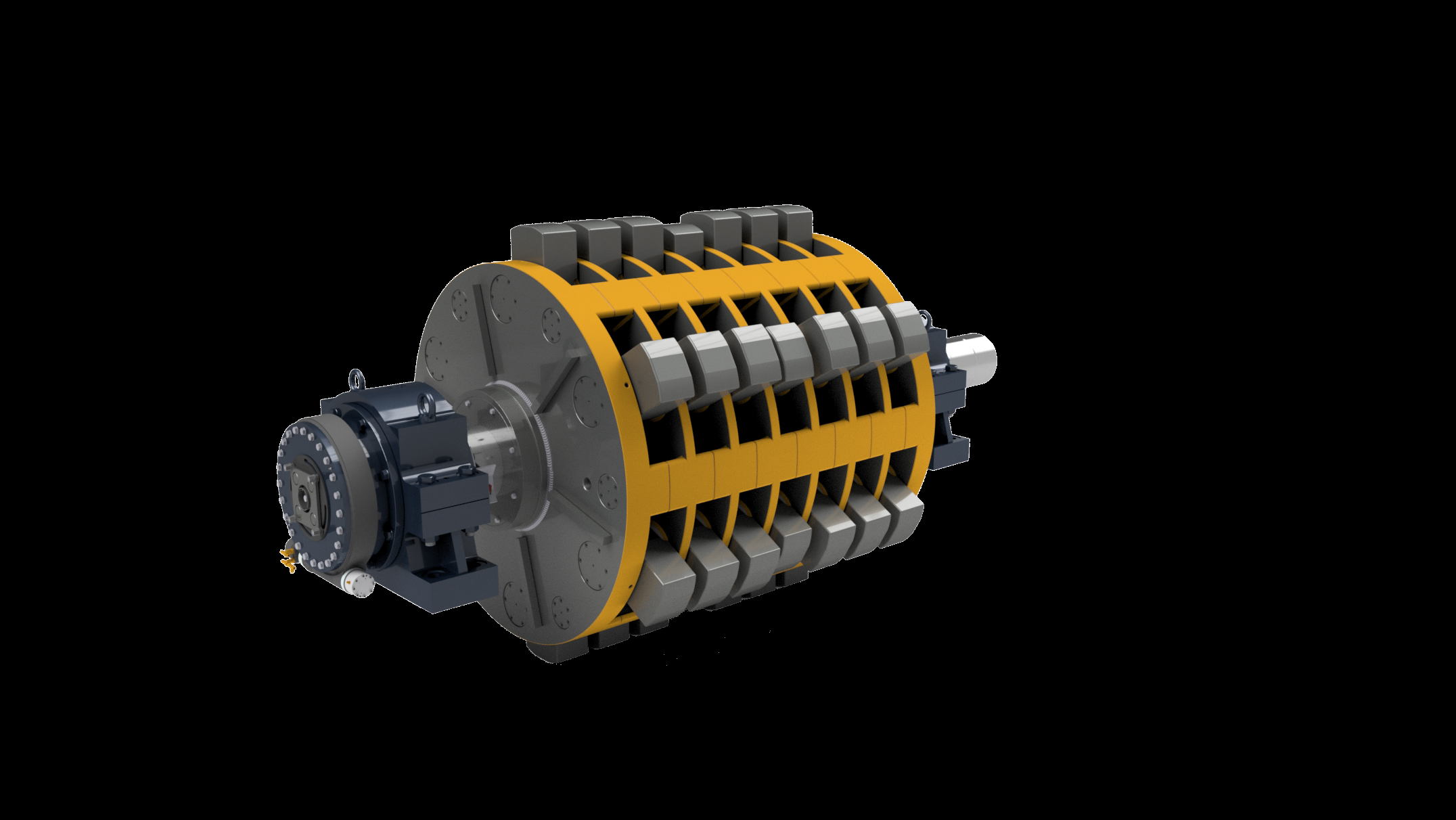
Hammer crusher rotor assemblies
Comprise the main shaft, rotor discs, hammer shafts and hammer system. Inspection scope differs between complete assemblies and individual rotor discs.
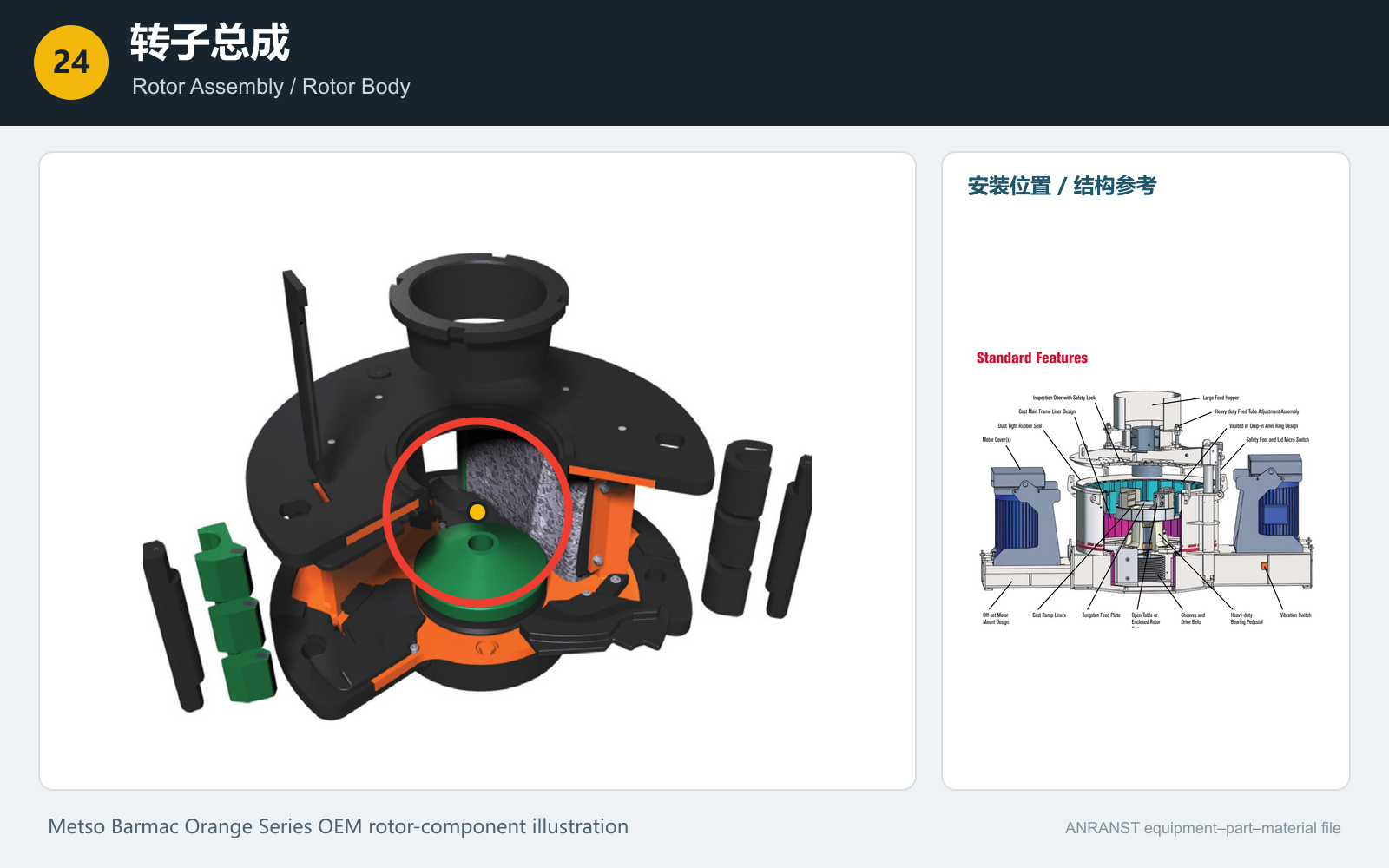
VSI rotor assemblies and bodies
Accelerate material at high speed and carry rotor tips, wear plates and distribution components. Identify the body separately from replaceable wear parts.
Mineral processing and grinding
Flotation rotor-stator systems, HIGmill GrindForce and slurry pump impellers
These components directly affect flow, mixing, grinding or pumping. Dimensions, profiles, clearances and worn shapes influence process results.
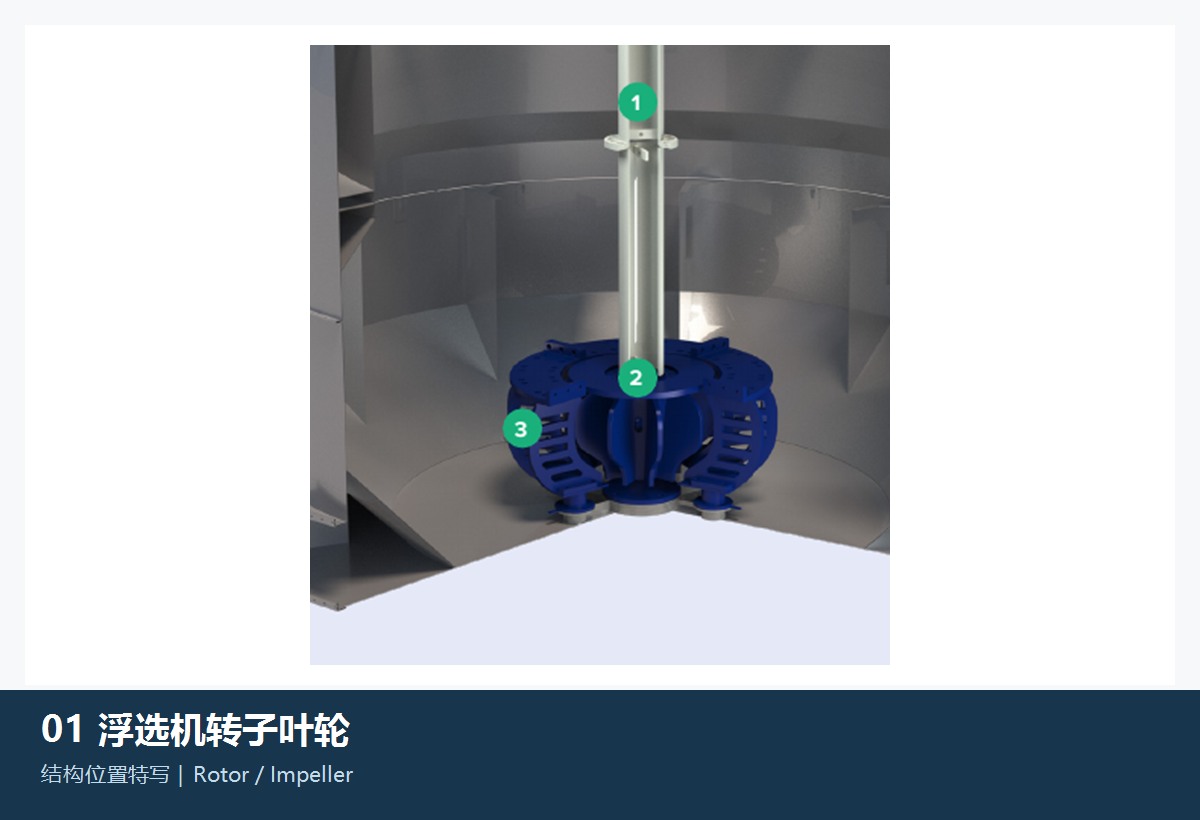
Flotation rotors and impellers
Mix pulp, disperse air and create circulation. Check mechanism series, diameter, blade profile, mounting and rotation direction.
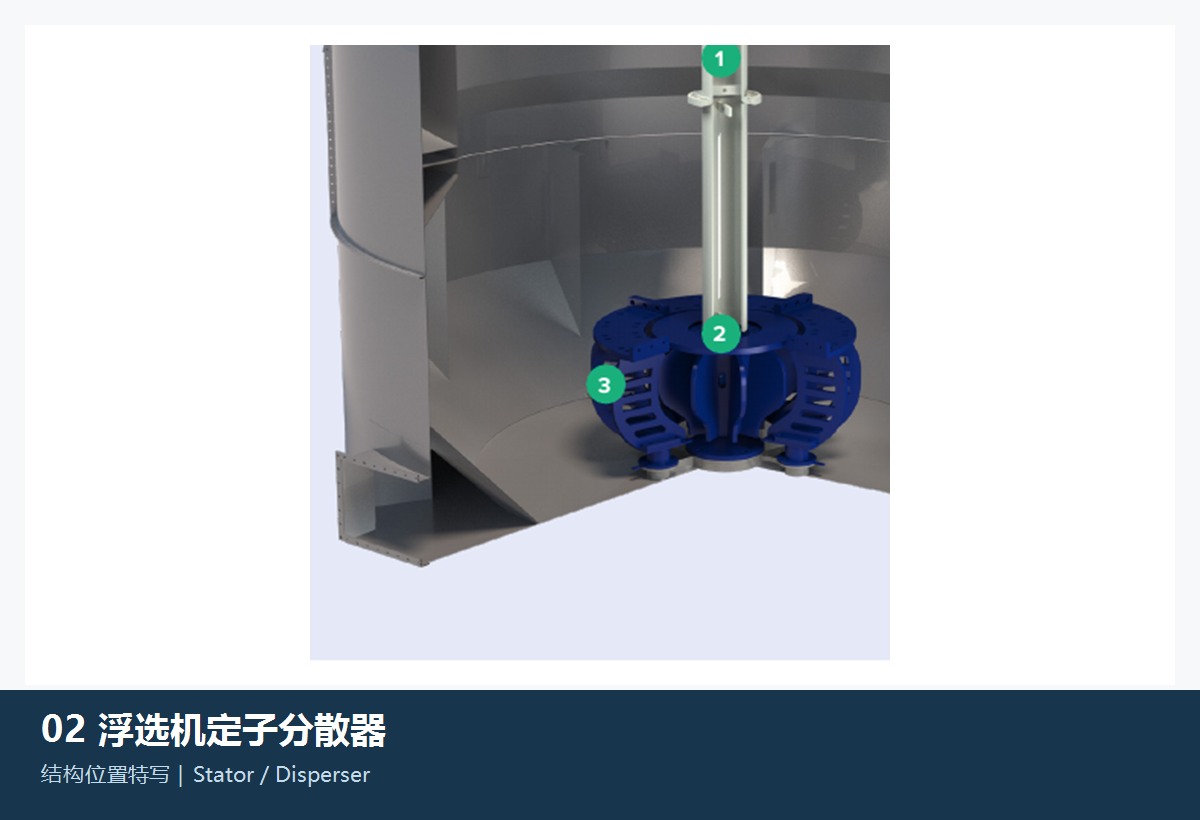
Flotation stators and dispersers
Work with the rotor to stabilise and distribute flow. Confirm blade geometry, fastening interfaces, radial clearance and wear condition as a pair.
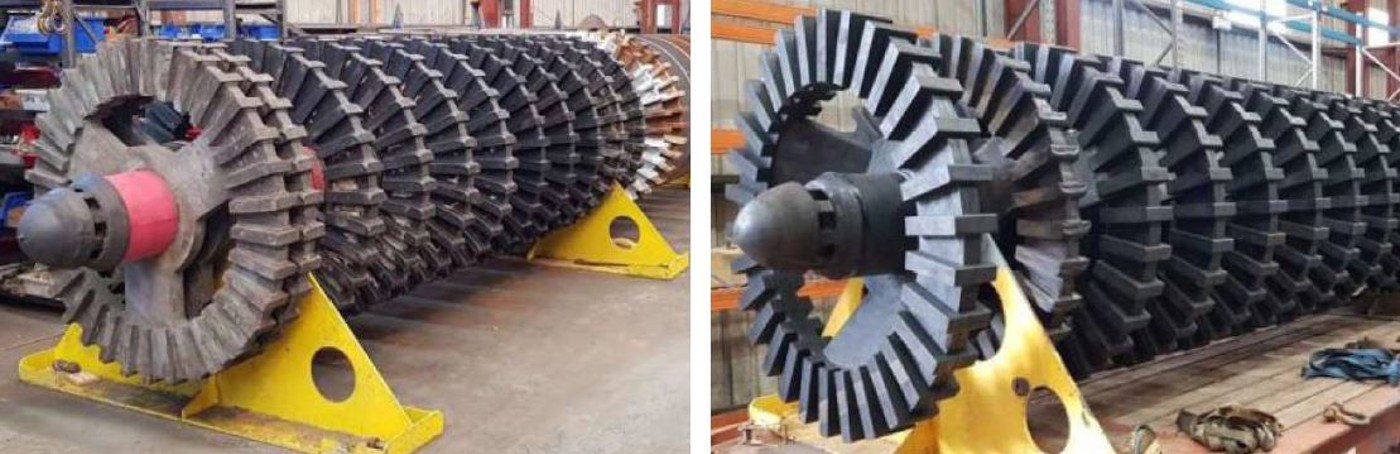
HIGmill GrindForce rotors
Grinding rotors mount on the rotating shaft. Confirm HIGmill model, rotor stage count, shaft interface and mating stator rings.
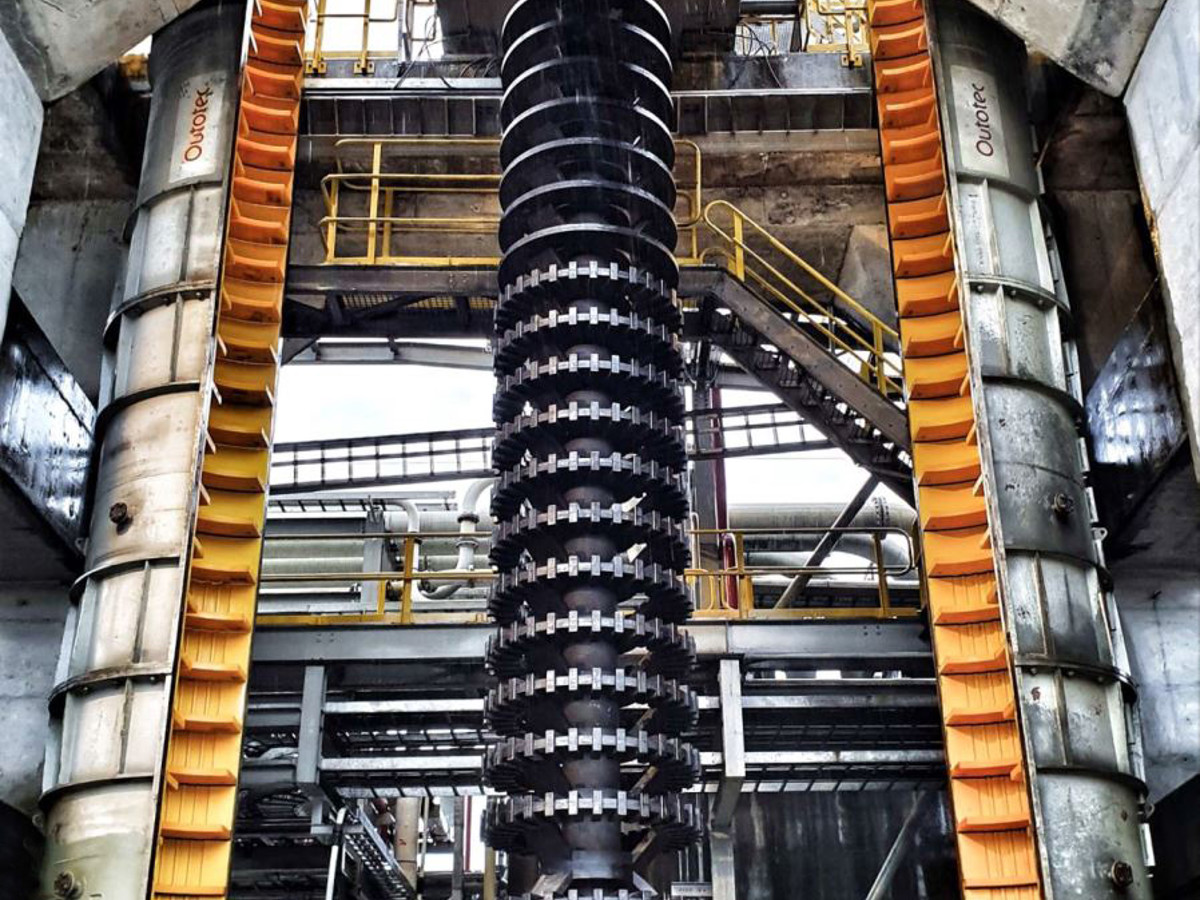
HIGmill stator rings
Mount on the mill housing wall and define grinding zones. Match rotor profile, stage position, inside diameter and housing interface.
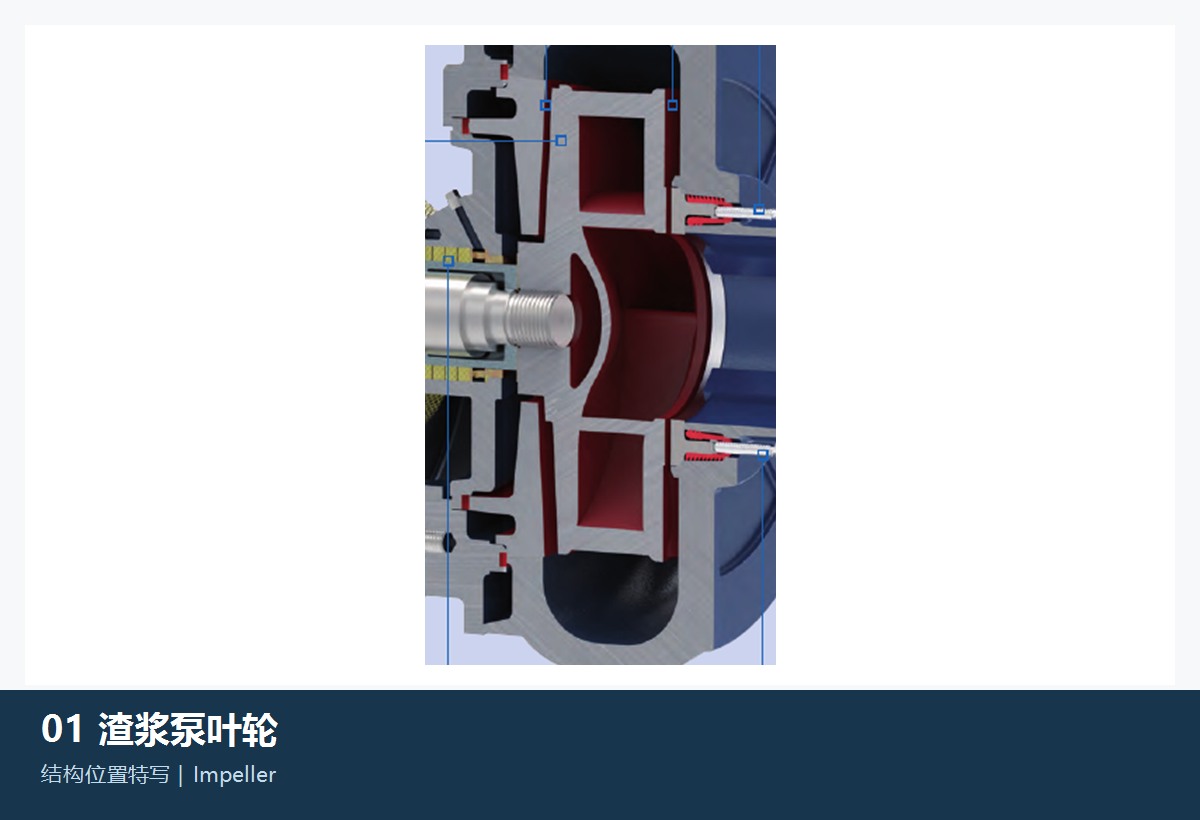
Slurry Pump Impellers
Determine head, flow and wear distribution. Check pump model, impeller type, diameter, blades, threaded or shaft connection, and front and rear clearances.
Pulping and screening
Rotating components for disc refiners, pulpers and pressure screens
Select pulp-equipment rotors and stators according to fibre-processing objectives, working clearances, pulp corrosion and foreign-object impact.
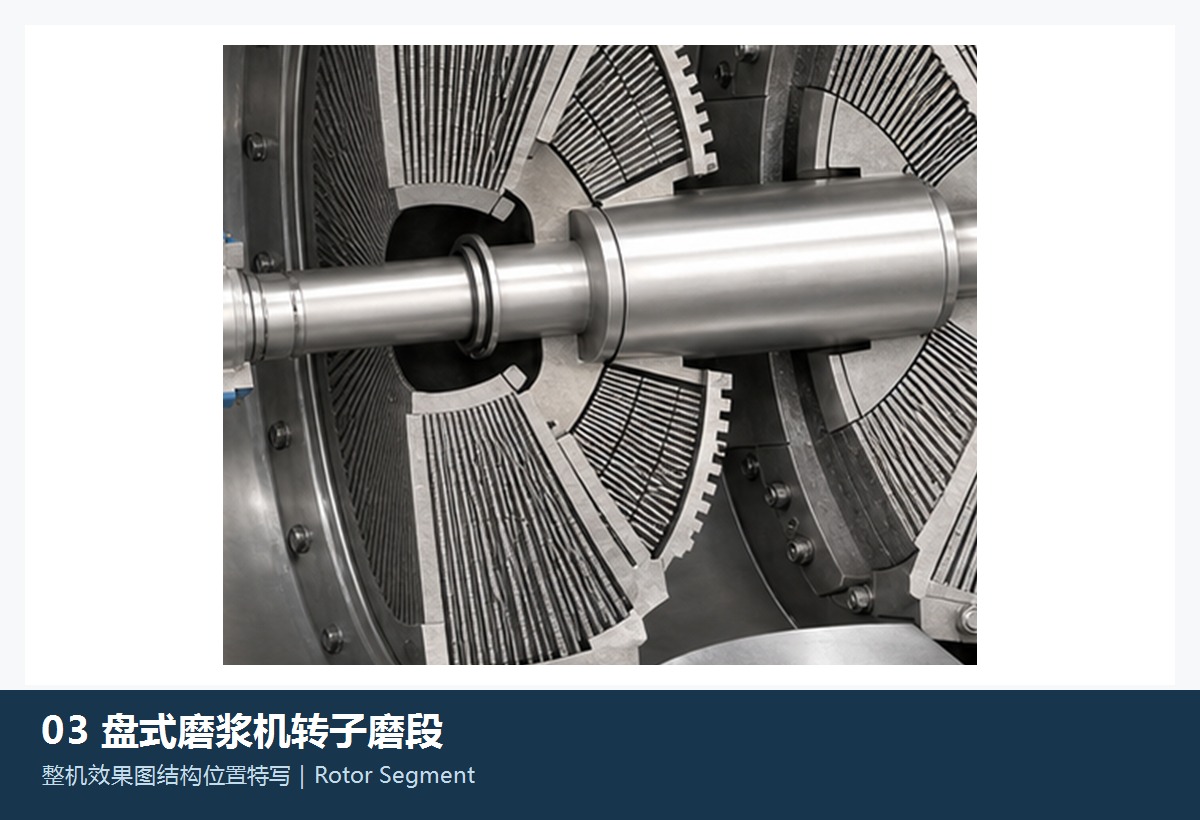
Disc refiner rotor plates
Rotate with the disc and form the refining gap with stator plates. Match bar pattern, zones, rotation direction, hole patterns and mating plates.
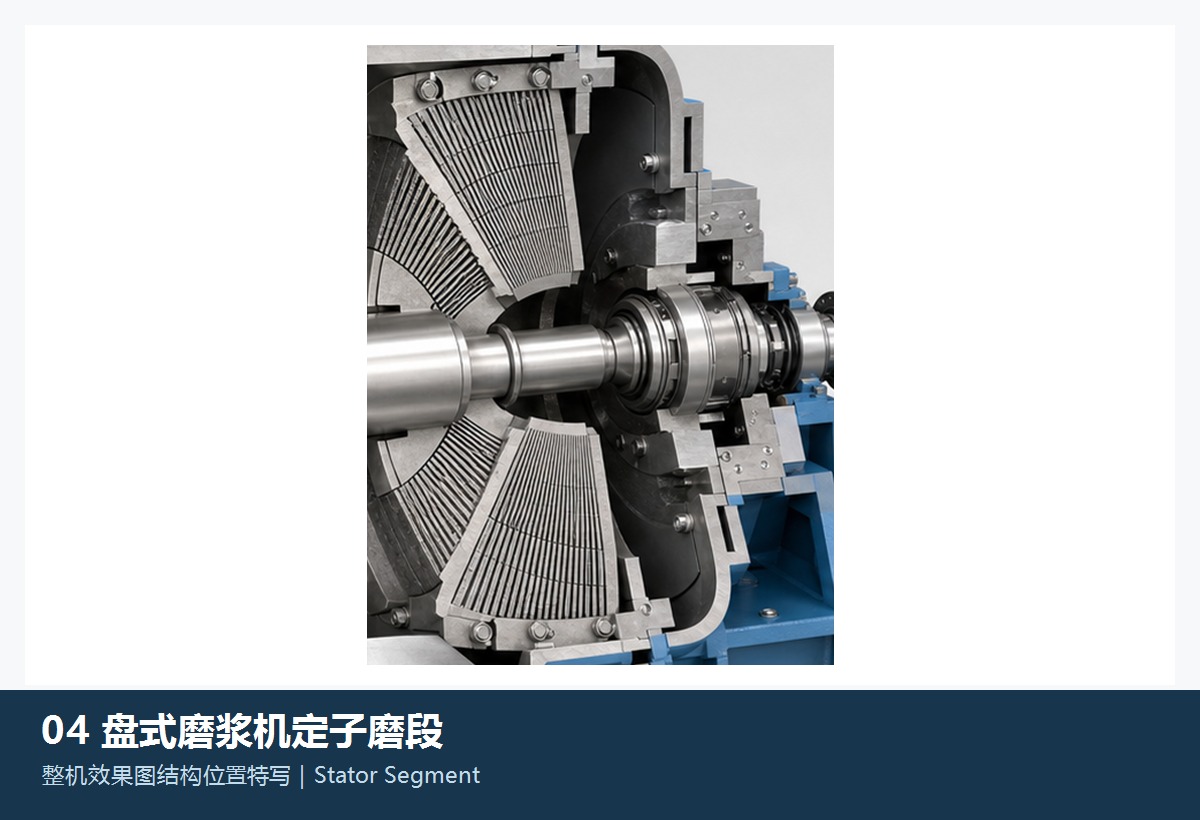
Disc refiner stator plates
Mount on the stationary housing side and work with rotor plates. Confirm installation zone, pattern combination, clearance and fibre-processing requirements.
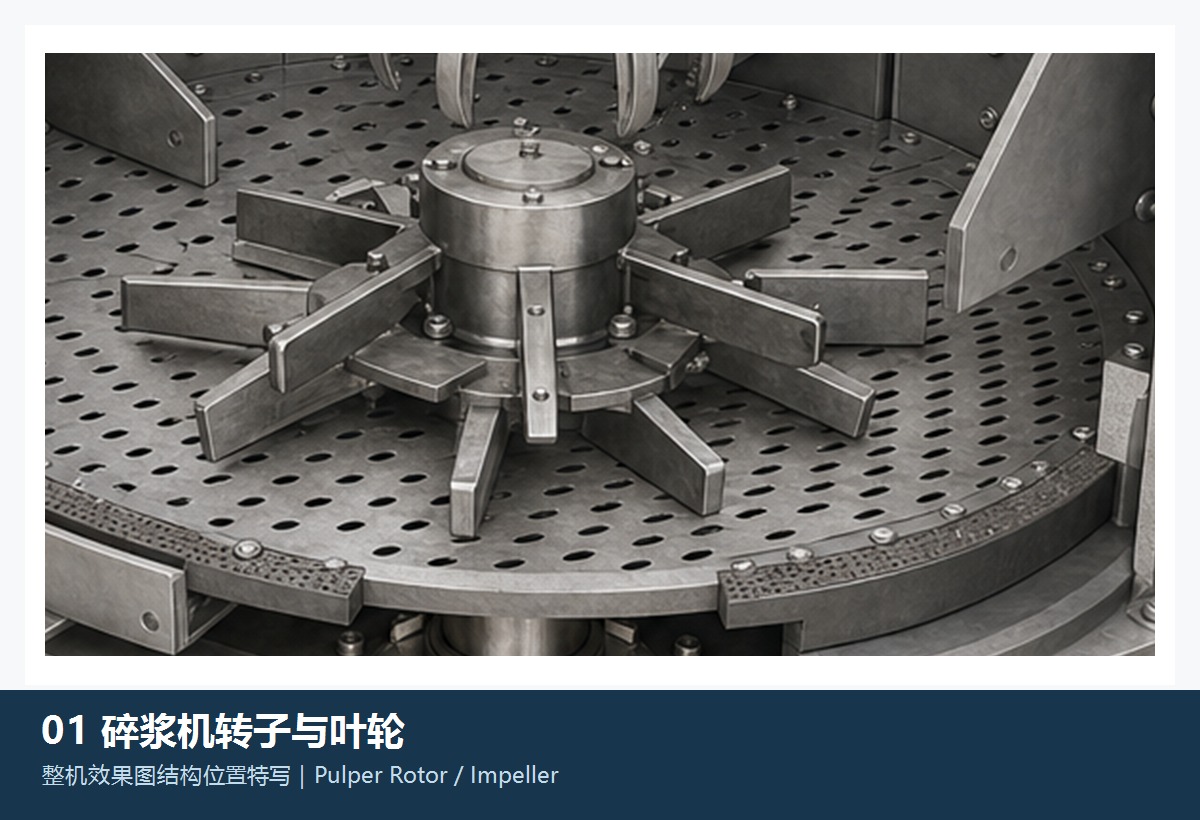
Pulper rotors and impellers
Drive pulp circulation and fibre disintegration. Check vat type, rotor structure, screen-plate clearance, connections and foreign-object conditions.
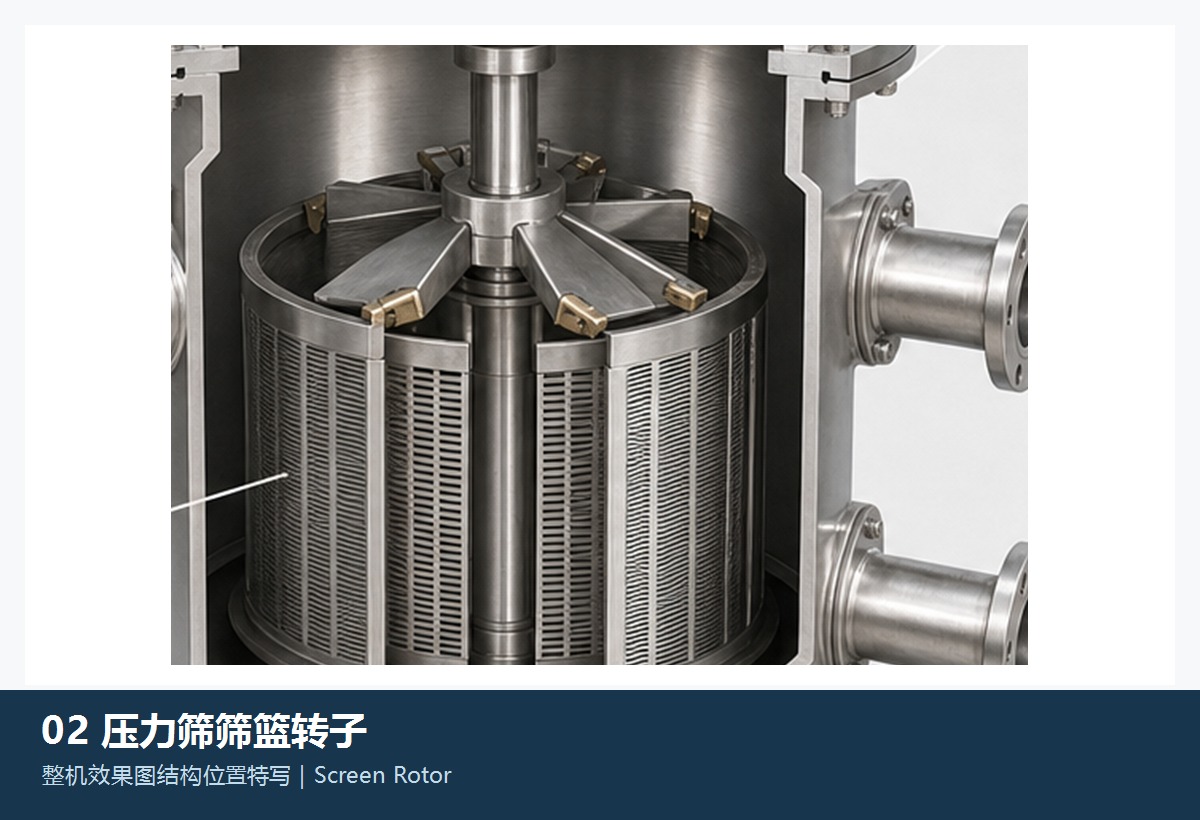
Pressure screen basket-rotor systems
The basket and rotor jointly create the screening flow field. Match inward or outward flow, slots, rotor diameter, rotation direction and working clearance.
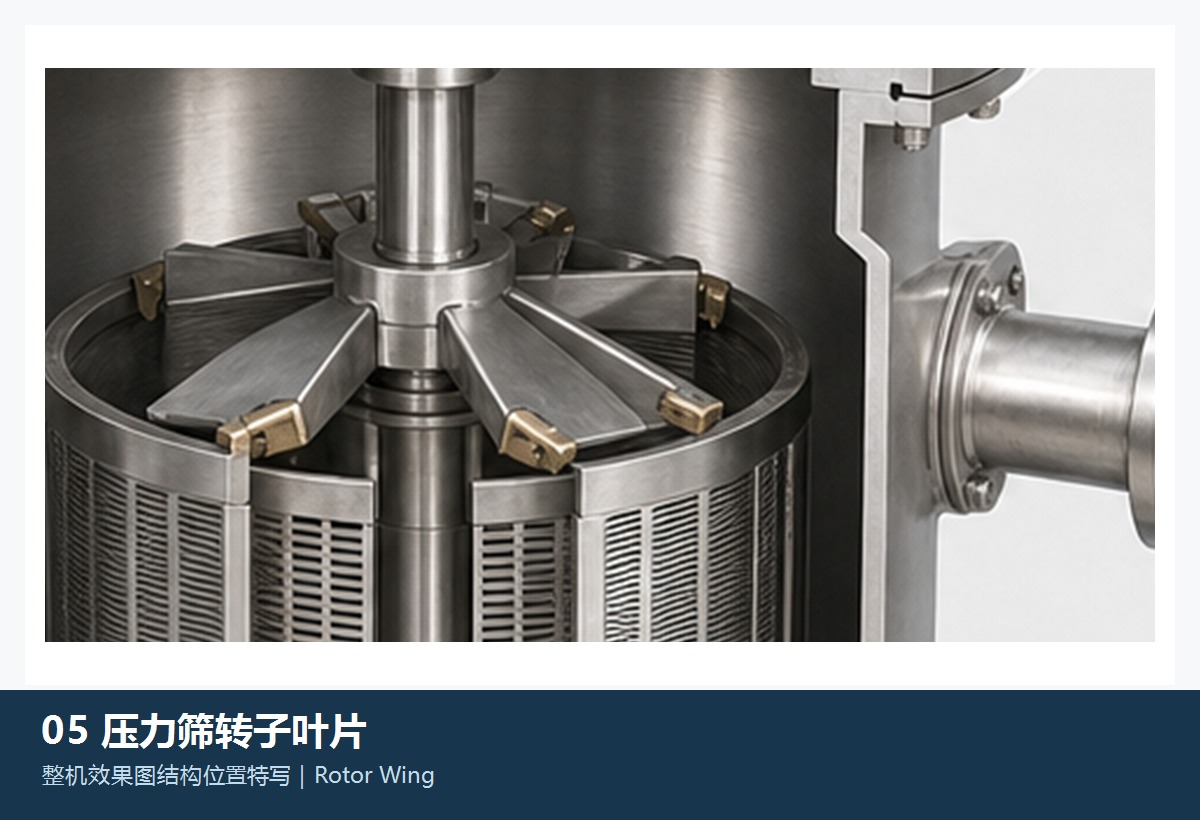
Pressure screen rotor blades and foils
Generate pulses with the rotor and clean the screen surface. Profile, angle, position, clearance and surface condition determine screening stability.
المواد والتصنيع
Select materials by component function, not by the name rotor
Public pages describe material families and selection checks. Confirm specific grade, composition, hardness, rubber-covering system and heat treatment against drawings and operating conditions.
Failure and mating components
Trace abnormal behaviour through the rotor-stator-housing system
Wear on one component often results from abnormal clearances, operating conditions, assembly or mating parts.
| Symptoms | الفحوصات ذات الأولوية | Associated Risks |
|---|---|---|
| Increasing vibration or noise | Mass matching, buildup, dynamic balance, shaft alignment, bearing clearance, looseness and cracks | Cascading damage to bearings, shafts, housings and foundations |
| One-sided or local wear | Rotor-stator clearance, housing centre, flow distribution, uneven feed loading and rotation direction | Loss of effective profile, lower efficiency and rubbing |
| Blade or rotor disc cracks | Material, casting, forging or welding defects, heat treatment, stress concentration, foreign objects and overload | Detached fragments, imbalance and major equipment damage |
| Reduced flow, head or process performance | Impeller or rotor profile, diameter, wear, clearance, speed and system operating conditions | Increased energy use, reduced output and downstream fluctuations |
| Covering delamination or elastomer tearing | Media compatibility, bonding, metal reinforcement preparation, temperature, particles and assembly | Exposed metal reinforcement and rapidly accelerating wear |
Enquiries and quality control
Information for rotor, stator and impeller supply
Combine used-part measurements with machine and mating-part information. Do not treat worn profiles as manufacturing dimensions.
تحديد المعدات
OEM, complete model, serial number, mechanism series, installed position and operating direction.
Drawing Number and Revision
Assembly number, individual part number, original drawing reference, superseding number, assembly drawings and latest revision.
الأبعاد الرئيسية
Overall shape, bore or hub, hole patterns, blade or refiner-plate profiles, clearances and mating dimensions.
المواد والعمليات
Body, covering or lining, casting, forging or welding route, heat treatment, hardness and non-destructive testing.
Balance and assembly
Static and dynamic balance grades, mass matching, rotation direction, assembly markings, locking and trial-assembly records.
ظروف التشغيل وأنماط الأعطال
Speed, power, material or pulp, temperature, corrosion, vibration, service life and wear photos.
Public technical references: Metso identifies NP impact crusher and Barmac VSI rotors as different machine components and emphasises specifications, balance and installed compatibility for rotors and wear parts. Its HIGmill information describes a shaft carrying grinding rotors and stator rings mounted in the housing. Flotation research shows that rotor and stator wear can impair mixing. Slurry pump guidance relates impeller material selection to particles, slurry chemistry, temperature and speed. Valmet describes disc-refiner rotor/stator plates and pressure-screen rotor/basket arrangements as paired systems.Metso Impact Crusher Parts · Metso HIGmill · Metso Flotation Mixing Mechanism · Metso Slurry Pump Handbook · Valmet Machine Screening
الأجزاء والمعدات ذات الصلة
Related equipment, products, materials and OEM models
General equipment and OEM routes lead to one product page, where confirmed drawing references and applicable models are maintained.
Impact Crusher Rotors, blow bars, impact plates, fastening and related drive systems. Flotation Machine Matched rotors, stators, cover plates, hubs and mixing mechanisms. Tower and stirred mills HIGmill rotors, stator rings, shaft and mill-body relationships. Slurry Pump Impellers, liners, side plates, throatbushes and sealing. Disc refiner Rotor plates, stator plates, clearances and fibre-processing conditions. العلامات التجارية والموديلات الأصلية Check applicable parts and drawing references by brand, series and complete model.
Request rotor, stator and impeller options and a quotation
Submit equipment models, drawing references, assembly drawings, used-part measurements, materials, wear and operating conditions for technical review and quotation.
خدمات صنع في الصين
من التقييم الفني إلى تسليم المنتج بالكامل
توفر شركة ANRANST للعملاء العالميين تقييمات هندسية، واختيار التصنيع الصيني، ومراقبة الجودة، وتسليم الأجزاء النهائية لقطع الغيار الصناعية المقاومة للتآكل حسب الطلب، ويمكنها أيضًا دعم قطع الغيار الصناعية الأخرى حسب الطلب.
مراجعة الرسومات والهندسة
قم بمراجعة أسطح التزاوج وأبعاد الواجهة، وقم بتقييم جدوى المواد والمعالجة الحرارية والتصنيع.
تحديد المادة والمعالجة الحرارية
تُحدَّد درجات المواد وعمليات المعالجة الحرارية لكل طلب على حدة، وتُثبَّت في الاتفاقية الفنية وتُتابَع أثناء الإنتاج.
ضبط الجودة
يشمل ذلك تأكيد الرسم، ومراقبة المواد والعمليات، وتتبع الإنتاج، وتنسيق عمليات الفحص والقبول.
تسليم المنتج النهائي
تنظيم عمليات التصنيع والتحقق من الجودة والتعبئة والتغليف وتسليم المنتجات النهائية الكاملة لتشكيل حلقة إمداد قابلة للتنفيذ.
قم بتزويدنا بالنماذج الحالية، والرسومات، وأرقام الرسومات، وأرقام الأجزاء، والمواد، أو معلومات ظروف التشغيل، وسنقوم بتحديد التحقق الفني ومسار التوريد وفقًا لذلك.
إرسال طلب