
Industrial rolls, roller tyres & roll surfaces
Industrial Rolls, Roll Sleeves and Wear Surfaces
Roll systems for high-pressure comminution, grinding, metal rolling and low-speed support
HPGR surfaces, crusher roll shells, vertical mill rollers, kiln support rollers and rolling-mill work rolls all use the term roll, but differ in loading, surface function, materials, accuracy and inspection standards. This page groups products by equipment function; bearings, seals and roll shafts belong to separate categories.
Main ProductsSolid rolls, sleeves, tyres, wear surfaces, segmented shells, kiln tyres and support rollers
Equipment ScopeHPGR, roll crushers, vertical mills, rotary kilns, rolling mills, sugar mills and feeders
Key RelationshipsRoll diameter and profile, surface structure, mating clearance, loads, shaft alignment and drive
Identification requirementsComplete model, drawing, surface type, used-part measurements, wear maps and operating conditions
Category scopeRoll type identification Solid, sleeved or segmented; fixed or floating; working, supporting or guiding Geometric datums Outside diameter, face width, profile, taper, bore, keys, flanges and hole patterns Surface system Smooth, toothed, studded, weld-overlay, composite, rubber-covered or specified surface roughness Mating operating conditions Roll gap, pressure, speed, uneven loading, material handled, temperature, cooling and lubrication
Establish roll function before the surface, body and mating parts
This category covers rolls that crush or grind material, replaceable shells or tyres, rotary-equipment tyres and support rollers, rolling-mill work rolls and guide rolls. Shafts, bearings, housings, seals, hydraulic loading and drive gears have their own spare-parts categories.
Used-part diameters, profiles and surfaces are often worn. Establish design datums before copying them and check mating rolls, roll gap, centre distance, alignment, rotation direction, loads and permitted repair allowance.
Crushing and grinding
Working rolls for HPGR, roll crushers, coal mills and vertical mills
Working surfaces contact material directly. Surface structure and material must match equipment type and wear mechanism.
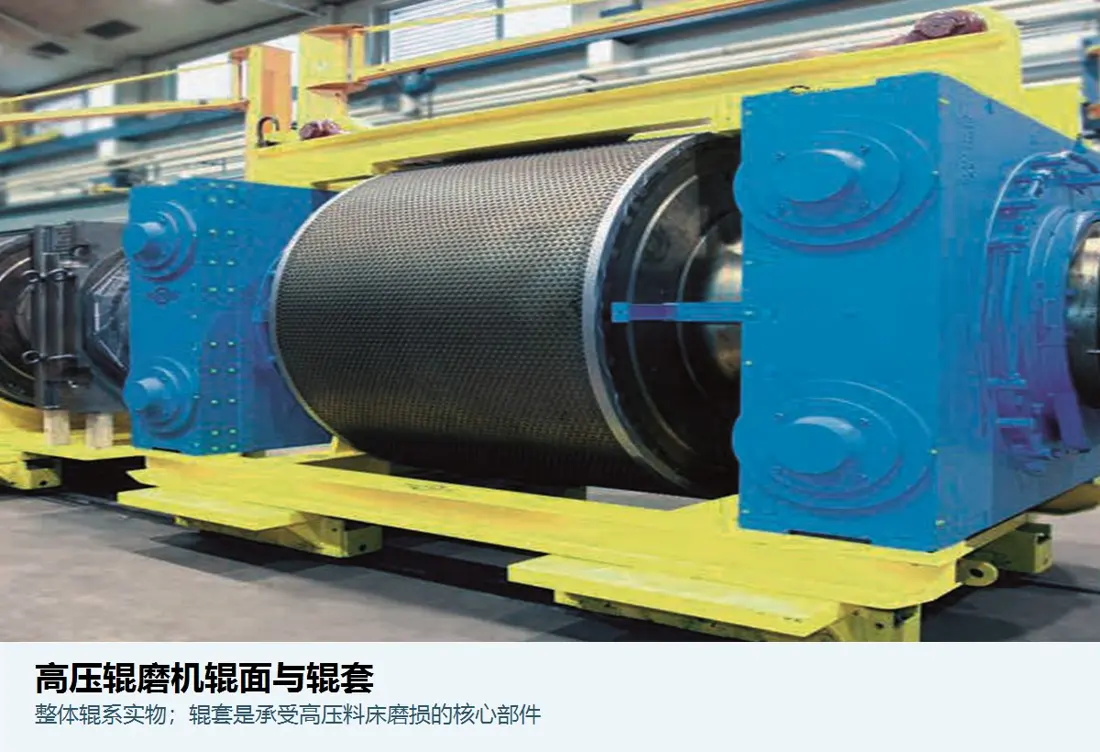
HPGR roll surfaces and tyres
Fixed and floating rolls form a high-pressure material bed. Check diameter, width, studs or weld overlay, edge protection and skew control.
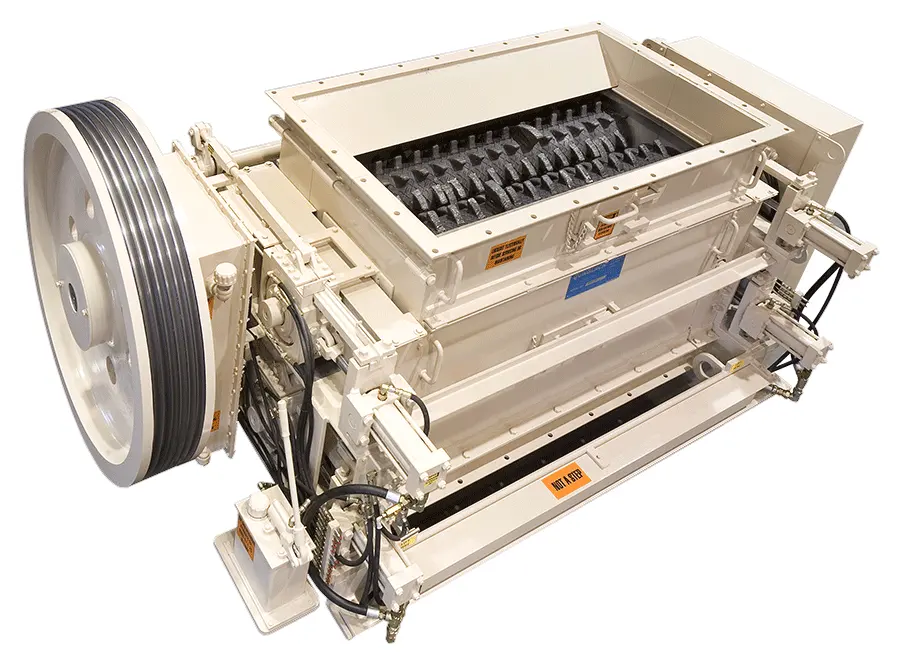
Double roll crusher shells and sleeves
Mount around the roll body to crush material directly. Confirm smooth or toothed surfaces, solid or segmented construction, roll gap and fastening.
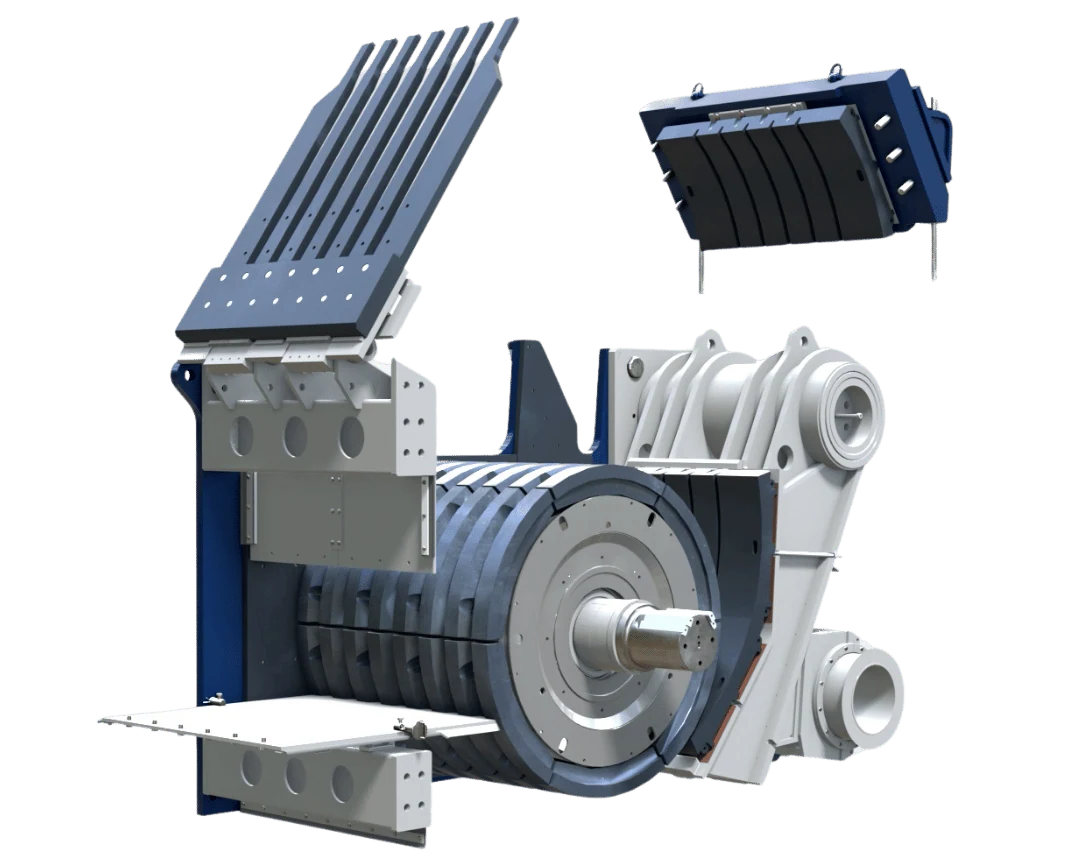
Double roll crusher shell and tooth segments
Provide replaceable working-surface sections. Check segment count, circumferential location, joints, fastening, tooth profile and matched-set numbers.
Eccentric roll crusher shells and surfaces
The eccentric roll and crushing wall form a varying gap. Check surface zones, eccentric relationship, clearance and material flow direction.
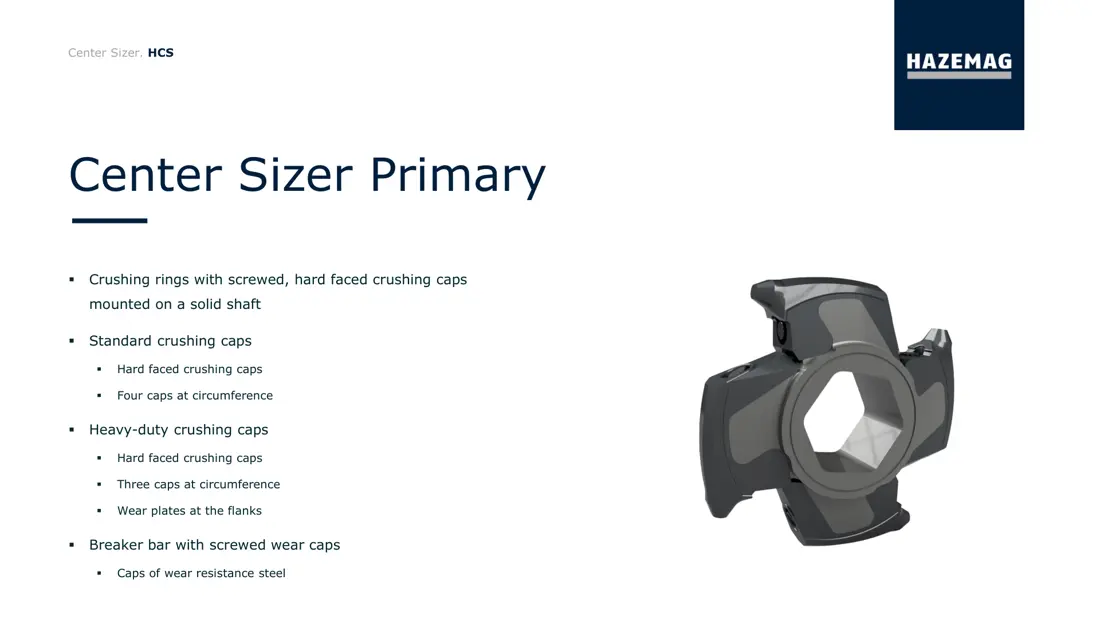
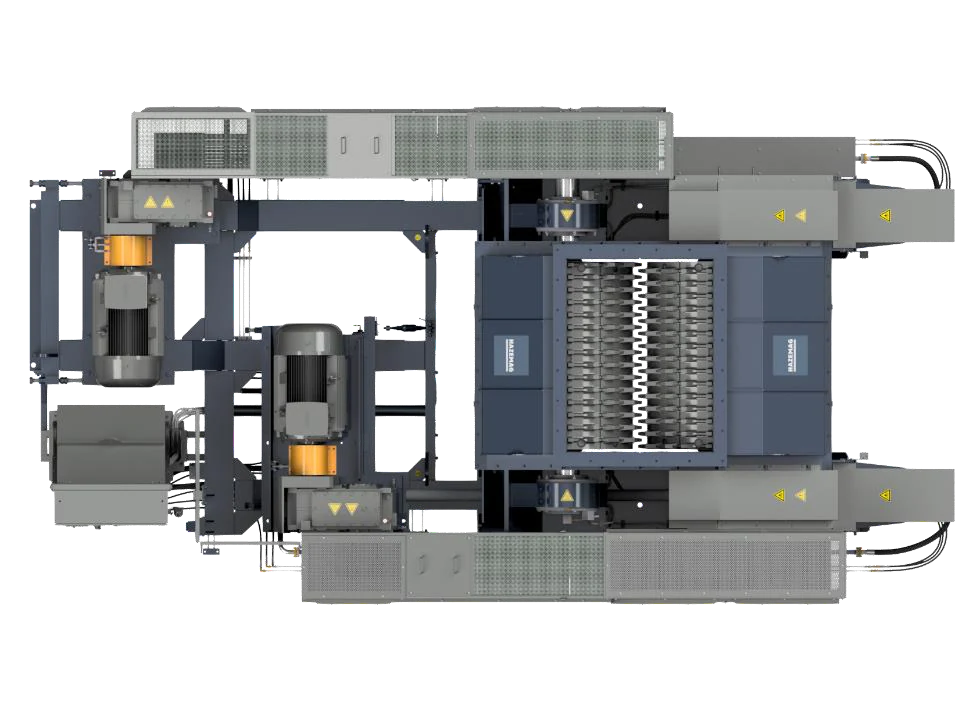
Mineral Sizer Roll Bodies
Carry tooth rings, caps or segments and transmit torque. Identify the roll body, replaceable teeth and main shaft separately, then check them as a system.
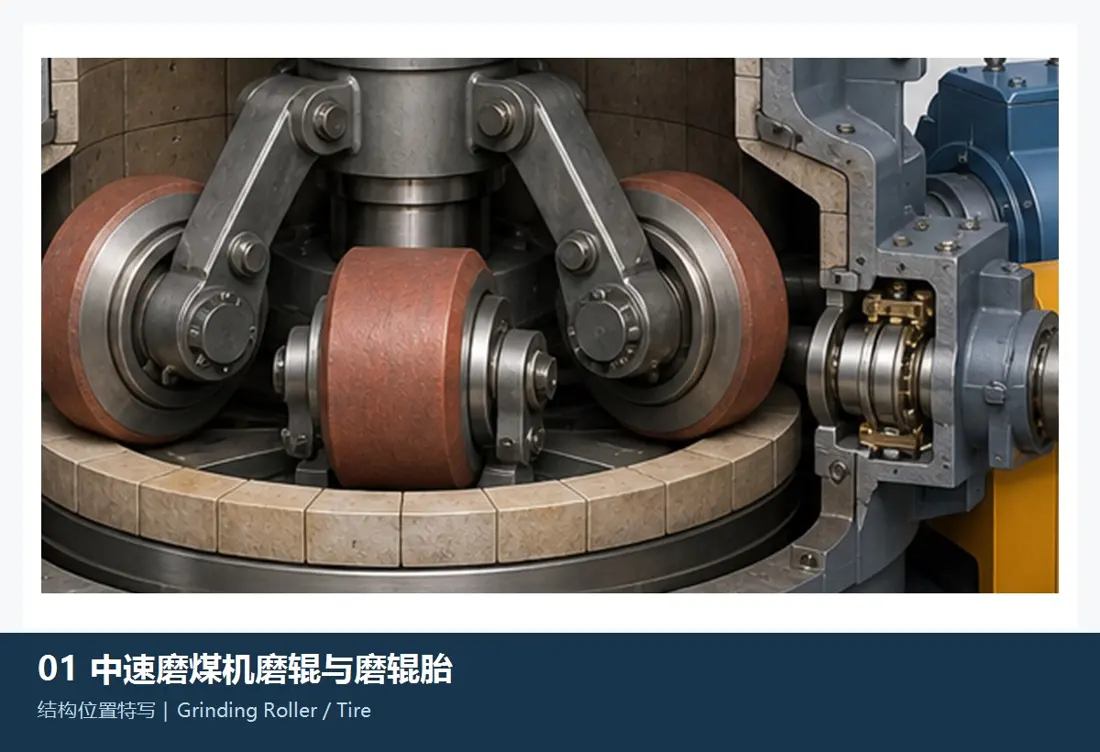
Coal mill grinding rollers and tyres
Crush coal against the grinding table. Confirm mill type, roll count, profile, mounting taper, material and mating table condition.
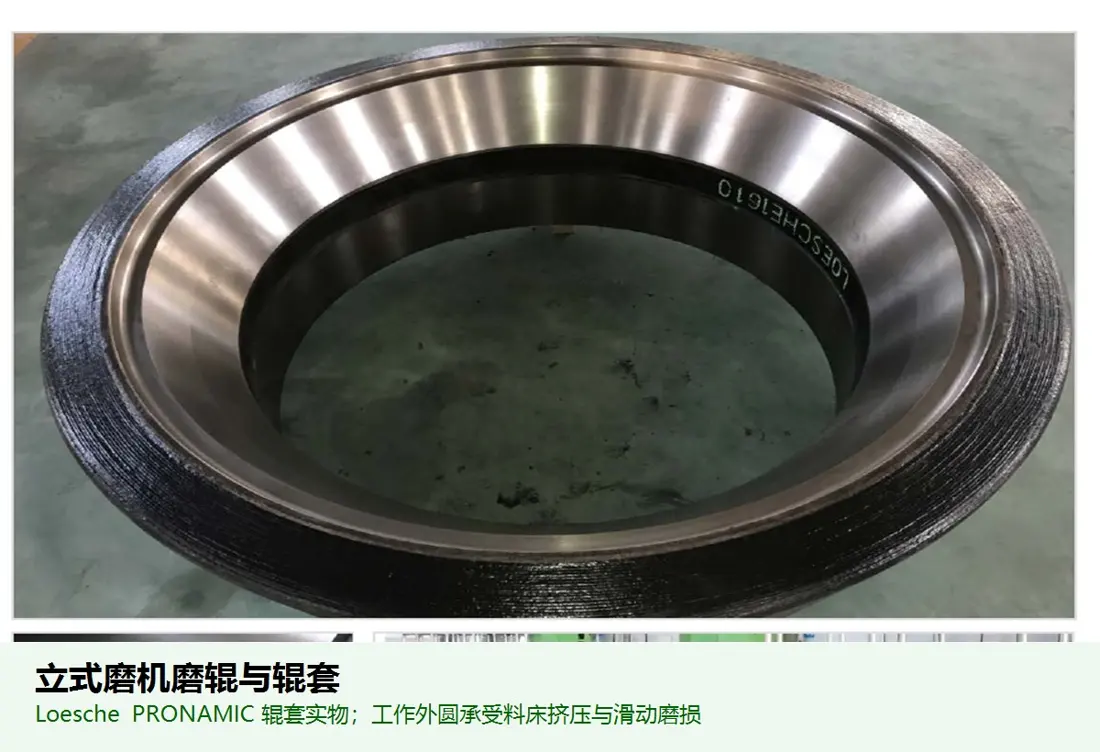
Vertical mill roller and tyre assemblies
Form the material-bed grinding zone with the table. Match OEM mill type, roll count, loading method, tyre profile and table.
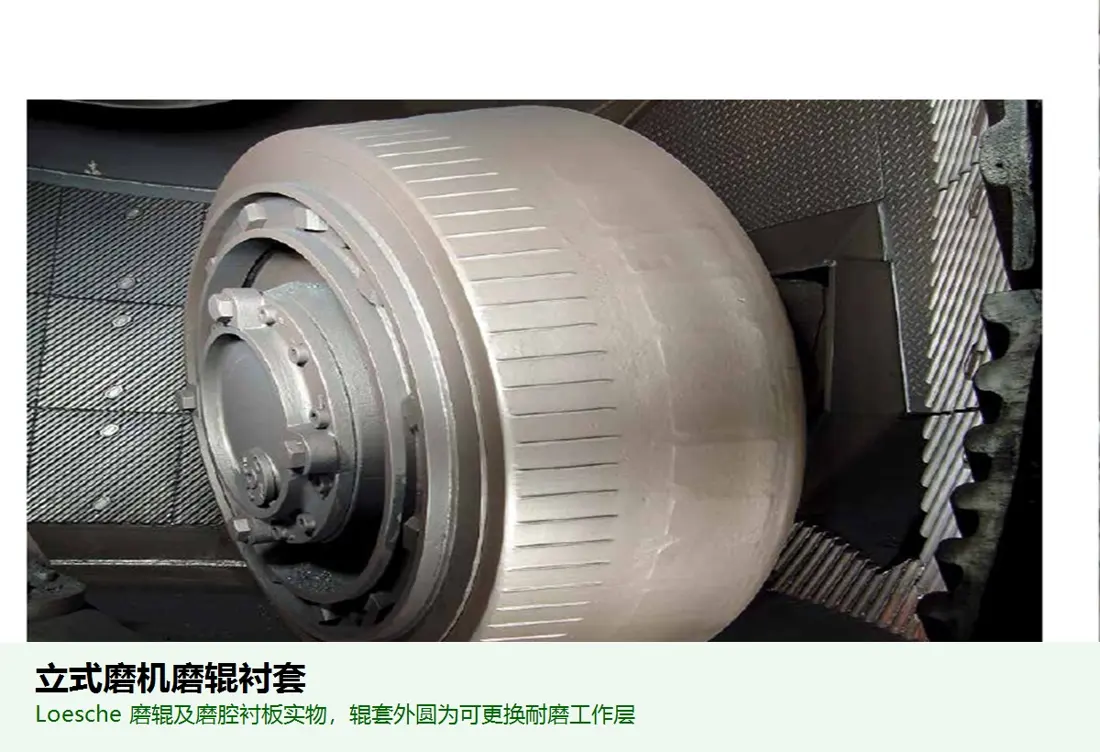
Vertical mill roller sleeves
Provide a replaceable wear surface. Check segmented or one-piece construction, mating surfaces, clamping, wear profile and remaining thickness.
Rotary support and industrial processing
Kiln, rolling-mill and sugar-mill roll systems
Heavy loads at low speed, precision metal rolling and fibre crushing impose different load and surface requirements.
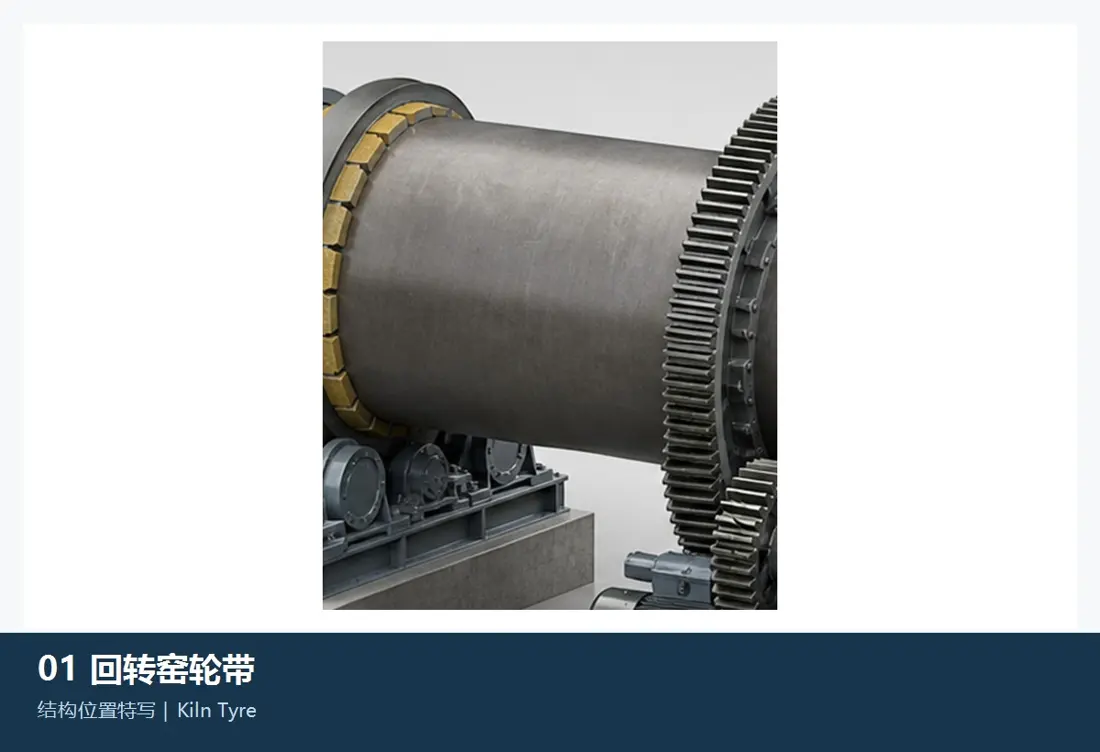
Rotary kiln tyres and riding rings
Transfer shell loads to support rollers. Check one-piece or split construction, inside and outside diameters, width, pads, shell interfaces and axial movement.
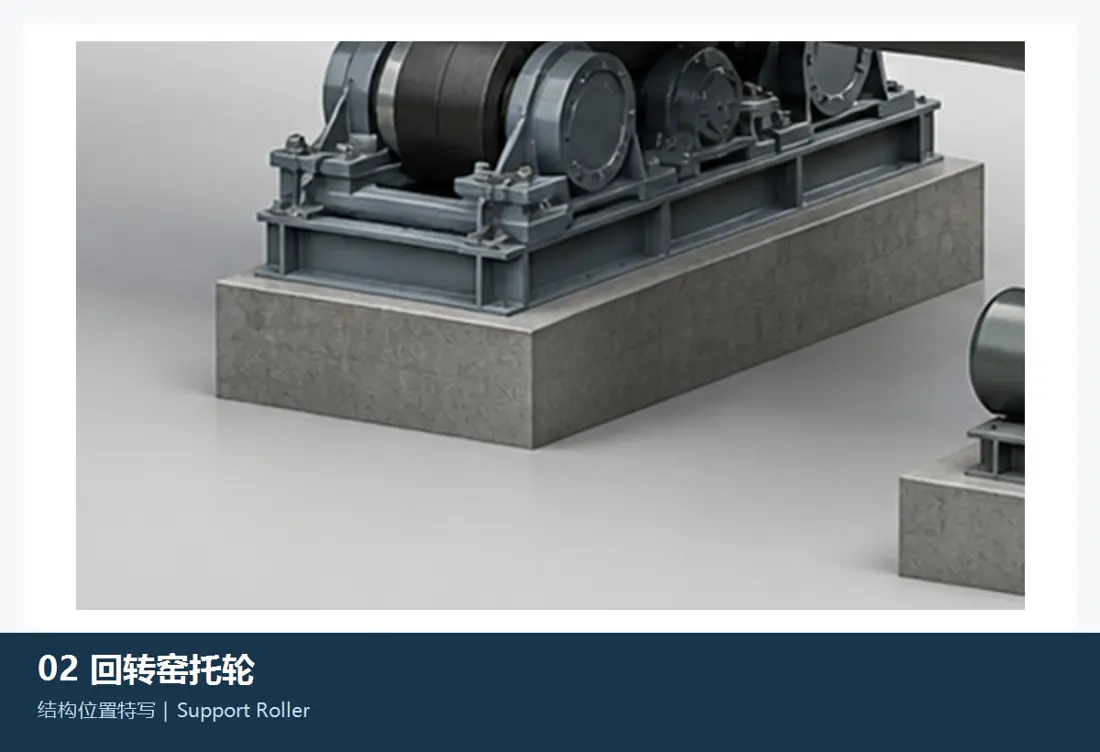
Rotary kiln support rollers
Roll against the tyre and support the shell. Diameter, profile, alignment, contact band, bearings and foundations jointly determine service life.
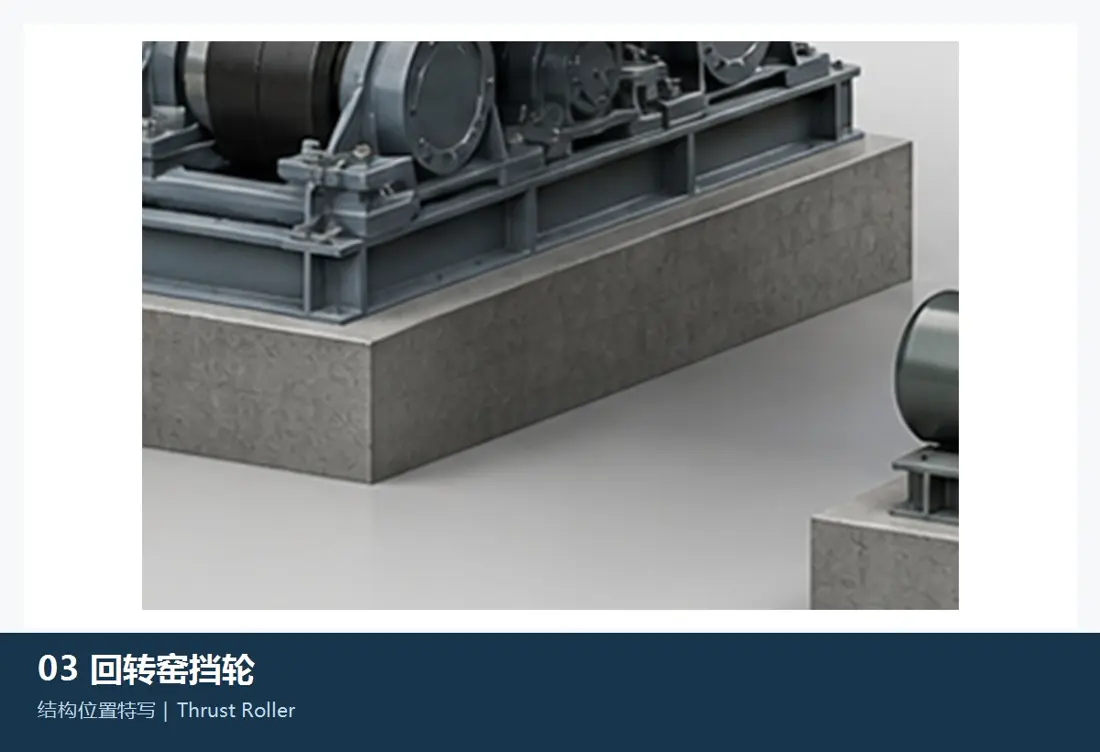
Rotary kiln thrust rollers
Control shell axial position. Check contact faces, thrust direction, bearing arrangement, mounting datums and axial kiln balance.
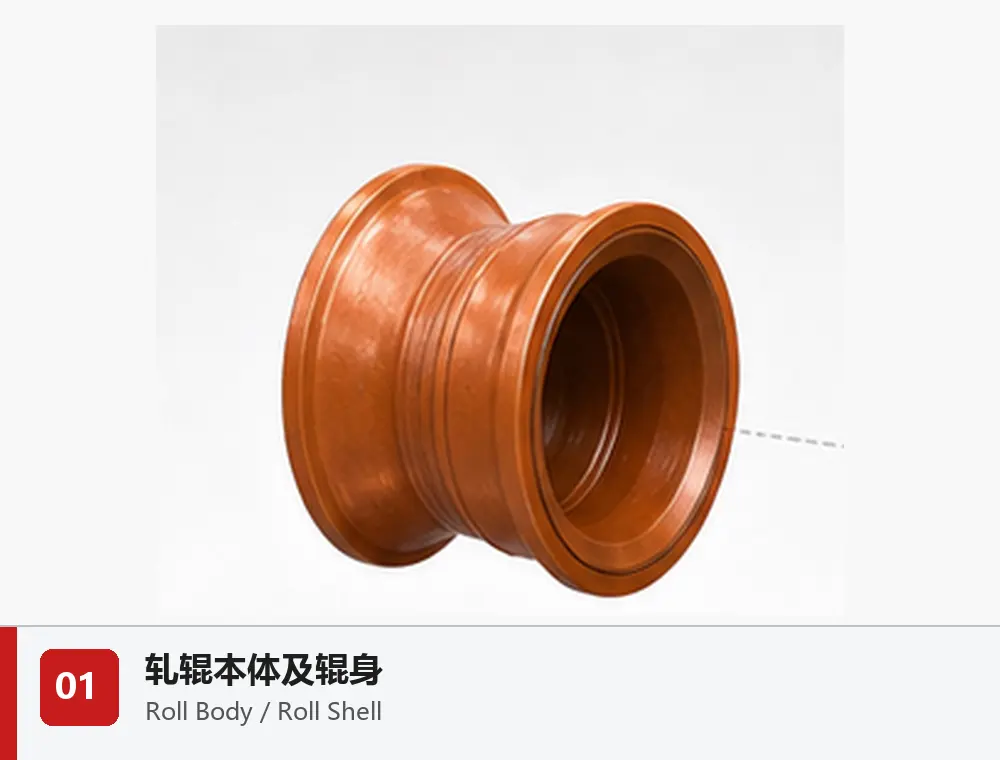
Roll bodies and barrels
Deform metal directly or support work rolls. Distinguish work, intermediate and backup rolls, and check profile curves and surface quality.
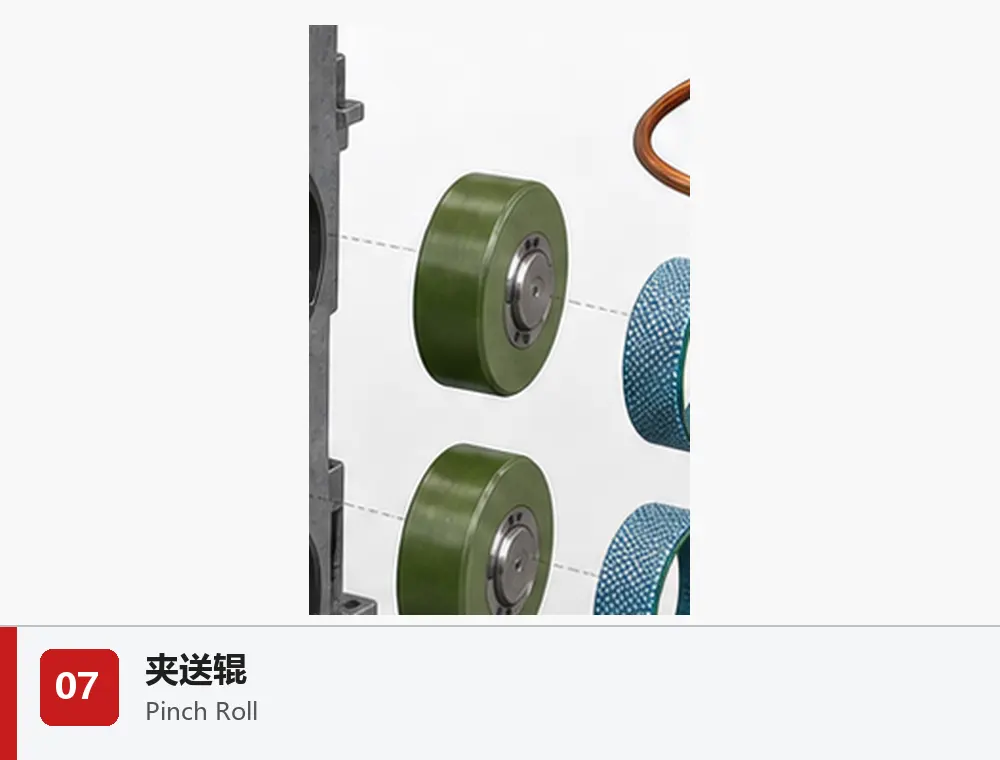
Pinch rolls
Grip and convey rolled material. Check diameter, face width, covering or wear surface, clamping force, speed and cooling.
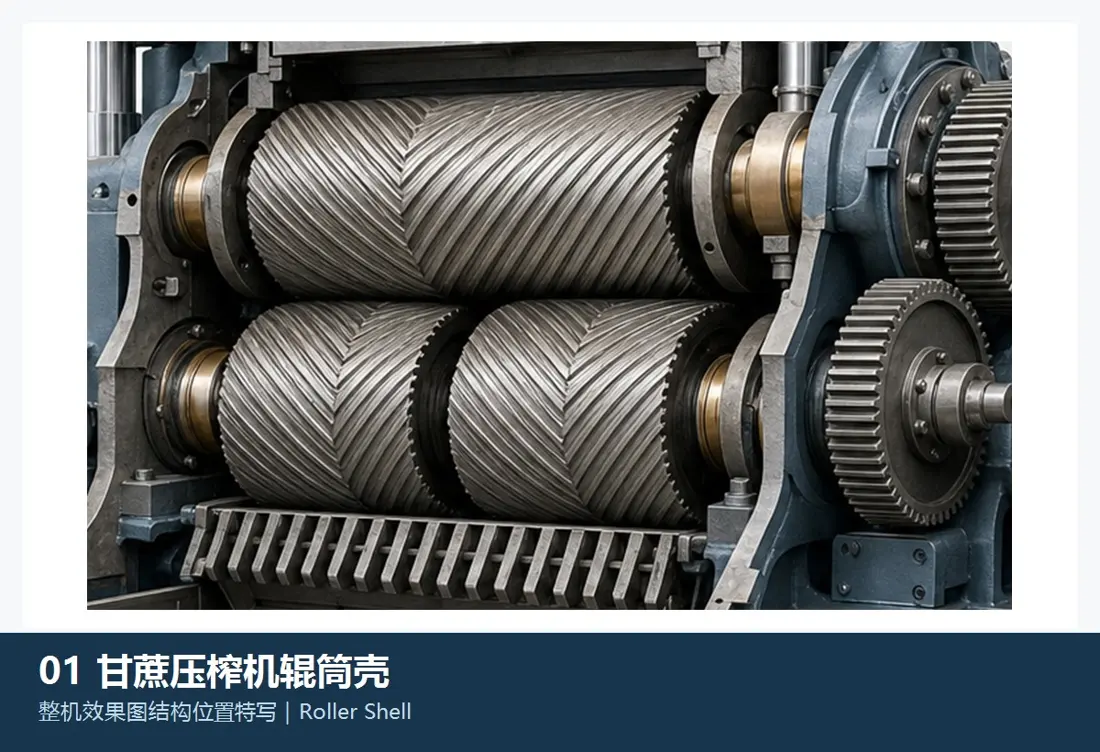
Sugar mill roll shells
Fit the roll core to crush sugarcane. Check outside diameter, length, grooves, juice drainage, shrink-fit or mechanical connection, and corrosive wear.
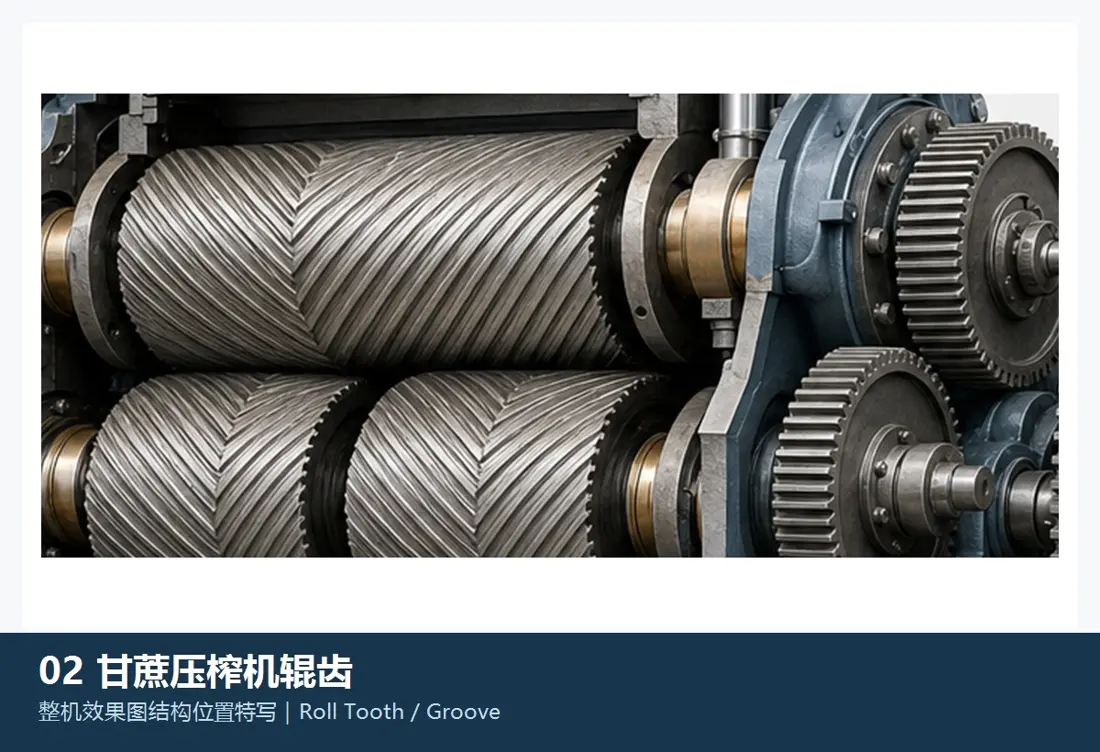
Sugar mill roll teeth and grooves
Provide cane-gripping, crushing and juice-drainage surfaces. Check tooth profile, helix direction, groove pitch, weld repair and mating rolls.
Support and conveying
Apron feeder support rollers
Support rollers do not crush material. Priorities are wheel-to-track fit, seals, bearings, alignment and contamination control.
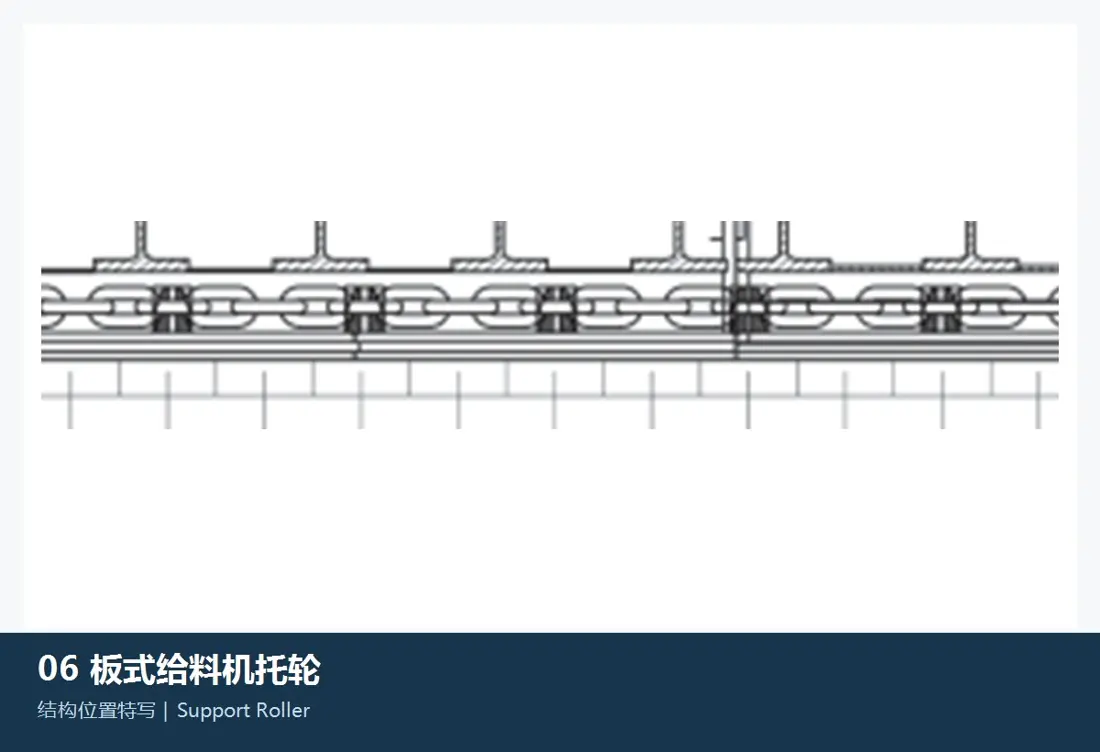
Apron feeder support rollers
Support chain tracks and moving pans. Check tread, flange, shaft, bearings, seals, mounting height and alignment of both tracks.
Materials and Processes
Design the load-bearing body and working surface by zone
One roll may combine a tough body, wear-resistant surface, studs, weld overlay or replaceable sleeve.
Failure and system relationships
Trace roll-surface wear back to feed, loads and alignment
Abnormal roll wear commonly reveals problems with mating rolls, bearings, loading or material distribution.
| Symptoms | Priority checks | Associated Risks |
|---|---|---|
| Uneven centre or edge wear | Feed distribution, edge effects, roll gap, alignment, profile and mating roll | Reduced capacity, circulating load and local overload |
| Detached or broken studs | Stud material, hole fit, insertion force, body support, foreign objects and edge loads | Tyre damage and cascading failure of adjacent studs |
| Sleeve cracks or spalling | Impact, material toughness, heat treatment, residual stress, fits and weld overlay | Imbalance, housing damage and unplanned shutdown |
| Abnormal tyre or support-roller contact band | Kiln axis, support-roller position, tyre ovality, shell deformation and lubrication | Axial movement, bearing overheating and abnormal foundation loads |
| Abnormal rolled-product surface or flatness | Roll profile, wear, roughness, gap, roll bending or shifting, and cooling | Product defects, roll-change frequency and barrel fatigue |
Enquiries and quality control
Information for industrial roll supply
Provide machine and mating-system information to avoid copying worn parts alone.
Equipment and position
OEM, complete model, serial number, fixed or floating side, upper/lower or left/right position, and installation number.
Drawings and structure
Assembly and individual model details, solid, segmented or sleeved construction, connections, bore, flanges and fastening.
Working-surface data
Design outside diameter, width, profile, teeth, studs or weld overlay, roughness and permitted repair allowance.
Materials and Processes
Body, working layer, hardened layer, composite interfaces, heat treatment, hardness and non-destructive testing.
Matching and assembly
Mating roll, roll gap, centre distance, alignment, bearings, loading, rotation direction, balance and matched sets.
Operating Conditions and Failure Modes
Material handled, pressure, speed, temperature, cooling, vibration, wear measurements and current service life.
Public technical references: Metso HRC information describes fixed and floating HPGR rolls compressing a material bed with tungsten-carbide studded surfaces. TAKRAF double roll crusher information treats the roll body, replaceable crushing segments and tramp-material release as one system. FLS rotary-equipment information groups tyres, support rollers, thrust rollers, bearing positions and alignment in coordinated inspections. Primetals distinguishes work, intermediate and backup rolls and uses roll profiles and arrangements for flatness control.Metso HRC Series · TAKRAF Double Roll Crushers · FLS Rotary Equipment Parts · Primetals Hot Rolling Mill
Related Equipment and Parts
Related equipment, products, materials and OEM models
General equipment and OEM model pages lead to the same roll product page, where confirmed drawing and applicable models are maintained.
HPGR High Pressure Grinding Rolls Roll surfaces, studs, edge protection, bearings and hydraulic loading. Vertical mills Grinding rollers, table, loading, sealing and classification systems. Rotary Kiln Tyres, support rollers, thrust rollers, bearings and shell alignment. Rolling mills Work, intermediate, backup, guide and pinch rolls. OEM Brands & Models Check roll structure and drawing by brand, series and complete model.