
Steel Rolling Equipment

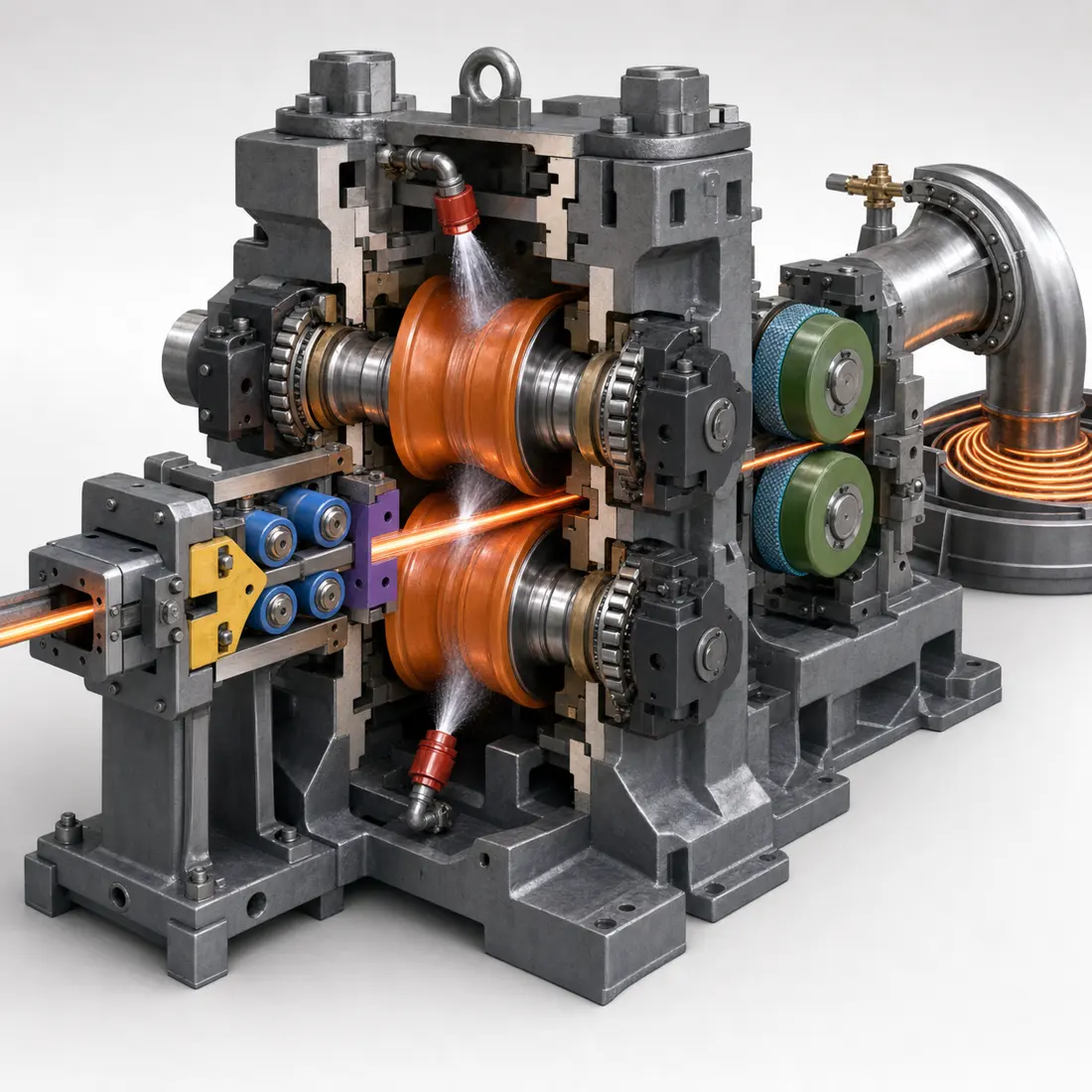
Rolling mills use rotating rolls to plastically deform billets or wire rod. The illustrations below show the positions of the mill stand, entry guides, pinch rolls, laying pipe and cooling nozzles in a high-speed wire rod unit. Confirm the actual part arrangement against the installation drawing.
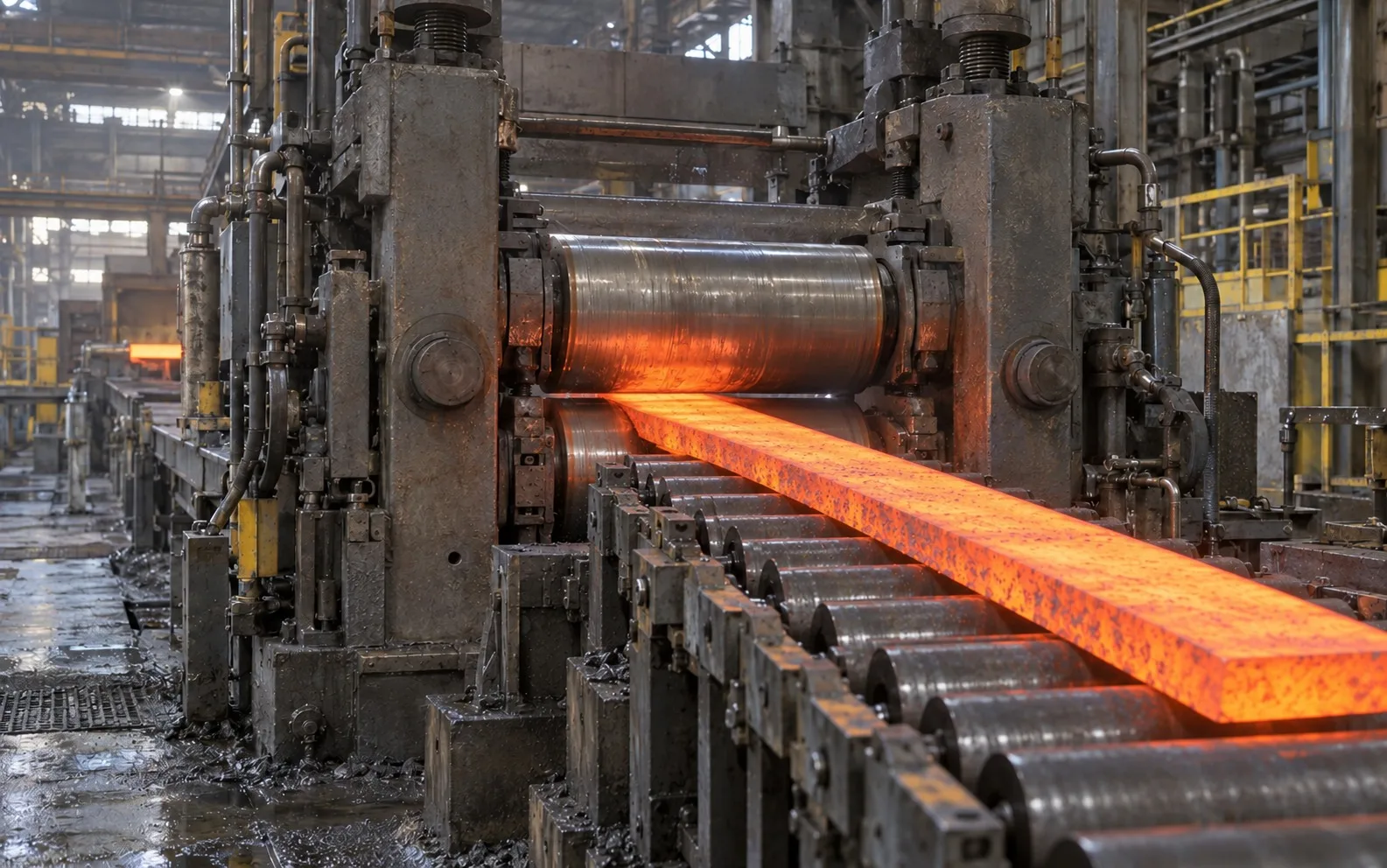
Steel Rolling Equipment

Equipment Section View

Rolling Mill Equipment cutaway illustration
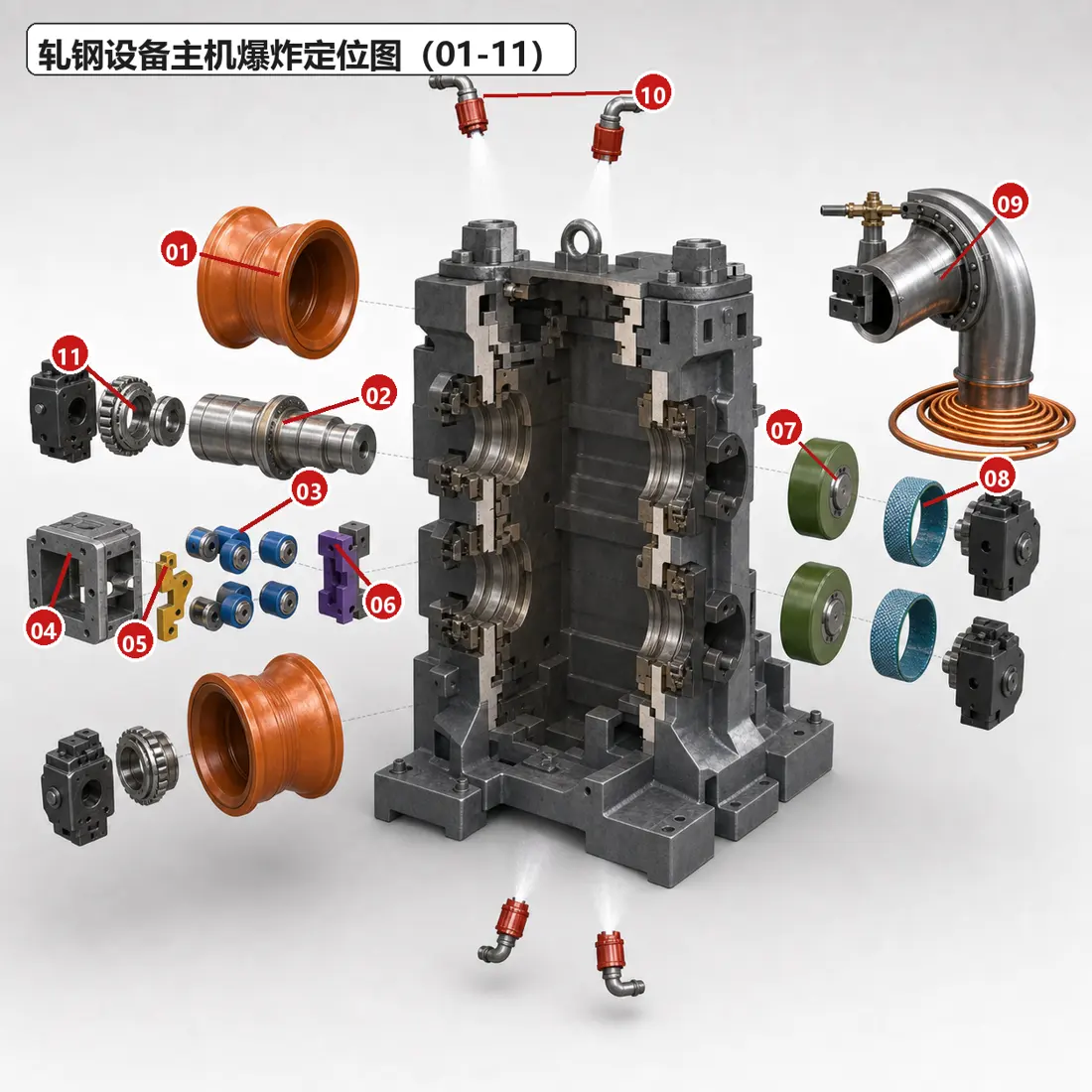
Rolling Mill Equipment exploded part location diagram

Rolling mills use rotating rolls to plastically deform billets or wire rod. The illustrations below show the positions of the mill stand, entry guides, pinch rolls, laying pipe and cooling nozzles in a high-speed wire rod unit. Confirm the actual part arrangement against the installation drawing.
Equipment Parts

Part Identification and Technical Details

Explore part names, images, material options and technical requirements. Select a card to open the corresponding replacement part page.

Major Components and Assemblies

Major Components and Assemblies

Individual and Maintenance Parts

Individual and Maintenance Parts

01

Roll Body / Barrel

Technical Requirements
Working layer: typically 65-80 HSD. Specify the hardness gradient and usable working depth for the rolled material and stand position.
02

Roll Necks

Technical Requirements
A typical candidate specification is approximately 28-36 HRC and a tensile strength of at least approximately 930 MPa. Fillets must be free of cracks.
03

Guide Roll / Guide Roller

Technical Requirements
Cemented carbide: approximately HRA 88-92; high-chromium cast iron: approximately 55-65 HRC, depending on grade and condition.
04

Guide Box / Guide Holder

Technical Requirements
ZG270-500: a tensile strength of at least approximately 500 MPa, subject to the material standard. Control hole positions and structural stiffness.
05

Guide Plate / Static Guide

Technical Requirements
Working surface: approximately 55-65 HRC, depending on material. Polish entry radii to prevent scratching the rolled product.
06

Twist Guide

Technical Requirements
Quenched and tempered base: approximately 28-36 HRC; working layer: approximately 50-62 HRC, subject to the selected material and process.
07

Pinch Roll

Technical Requirements
Working surface: typically 45-60 HRC. Control outside diameter variation, runout and clamping force across the roll pair.
08

Pinch Roll Wear Surface

Technical Requirements
Coating: typically approximately HV 900-1,400. Control bond strength, thickness and surface finish.
09

Laying Pipe

Technical Requirements
Base material: typically 48-54 HRC, depending on specification. Check bend radius, dynamic balance and continuity of the internal surface.
10

Cooling Water Nozzle

Technical Requirements
316L provides corrosion resistance. Test each nozzle for flow, spray angle and atomization consistency at the specified water pressure.
11

Bearing / Bearing Housing

Technical Requirements
Bearing raceway: approximately 60-64 HRC. For the housing, control fit tolerances, stiffness and water-cooling passages.

Materials for similarly named parts may differ by OEM, machine model and operating conditions. Confirm the machine model, OEM drawing number and measured dimensions before ordering or manufacture.

Materials for similarly named parts may differ by OEM, machine model and operating conditions. Confirm the machine model, OEM drawing number and measured dimensions before ordering or manufacture.

Equipment Manufacturers and Series

Request a Rolling Mill Equipment Wear Parts Proposal

Provide the machine model, operating conditions and target service life so our engineers can recommend materials and prepare a quotation.

Send Operating Details for a Quote

Or contact us directly: +86 156 3797 3199
zzx@anranst.com

Manufacturing Services in China

From Technical Assessment to Finished-Part Delivery

ANRANST provides customers worldwide with coordinated consulting, supplier sourcing, quality control and finished-part delivery for custom parts, wear parts and industrial spares from China, with scope to support other custom industrial parts.

01

Technical Advice

Equipment and part identification, drawing review, material selection and manufacturing feasibility assessment.

02

Supplier Introductions

Match requirements with suitable manufacturers in China and coordinate the exchange of technical information.

03

Quality Control

Drawing confirmation, material and process control, production tracking, inspection and acceptance coordination.

04

Finished-Part Delivery

Coordinate manufacturing, quality confirmation, packaging and delivery of complete finished parts.

Provide the existing model, drawings, drawing or part numbers, materials or operating conditions so we can identify the appropriate technical review and supply route.

Submit an Enquiry