
Hammers & blow bars
Hammers and Blow Bars
Impact Crusher Blow Bars, Swing Hammers and Ring Hammers
Hammers and blow bars strike the feed directly and are key crusher wear parts. Match geometry, mass, centre of gravity, material and mounting interfaces to the rotor, feed material, particle size, tramp metal risk and target product.
Main ProductsBlow bars, swing hammers, ring hammers, hammer bodies and replaceable tips
Main LoadsHigh-speed impact, bending, abrasion and cyclic loads
Key variablesFeed material, particle size, speed, tramp metal, rotor and fastening design
Identification requirementsEquipment model, drawing, dimensions, mass, material and wear records
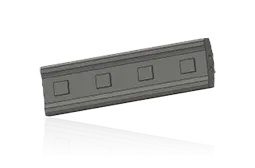
Part scopeGeometry Working and mounting faces, holes, sections and permitted wear Quality Individual mass, set mass variation and rotor balance Operating Conditions Feed material, particle size, abrasiveness, impact and tramp metal Inspection Material, heat treatment, internal defects, dimensions and mass
Identify Impact Wear Parts Separately from Supports and Fasteners
This page covers blow bars, swing hammers, ring hammers and tips that directly crush material. Identify suspension rods and discs, hammer shafts, wedges, clamp plates and fasteners separately through equipment, drive or fastening pages.
When replacing blow bars or hammer sets, check opposing-part masses, rotor balance, locking faces, pin bores, wear limits and associated fasteners. Matching the external shape alone is insufficient.
Part Details
Explore Impact Parts by Equipment
Explore the parts that directly perform impact crushing below. Find pins, wedges and support parts on the corresponding equipment pages.
Impact Crusher Blow Bars
Mounted on an HSI rotor to strike material at high speed. Check rotor model, section, locking method, material and mass matching.
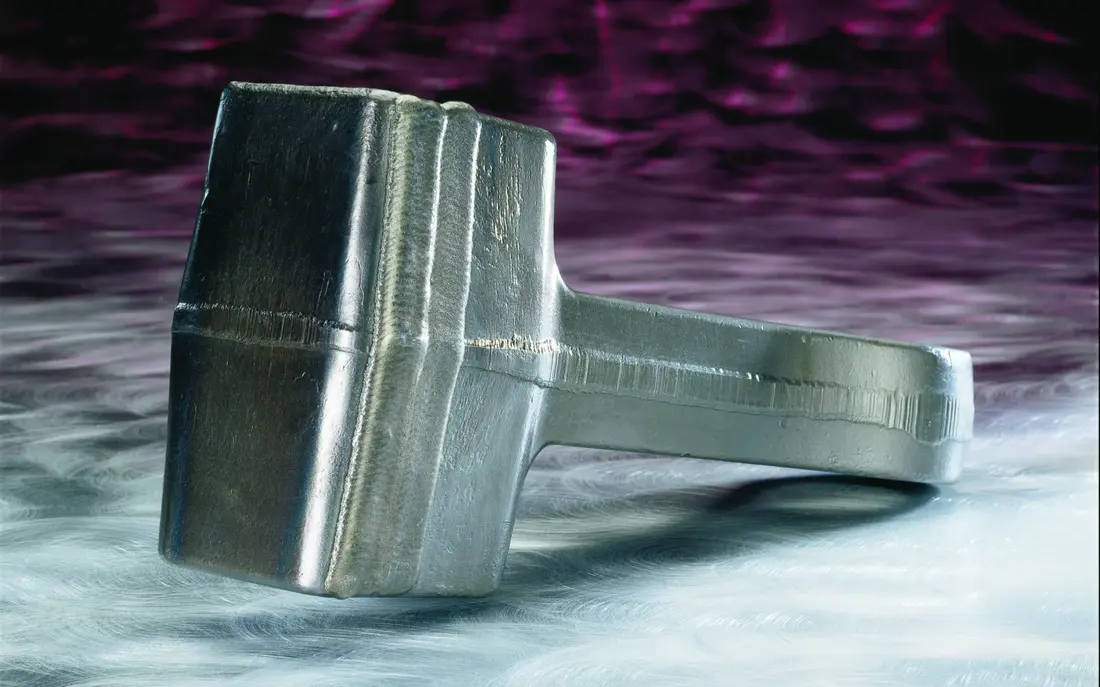
Hammer Crusher Swing Hammers
Suspended on hammer shafts to strike material. Check pin bores, working ends, mass, swing clearance and set balance.
Coalpactor Swing Hammers
For coal impact crushers; match suspension rods, suspension discs and rotor design.
Ring Granulator Hammers
Ring-shaped hammers rotate on pins and strike material. Check bores, profile, rotational clearance and set masses.
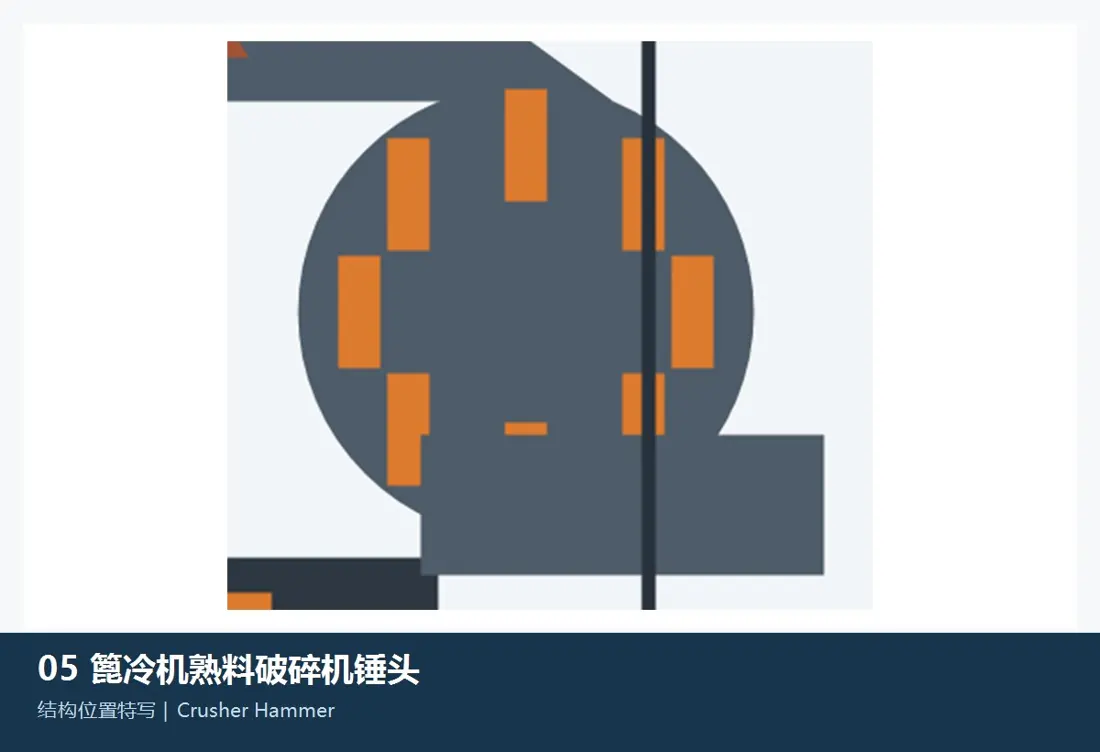
Clinker Crusher Hammer
For breaking hot or cooled clinker lumps at the grate cooler discharge. Assess temperature, abrasion and impact together.
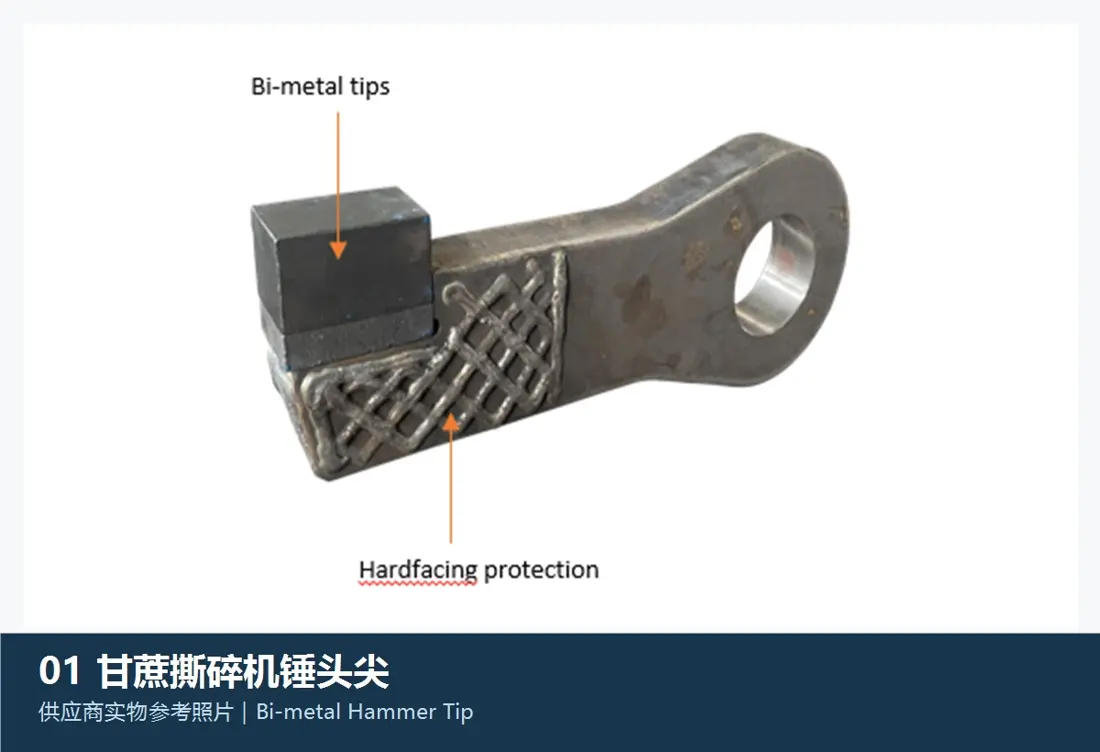
Cane Shredder Hammer Tips
Replaceable working tips fit the hammer body. Check equipment model, holes, connections, fibrous feed and contaminants, and wear mechanism.
Material Options
Balance Impact Toughness and Wear Resistance
Impact, abrasion, tramp metal and section size determine material selection. Higher hardness alone is not a sufficient criterion.
Manganese Steel For conditions requiring high impact resistance and sufficient loading for work hardening. Low-impact or fine-feed service may not develop adequate hardening.Martensitic Steel For blow bars and hammers requiring a balance of impact and wear resistance. Specify alloy, heat treatment and section hardness against feed material and tramp metal risk. High-Chromium White Cast Iron For severe abrasion with controlled impact. Hard wear surfaces also require control of matrix structure, carbides, internal defects and fracture risk. Ceramic / MMC and Bimetallic Composites A tough matrix carries the overall load, with hard reinforcement along the wear path. Specify interfaces, reinforcement positions and machining limits for the design.
Material Selection
Match Materials to Operating Conditions
Use the table to guide assessment alongside OEM drawings and operating trials.
| Operating Conditions | Priority checks | Main Risks |
|---|---|---|
| Coarse lumps, severe impact or high tramp metal risk | Toughness, section, mounting and manganese or tough steel options | Brittle fracture, pin-bore cracks and mounting-area damage |
| Moderate impact and significant abrasion | Martensitic steel or validated composite designs | Insufficient hardness or toughness |
| Fine feed, severe abrasion and controlled tramp metal | High-chromium cast iron or hard reinforcement | Impact overload, internal defects and chipping |
| Localized wear with a load-bearing matrix | Bimetallic or localized ceramic/MMC reinforcement | Incorrect reinforcement location and interface failure |
| Hot clinker or special media | Material selection for combined temperature, oxidation, thermal fatigue and impact | Thermal cracking, softening, oxidation and dimensional instability |
Inquiries and Quality Control
Hammer and Blow Bar Specification Details
Part sets must also meet mass matching and rotor balance requirements.
Equipment identification
OEM, full model, serial number, rotor model and drawing.
Feed Conditions
Feed material, particle size, moisture, abrasiveness, temperature and tramp metal history.
Part Geometry
Overall dimensions, sections, holes, mounting and locking faces, and permitted wear.
Mass and Balance
Individual mass, set mass variation, installation sequence and rotor balance requirements.
Materials and processes
Material, heat treatment, composite zones, hardness distribution and nondestructive testing.
Failure and Service Life
Wear profiles, cracks, chipping, fracture, rotation records and actual service life.
Lining selection: Metso NP guidance distinguishes manganese steel, martensitic steel, chromium-based and ceramic-reinforced blow bar options, selected by feed, abrasion, foreign objects and feed size. Supply specifications depend on installation drawings, operating conditions and the technical agreement. Metso Impact Crusher Parts
Related Equipment and Parts
Equipment, Parts and Materials
Find detailed part and material information through either OEM or general equipment pages.