
Drawing and Engineering Review
We review mating surfaces and interface dimensions and assess material, heat treatment and manufacturing feasibility.
Directly impacts and shears material, then throws it towards the central anvil, breaker wall or grinding path.
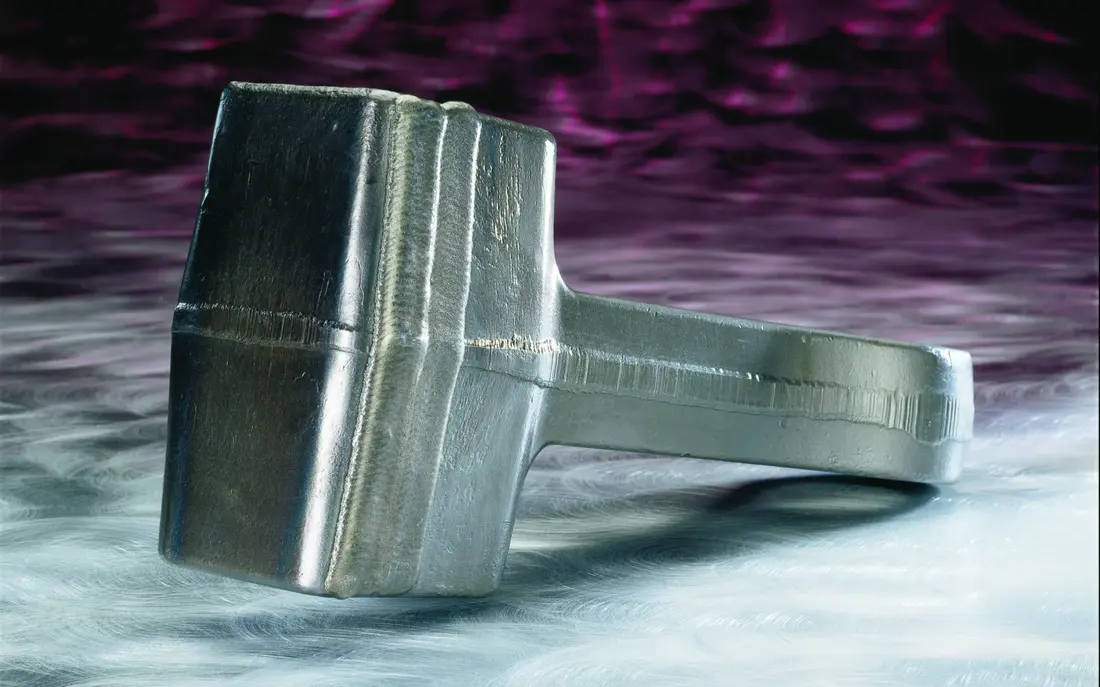
Hammers (Hammer / Swing Hammer)— Hammer Crusher Wear part, position 01.
| Material Options | Alloy steel forgings using grades covered by ASTM A322, high-manganese steel, martensitic wear-resistant steel, a high-chromium working layer, or a bimetallic design combining a tough shank and wear-resistant hammer head |
| Typical Properties and Acceptance Criteria | Select hammers for impact, abrasion and tramp-material risk. High-manganese steel commonly starts around 180–240 HB and relies on impact work-hardening. Martensitic steel can balance hardness and toughness around 40–55 HRC. High-chromium working layers are commonly around 55–65 HRC and suit highly abrasive zones only where impact is controlled. Bimetallic hammers must retain toughness at the bore and shank. Verify interface bonding, composition, heat treatment, hardness gradients, UT/MT and individual mass. |
| Principal Failure Mechanism | Impact, cutting and abrasion |
Use these links for engineering pre-selection. Final fit must be checked against the full model, serial number, drawing revision, dimensions and actual duty.
Independent aftermarket information. OEM names and trademarks belong to their owners and do not imply authorization, affiliation or endorsement. Confirm the series, full model, serial number, drawings and duty before manufacture.
Provide the machine model, operating conditions and target service life so our engineers can recommend materials and prepare a quotation.
Or contact us directly: +86 156 3797 3199
zzx@anranst.com
ANRANST provides customers worldwide with engineering assessment, production at certified foundries to the customer technical requirements, quality control and finished-part delivery for custom wear parts and industrial spares, with scope to support other custom industrial parts.
We review mating surfaces and interface dimensions and assess material, heat treatment and manufacturing feasibility.
Material grades and heat-treatment processes are specified order by order, stated in the technical agreement and tracked through production.
Drawing confirmation, material and process control, production tracking, inspection and acceptance coordination.
We coordinate manufacturing, quality confirmation, packaging and delivery of complete finished parts in a workable, closed-loop supply process.
Provide the existing model, drawings, drawing, materials or operating conditions so we can identify the appropriate technical review and supply route.
Submit an Enquiry