
Grates, screen panels & screening media
Grates and Screen Panels
Mill discharge, screening, crusher product sizing and high-temperature grates
Perforated parts serve different functions. Mill discharge grates retain grinding media while passing slurry; vibrating screen decks classify particle sizes; crusher screens control product size; and cooler grates carry clinker under airflow and thermal loads.
Main ProductsDischarge grates, modular screen panels, wire mesh, crusher screens and cooler grates
Key geometryAperture shape and size, open area, thickness, curvature and mounting interface
Main materialsWear-resistant steel, rubber, polyurethane, metal wire and heat-resistant cast steel
Identification requirementsEquipment, drawing, screening target, material, temperature and wear records
Product ScopeScreening / discharge Target particle size, flow rate, open area and blinding tendency Construction Plate thickness, curvature, segmentation, support, tensioning and mounting method Operating Conditions Impact, abrasion, moisture, corrosion, temperature and process media Acceptance Material, aperture shape, dimensions, flatness, fit and identification
Group parts by equipment function before selecting materials and apertures
Mill grates, vibrating screen decks, crusher screens and high-temperature grates have different loading, mounting and flow requirements. Length, width or aperture size alone does not establish interchangeability.
Within each machine, identify grate bodies, supports, pulp lifters, clamping strips, tension hooks, rail seats and fasteners separately. We can organise supply as individual parts, associated wear systems or assemblies with a customer-confirmed scope.
Part Details
Find grates and screens by equipment
Open the relevant product page to check OEM models, drawing and material requirements.
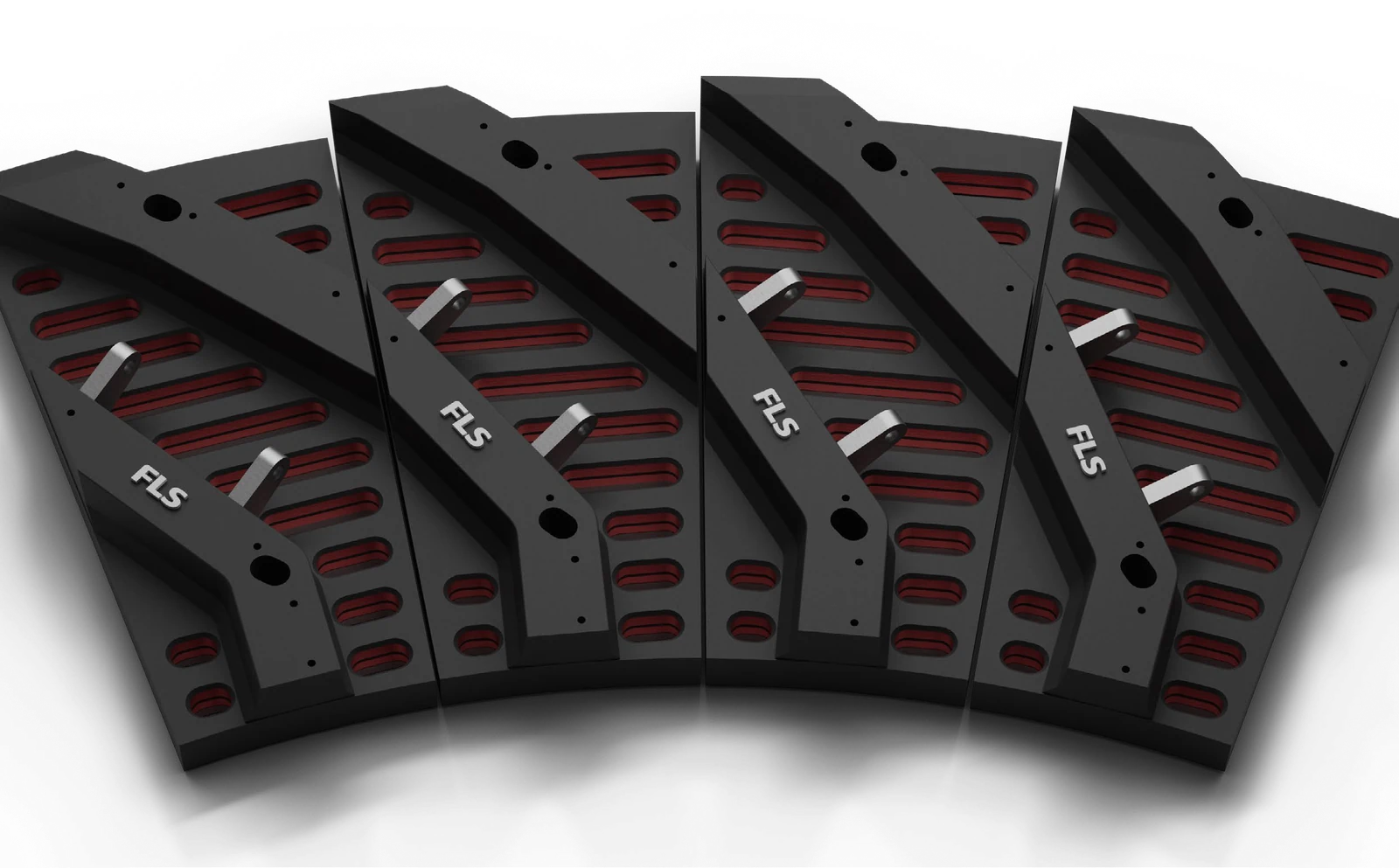
SAG mill discharge grate
Retain grinding media while allowing slurry into the discharge system. Aperture geometry, open area, pulp lifters and the discharge cone jointly influence discharge capacity.
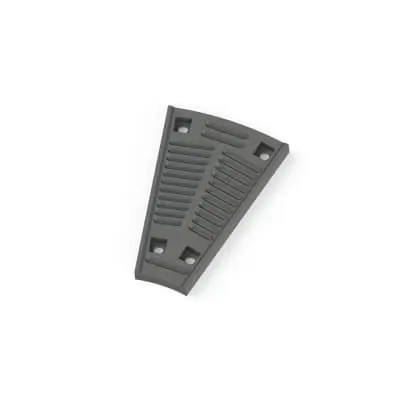
Ball Mill Discharge Grates
For the discharge end of grate-discharge ball mills. Distinguish these from overflow mills and check the actual discharge structure, ball size and slurry conditions.
Modular Polyurethane Screen Panels
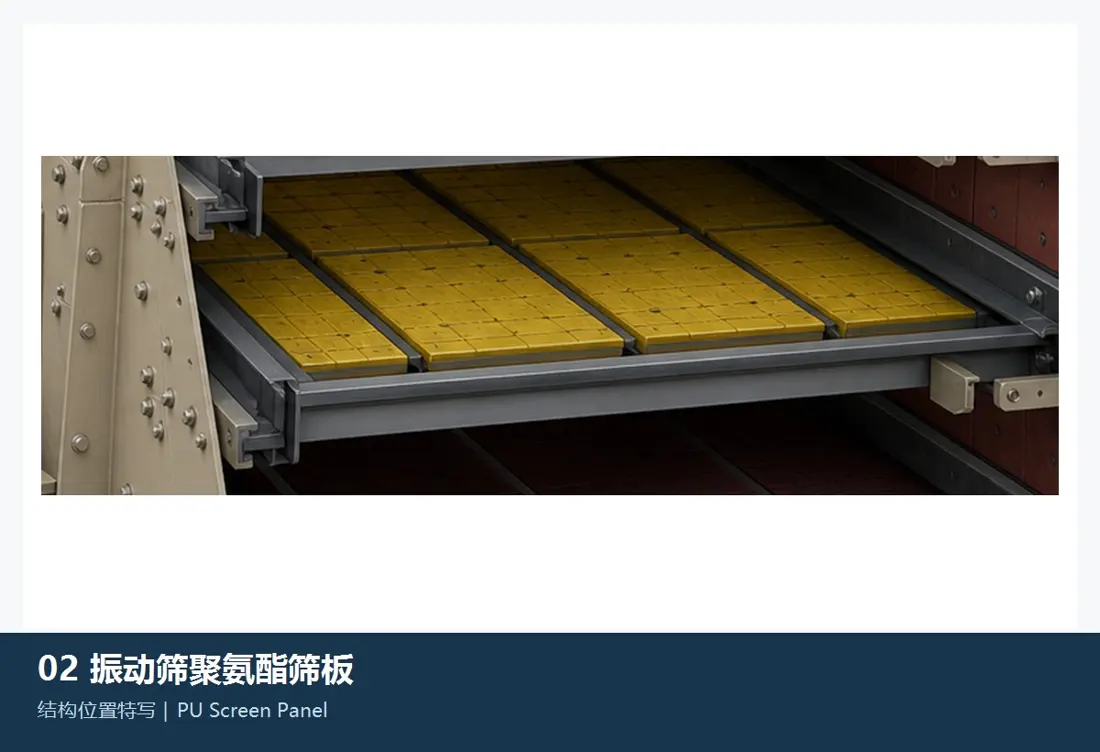
Modular screening surfaces for suitable wet or dry duties. Check aperture shape, open area, modules, rail seats and locking systems.
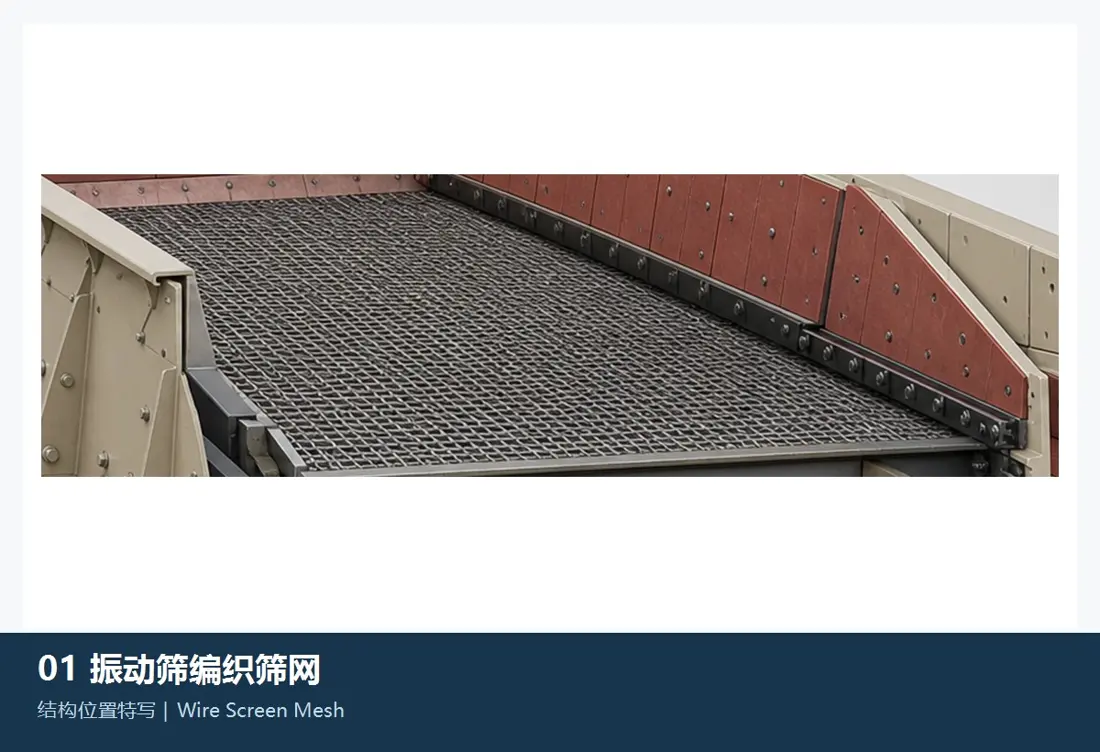
Woven Wire Screen Mesh
Offers high open area and a wide range of specifications. Check wire diameter, weave, tension direction, hook edges and support spacing as a complete system.
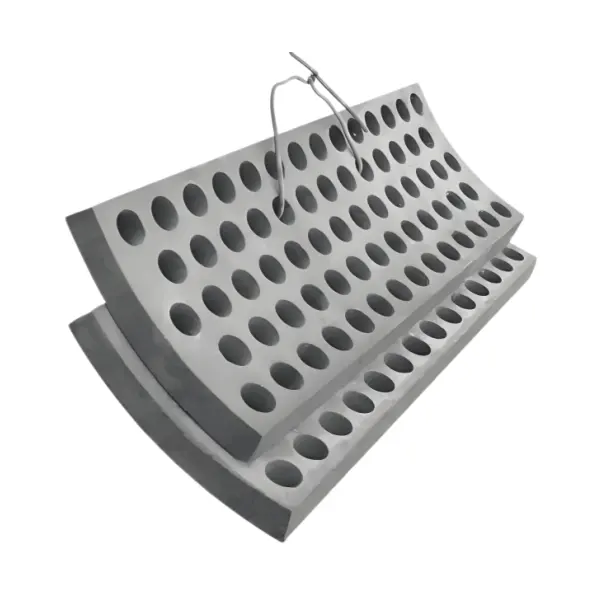
Hammer Crusher Screens / Grates
Installed below the rotor to control discharge size. Check curvature, apertures, clearance, support and impact wear.
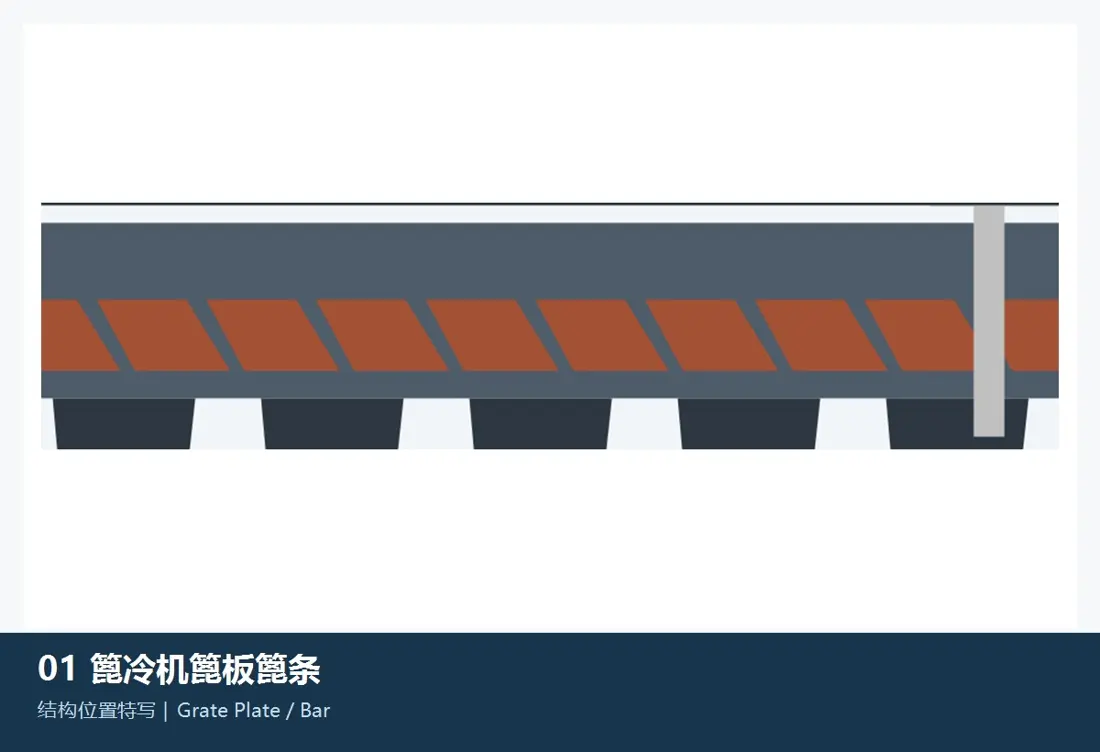
Cooler Grate Plates / Bars
Carry clinker and distribute cooling air. Material and structural selection must account for temperature, thermal cycling, abrasion, material leakage and ventilation together.
Bradford Breaker Screen Plates / Perforated Plates
Screening surfaces on the drum shell. Confirm drum diameter, plate curvature, apertures, joints and wear direction.
Granulator Screens / Grates
Work with the rotor, hammers and discharge clearance to control the product. Confirm the structure using the full equipment model and original drawing.
Material Options
Match materials to equipment positions and failure modes
Use material families for preliminary selection. Determine the grade, hardness, thickness and structure from drawings and operating conditions.
Functional checks
Apertures, open area and fastening determine performance
Changing apertures or materials within the same external shape can alter capacity, particle size, blinding, wear and operational safety.
| Product type | Core function | Required Checks |
|---|---|---|
| Mill discharge grates | Retain grinding media, pass slurry and connect to the pulp-lifting system | Mill type, ball size, aperture shape, open area, segmentation and discharge system |
| Modular rubber / polyurethane screen panels | Classify particles and help reduce blinding, noise or maintenance weight | Screen, aperture shape, module dimensions, rail seats, attachment and feed moisture |
| Woven Wire Screen Mesh | Wet or dry screening with relatively high open area | Wire diameter, material, weave, tensioning, hook edges, support and fatigue |
| Crusher screens / grates | Control discharge size while resisting impact and wear near the rotor | Curvature, discharge clearance, aperture shape, support, foreign objects and permissible wear |
| High-temperature grates | Support material and distribute cooling or process air | Temperature, thermal cycling, air openings, oxidation, material leakage, loads and installation joints |
Inquiries and Quality Control
Information for grate and screen identification
When measuring used parts, record unworn datums and in-service deformation. Do not reproduce worn apertures as original dimensions.
Equipment identification
OEM, full model, serial number, installation deck / zone, left/right side or feed/discharge position.
Drawings and segmentation
Drawing or sample, revision, individual panel profile, curvature, hole pattern, segmentation drawing and adjacent-part relationships.
Screening parameters
Target particle size, aperture shape, open area, throughput, feed material and moisture.
Fastening system
Bolts, clamping strips, rail seats, locking clips, tension hooks, support spacing and pretension.
Materials and duty
Impact, abrasion, temperature, corrosion, existing material, hardness and composite construction.
Failure records
Aperture enlargement, blinding, tearing, loosening, fracture, deformation and actual service life.
Lining selection: Metso mill lining literature treats grates, pulp lifters and discharge cones as a complete discharge system, with rubber, metal and composite options. Its screening media literature distinguishes rubber, polyurethane, woven wire and their mounting systems. Metso Mill Lining Solutions · Metso Screening Media
Related Equipment and Parts
Equipment, Media and Materials
Use equipment structure and OEM model links to reach the relevant product page, then review materials and operating conditions.
SAG Mills Discharge grates, pulp lifters, liners and drive systems. Ball Mills First distinguish grate-discharge and overflow configurations. Vibrating Screen Screen decks, tensioning, rail seats, supports, feed and discharge systems. Rubber and Polyurethane Relationships between elastomers, metal reinforcement and wear locations.