
BALL MILL MAIN BEARING / BEARING PAD / HOUSING
Ball Mill Main Bearings, Bearing Shells and Housings
Trunnion journal support system · Check bearing shells, pads, housings, seals and lubrication separately
The main bearings support the ball mill shell and trunnions. A stable oil film controls friction, temperature rise and load distribution. ANRANST provides bearing identification, shell and housing drawing review, material assessment, quality control and complete-set delivery.
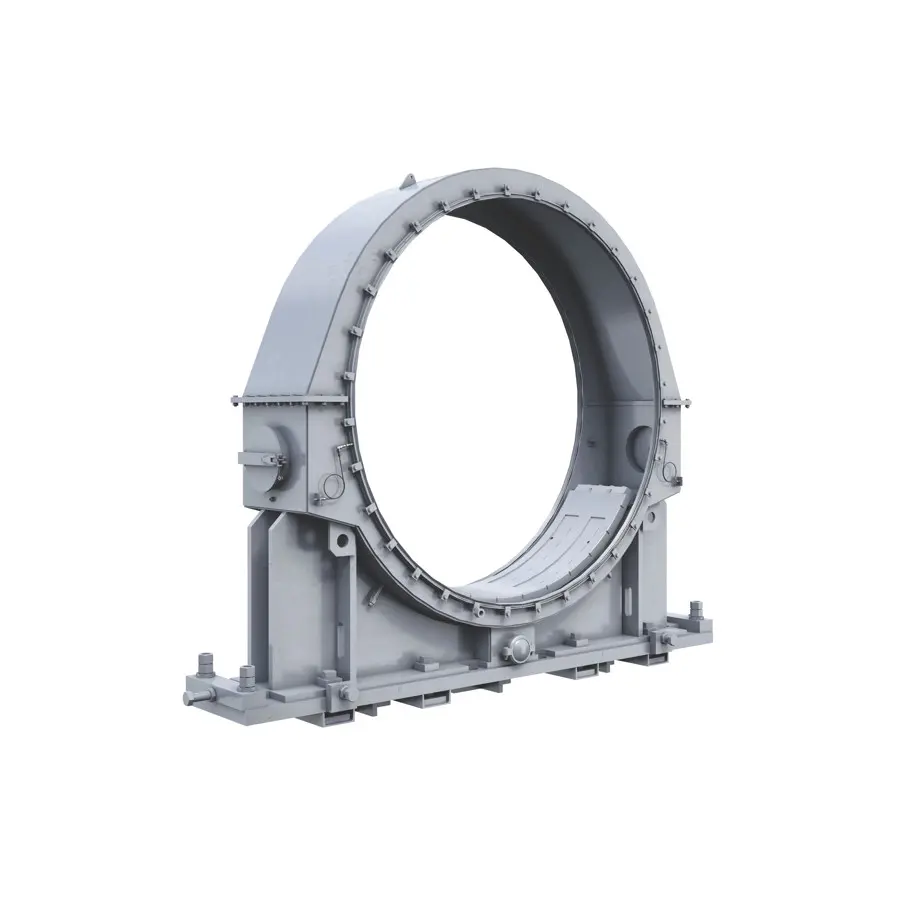
System scope Bearing Shell or Radial Pad Supports radial journal loads and forms the oil film Axial Pad or Thrust Face Provides axial location in the fixed-end configuration Bearing Housing Welded structure or other design specified by the drawing; distinct from the bearing shell material Sealing and Lubrication Oil supply and return, cooling, filtration, sealing and monitoring
Distinguish the Bearing Layer, Load-Bearing Housing, Journal and Lubrication System
Bearing shells or pads form a sliding bearing and oil film against the trunnion journal. The housing carries and transfers structural loads. Seals exclude slurry and dust, while the lubrication or hydraulic system controls oil flow, pressure and temperature.
The term "bearing bushing" is insufficient to identify the part. Specify whether the inquiry concerns a bearing shell, radial pad, axial pad, housing, seal, oil circuit assembly or complete main bearing assembly.
Position and Performance
Reliability Depends on Loads, Oil Film, Alignment, Thermal Expansion and Contamination Control
Inspect the main bearing as a complete system of journal, bearing layer, housing, oil circuit and seals.
Radial Load-Bearing Area
Carries the weight of the shell and charge. Check contact pressure, oil film, contact distribution, temperature rise and edge loading.
Axial Locating Area
The fixed end restrains axial movement. Check axial pads, clearance, thermal expansion, axial displacement and thrust direction.
Journal Mating Surface
Runs against the bearing shells or pads. Verify diameter, roundness, taper, roughness and damage.
Oil Passages and Pockets
Provides the hydrodynamic or hydrostatic oil film. Check pressure, flow, temperature, filtration, cleanliness and oil return.
Housing and Foundation Interface
Transfers loads and maintains alignment. Check split faces, housing bores, coaxiality, base contact, anchor bolts and deformation.
Sealing and Monitoring
Excludes slurry, dust and moisture. Check seal construction, leakage, and temperature, pressure and vibration monitoring.
Materials and Manufacturing Processes
Bearing Layers, Pads and Housings Have Different Material Requirements
Assess materials together with the journal, loads, speed, oil film, contamination and maintenance configuration.
Select the bearing layer material together with the journal and lubrication system. Define the grade, layer thickness, hardness, clearance, oil pressure, oil flow and acceptance criteria in the drawings and technical agreement.
Failure Diagnosis
Investigate Oil Film, Contamination and Alignment Alongside Material Condition
For any bearing shell failure, also inspect the journal, oil supply, cooling, seals, alignment and operating records.
| Observed condition | Priority checks | Improvement Options |
|---|---|---|
| Sustained bearing temperature rise | Oil flow, pressure, viscosity, cooling, clearance, loads, alignment, contamination and sensors | Restore the designed oil film and thermal balance, and verify load distribution |
| Scoring, adhesive damage or localized melting | Oil supply interruption, starting conditions, journal defects, contact, clearance, material and abnormal loads | Restore the journal and oil supply, and reinstate the correct bearing layer and contact |
| Fatigue cracks, spalling or delamination | Bearing layer bond, thickness, cyclic loads, edge contact, temperature and manufacturing defects | Improve bond quality, load distribution and nondestructive inspection |
| Oil contamination, slurry ingress or seal leakage | Seals, breathers, filtration, oil return, liquid buildup in the housing, journal and adjacent trunnion liner | Restore sealing and cleanliness control to prevent contamination damage to the bearing surface |
| Axial movement, vibration or uneven loading | Fixed or floating end, axial pads, foundation, housing, alignment, thermal expansion and trunnion condition | Restore axial location, alignment and allowance for thermal movement |
Drawings and Inquiry Details
Identify Bearing Type and End Configuration Before Checking Shells, Housings and Oil Circuits
Provide the drawing or spare model details, identifying the exact part and drawing revision.
Equipment identification
OEM, series, complete model, serial number, shell diameter, EGL, power, speed and modification history.
Bearing Type and End Configuration
Hydrostatic or hydrodynamic, shells or pads, fixed or floating end, feed or discharge end, radial or axial position.
Drawing and Revision
Assembly drawing, shell or pad drawing, housing drawing, seal number, sample, revision and physical markings.
Journal and Bearing Layer Dimensions
Journal diameter and width, roundness, taper, roughness, bearing shell inside and outside diameters, layer thickness, clearance and contact.
Housing and Interfaces
Housing bore, split faces, base, anchor bolts, oil ports, oil return, seals, cooling, sensors and piping.
Operating and Failure Information
Loads, oil pressure, flow, temperature, lubricant type, cleanliness, vibration, alarms, failure photographs and journal inspection.
Related Equipment and Parts
Related Trunnions, Equipment, OEM Systems and Bearing Materials
The general page explains support and material selection. The OEM page identifies the installed system, while drawing, journal data and lubrication parameters complete the technical review.
Trunnion Liner Distinguish the protective liner inside the bore from the external journal support system. General Bearing and Bushing Catalogue View rolling bearings, bearing shells, bushings and bearing housings. General Ball Mills Information Explore the relationship between supports, shell, heads and drive system. Metso Ball Mills Identify the system from the Select / Premier model and bearing configuration. FLS Ball Mills Identify drawing from the brand, equipment series and installed-machine details. Bearing Steels, Copper Alloys and Plain Bearing Materials Explore material selection for bearing shells, bearing layers, journals and lubrication conditions.