
HPGR HYDRAULIC CYLINDER SEAL KIT
HPGR Hydraulic Cylinder Seal Kits
Sealing systems for loading and roll-gap control cylinders · Identify by profile, groove and fluid
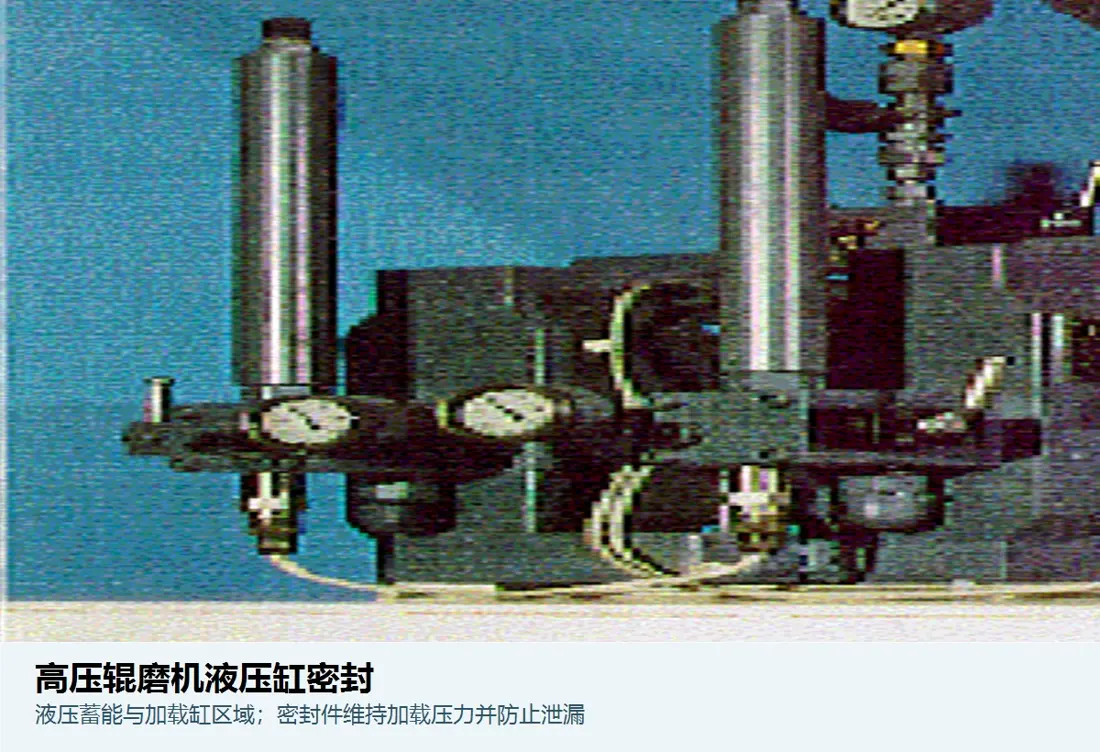
Cylinder seal kits may include piston seals, rod seals, wipers, guide rings, bearing rings and static seals. ANRANST checks cylinder position, bore, rod diameter, stroke, grooves, pressure, fluid, temperature, speed, seal profile and drawing. Outside diameter or colour alone is insufficient for replacement selection.
System function Seal identification Piston seal, rod seal, wiper, guide ring, bearing ring or static seal Geometry identification Bore and rod diameters, groove, seal profile, lip and chamfers Operating conditions Pressure, temperature, speed, stroke, fluid and cycle frequency Kit identification Quantities per cylinder/machine, position sequence and associated rings
Maintain pressure, control leakage and guide piston and rod movement
Piston seals separate pressures on either side of the piston; rod seals limit external leakage; wipers exclude contamination; guide rings carry side loads and prevent metal contact; static seals serve end covers and connections.
Seal life depends on material, groove geometry, chamfers, surface roughness, concentricity, clearances, fluid cleanliness and installation procedures.
Position and Performance
Each sealing element has a distinct function and requires the correct profile
Check the complete kit to avoid omitting guide rings, back-up rings or static seals.
Piston seals
Separate pressure between the cylinder chambers. Check double- or single-acting design, groove, pressure, clearance and extrusion risk.
Rod seals
Control leakage along the rod. Check lip orientation, rod diameter, surface condition, eccentricity and fluid return conditions.
Rod wipers
Prevent dust and particles from entering the cylinder. Match the external contamination, temperature, rod surface and installation groove.
Guide rings and bearing rings
Carry side loads and prevent metal contact. Check band width, thickness, split gap, clearance and material.
Static seals and back-up rings
Identify O-rings, bonded seals and back-up rings at end covers, connections and high-pressure gaps using groove dimensions, pressure and fluid.
Complete kit installation sequence
Use the sectional drawing to record each seal's sequence, orientation and quantity. Keep removed seals labelled by position.
Materials and Mating Surfaces
Match materials to the fluid, temperature, pressure and moving surfaces
Material families support selection. Confirm compound, hardness and seal profile against drawings and seal manufacturer data.
Selection sequence: pressure, fluid, temperature and speed → seal loading and friction → material and profile → grooves and surfaces → clean installation → leakage and service-life records.
Failure Diagnosis
Distinguish external leakage, internal leakage, extrusion, wear and thermal damage
Inspect the cylinder bore, rod, guides and hydraulic fluid before replacing seals.
| Observed condition | Priority checks | Improvement Options |
|---|---|---|
| External leakage at the rod | Rod seal, wiper, lip orientation, rod scoring, eccentricity, pressure peaks and fluid return | Inspect seals, rod surface and guides as a system |
| Poor pressure retention or internal leakage | Piston seals, bore surface, grooves, clearances, temperature, fluid and valve block | Distinguish seal bypass from internal leakage in hydraulic components |
| Extruded or cut seal edges | Pressure peaks, mating clearances, back-up rings, chamfers, installation tools and material strength | Restore clearances and back-up ring arrangements, and improve installation lead-ins |
| Seal hardening, softening or swelling | Fluid compatibility, temperature, contamination, idle periods and material batch | Reselect materials for the actual fluid and temperature |
| Uneven wear, damaged guide rings or cylinder scoring | Side loads, concentricity, guide clearance, rod bending and contaminant particles | Repair guides and moving surfaces before replacing seals |
Drawings and Inquiry Details
Identify seal kits by cylinder position, groove, profile and duty
Without a reliable drawing, provide cylinder sections, photographs of old seals by position and groove dimensions. Do not rely solely on measurements of deformed used seals.
Equipment and cylinder position
OEM, full model, serial number, cylinder function, installation position, cylinder reference and quantity.
Bore and rod diameters
Bore diameter, rod diameter, stroke, operating speed, mounting arrangement and piston/rod guide structures.
Grooves and profiles
Groove diameter, width, depth, chamfers, clearances, seal profile, orientation and kit sequence.
Drawing or sample and used parts
drawing, customer model details, revision, old-part markings, colour and photographs by position.
Fluid and duty
Fluid designation, temperature, operating/peak pressure, cycle frequency, ambient dust and shutdown conditions.
Failures and surfaces
Leak location, time in service, seal damage, bore/rod roughness, scoring, plating and contamination.
Related Equipment and Parts
Connect hydraulic seals with HPGR equipment, OEM installations and seal materials
This page covers sealing systems and failure identification. Use OEM equipment pages to confirm the series, model and hydraulic configuration.
General High Pressure Grinding Rolls Information Review hydraulic loading, floating roll movement and roll-gap control. Metso HRC / HRCe Check HRC / HRCe models and hydraulic system positions. FLS HPGR Identify hydraulic part drawing through the FLS equipment series. thyssenkrupp Polysius HPGR Check cylinders and seal kits through the brand's equipment series. Sealing Elastomers and Engineering Plastics Review material selection for fluid, temperature, pressure and speed. Rubber and Polyurethane Review polyurethane and elastomer abrasion resistance, elasticity and environmental compatibility.
ANRANST is an independent wear-parts engineering team. OEM names and trademarks belong to their respective owners. Before ordering, confirm the full model, cylinder position, drawings, grooves, fluid, pressure, temperature and operating conditions.