
HPGR DISCHARGE CHUTE LINER
HPGR Discharge Chute Liners
Wear protection for cake discharge, sliding and downstream transfer · Identify by zone and plate number
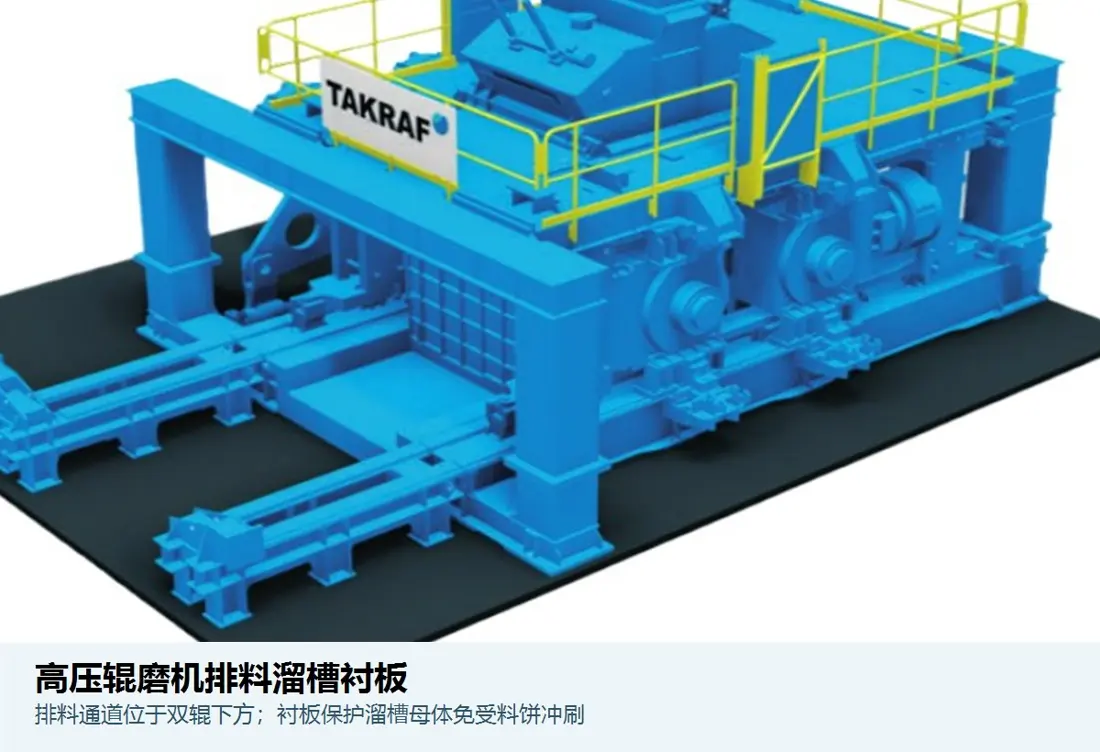
Discharge liners protect the area beneath the roll gap, the cake landing point and downstream transfer chutes. ANRANST checks plate numbers, orientation, profiles, hole patterns, materials, wear records and drawing separately for impact, sliding, flow-turning and buildup zones.
System function Zone identification Impact, sliding, flow-turning and buildup zones Plate identification Plate number, left/right orientation, upper/lower position and layout sequence Geometry identification Profile, thickness, hole pattern, recessed holes, joints and datums System identification Backing plate, fasteners, clamping plates, shims and adjacent liners
Receive the cake and protect discharge and transfer structures
HPGR discharge may include relatively intact cakes, loose particles and recirculated material. Impact dominates at the landing point, while sliding abrasion dominates on inclined surfaces. Flow changes and narrow passages can also cause concentrated erosion, buildup and uneven flow.
Select materials by location. Plate orientation, joints, fastener protection and support beneath the plate also directly affect service life and the scope of replacement work during shutdowns.
Position and Performance
Cake impact, sliding and flow-turning zones require different properties
Define zones from actual material flow and wear patterns before selecting materials.
Landing zone beneath the roll gap
Receives falling cake or particles directly. Check drop height, particle size, impact angle, support beneath the plate and toughness.
Inclined sliding zone
Subject to continuous sliding abrasion. Check flow angle, velocity, surface wear resistance and erosion at joints.
Flow-turning erosion zone
Changes in flow direction concentrate local velocity and wear. Use wear patterns to adjust the profile, material and module boundaries.
Sidewall and uneven-flow zones
Differences in wear between sides may indicate uneven feed or discharge. Record both sides and inspect upstream operation.
Buildup and blockage zones
Wet or sticky material can cause buildup, rebound and abnormal loads. Check surfaces, clearances and cleaning methods.
Fastening and modular replacement
Recess protection, bolts, joints and liner layout affect loosening risk and maintainability.
Materials and Manufacturing Processes
Select wear-resistant and cushioning systems for each zone's failure modes
Confirm material grade, thickness, hardness and service-life targets against drawings, used parts and operating evidence.
Selection sequence: cake condition and drop height → impact, sliding, flow changes and buildup → failures by location → materials and modules → drawings and inspection → layout and fastening → service-life records.
Failure Diagnosis
Establish the material flow from wear patterns before changing materials and structure
Different service lives at different plate positions in the same chute provide useful engineering information.
| Observed condition | Priority checks | Improvement Options |
|---|---|---|
| Cratering, plastic deformation or fracture at the landing point | Cake size, drop height, impact angle, support beneath the plate, material toughness and thickness | Improve impact-zone support, profile and material selection |
| Rapid thinning on inclined surfaces or at flow changes | Flow velocity, abrasiveness, angle, surface material and joint orientation | Adjust materials and module boundaries by wear zone |
| Composite block or ceramic detachment | Matrix, bonding, rubber layer, impact level, edge protection and installation | Reassess impact limits and composite construction |
| Cracking around holes or fastener failure | Hole recesses, edge distances, preload, support, impact, corrosion and material toughness | Improve hole-area design and fastener protection |
| Buildup, blockages or abnormal rebound | Moisture, cake condition, chute angle, surface friction, cross-section and cleaning access | Restore stable discharge before evaluating material service life |
Drawings and Inquiry Details
Identify liners using assembly positions, layout drawings, individual dimensions and operating conditions
Record confirmed drawing and customer model details together. Manufacture to the controlled drawing revision.
Equipment and discharge system
OEM, full model, serial number, discharge chute structure, modifications and downstream equipment.
Location and plate number
Position beneath the roll gap, on inclines, at flow changes or on sidewalls; left/right orientation, plate number, quantity and layout drawing.
Profile and hole pattern
Length, width, thickness, curved and inclined surfaces, hole diameters and spacing, recesses, joints and mounting datums.
Drawing or sample and materials
drawing, customer model details, revision, material layers, hardness and manufacturing process.
Fasteners and associated parts
Bolts, nuts, washers, clamping plates, shims, plug welds or other attachment methods, and locking requirements.
Operating conditions and service life
Cake condition, particle size, moisture, drop height, throughput, service life by position, wear measurements and photographs.
Related Equipment and Parts
Connect discharge liners with HPGR equipment, OEM installations and materials
Use this page to identify general structures, materials and failure modes. OEM equipment pages help establish the series, model and installation position.
General High Pressure Grinding Rolls Information Review the relationship between the roll gap, cake and discharge path. HPGR Feed Chute Liner Compare feed-zone and discharge-zone duties on the same machine. Metso HRC / HRCe Check HRC / HRCe models and the installed discharge-zone arrangement. FLS HPGR Identify discharge liner drawing through the FLS equipment series. thyssenkrupp Polysius HPGR Check chute structures and plate numbers through the relevant brand's equipment series. Ceramic and Carbide Composites Review composite selection criteria for highly abrasive zones with controlled impact.
ANRANST is an independent wear-parts engineering team. OEM names and trademarks belong to their respective owners. Confirm the full model, serial number, drawings, dimensions and actual operating conditions before manufacture.