
What other names or designations is the Wet trommel known by?
The Wet trommel is also documented under these designations: KVS Maxton Wet Cylindrical Screen, Maxton screen, Wet-Pulp Screening Device.
Wet rotary screen · 1919-04-26 · 1 model
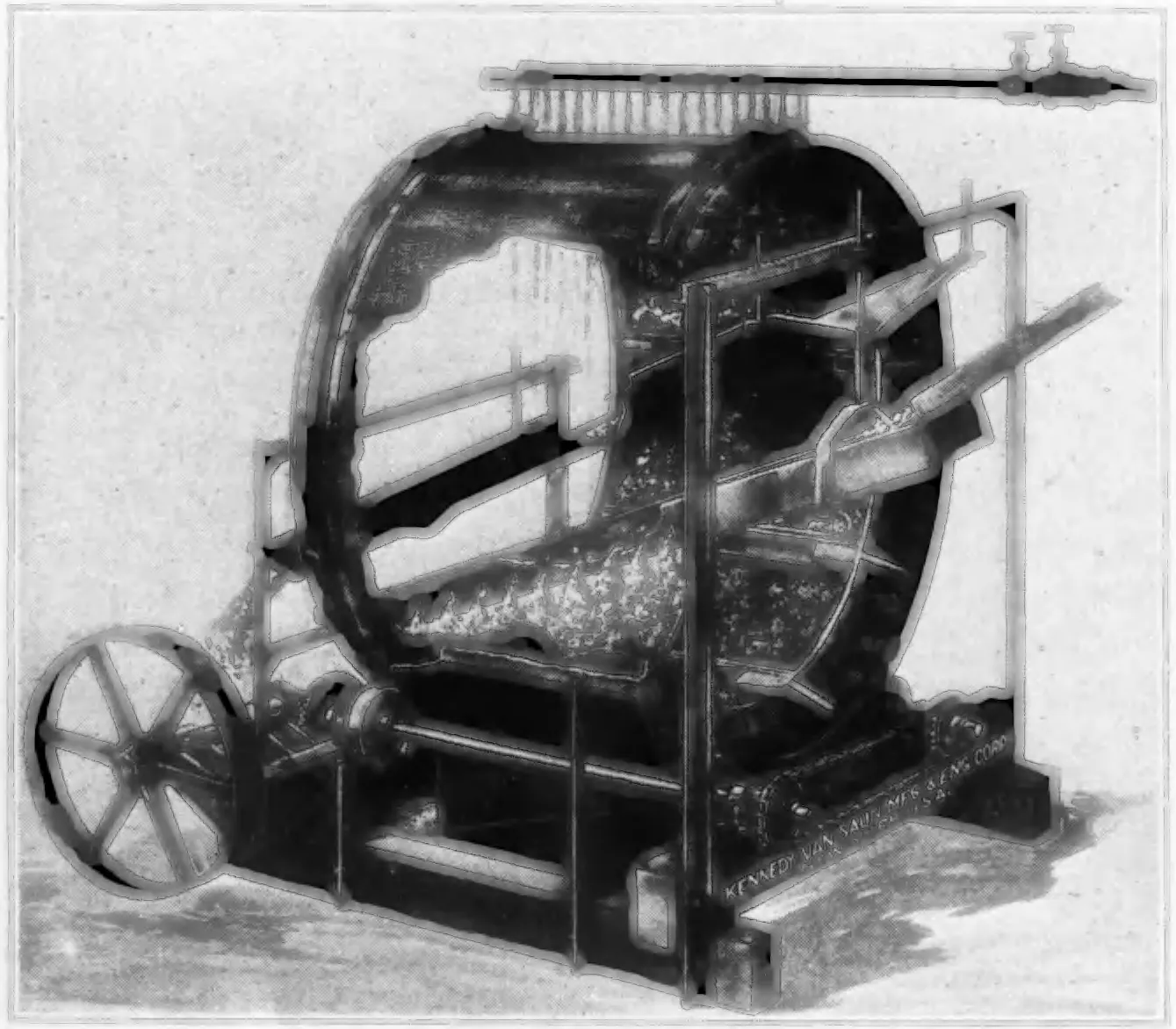
Select a model to jump to its component table; former and renamed designations are listed under “Historical names / renamings”.
| Model | Historical names / renamings | Period | Components |
|---|---|---|---|
| KVS Maxton Wet Cylindrical Screen | Maxton screen; Wet-Pulp Screening Device | 1919-04-26 | 11 |
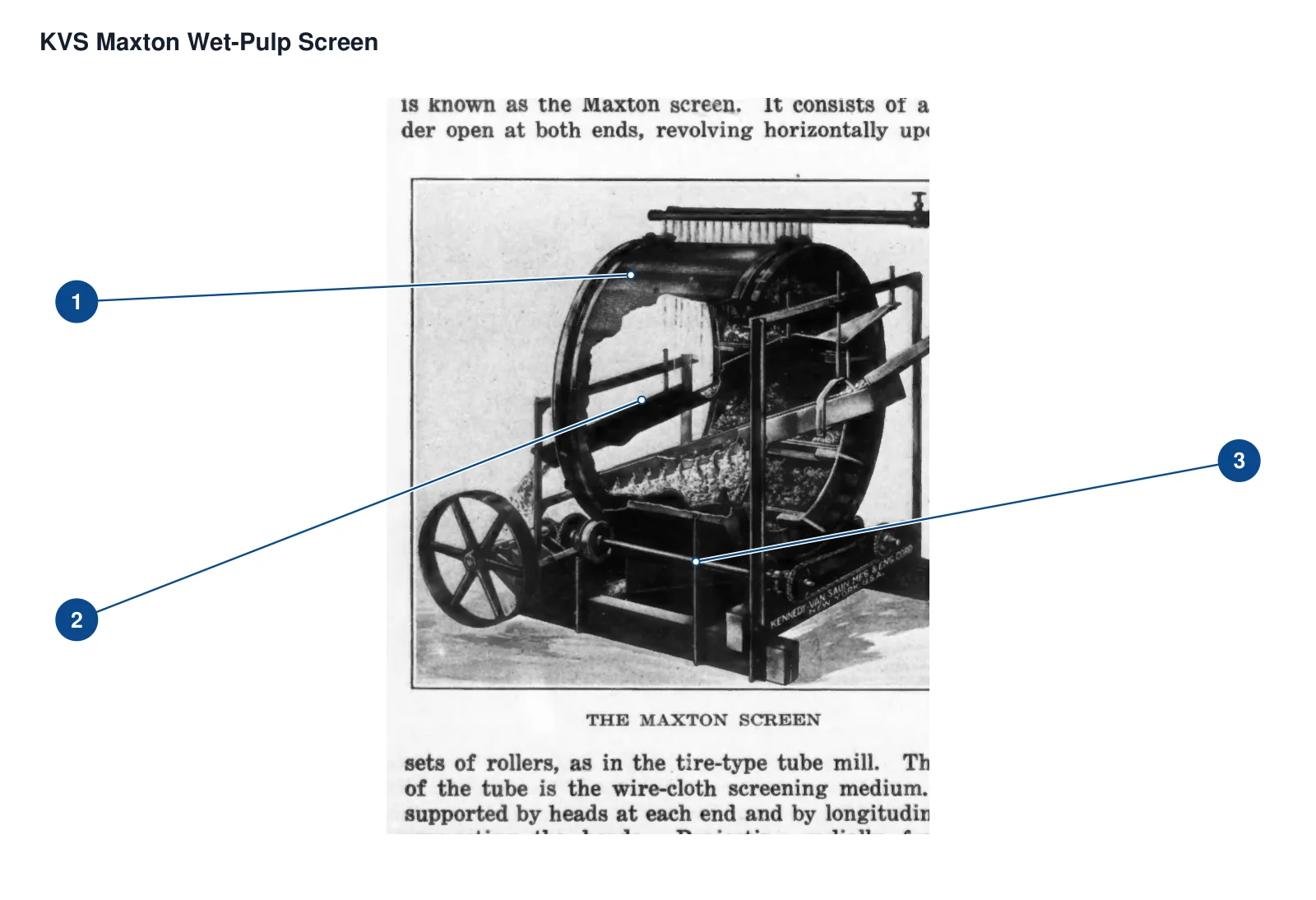
The numbers on the diagram correspond one to one with the rows below.
| No. | Component | Location | Applies to |
|---|---|---|---|
| 1 | Wire screening cloth | Visible screening surface around the drum | Named Maxton installation in 1919 publication; commercial dimensions not specified |
| 2 | End support heads | Annular support at the near drum end | Named Maxton installation in 1919 publication; commercial dimensions not specified |
| 3 | Full-length feed distribution trough | Longitudinal feed trough beside the drum | Named Maxton installation in 1919 publication; commercial dimensions not specified |
| Component |
|---|
| Two sets of supporting rollers |
| Longitudinal connecting rib |
| Radially inward extending lifting ribs |
| Inclined guide plate |
| Collection tray under the screen |
| Discharge chute on screen |
| Upper double water spray pipe |
| Additional water spray pipe (optional) |
Models with the same components are grouped together; select a group to open its component table.
| No. | Component | Location |
|---|---|---|
| 1 | Wire screen | Rotary cylindrical screen body |
| 2 | End support head | Both ends of the screen drum |
| 3 | Full length feed distribution trough | Cylinder low entrance along the length direction |
| Two sets of supporting rollers | Rolling bearing under the cylinder | |
| Longitudinal connecting rib | Between the support heads at both ends | |
| Radially inward extending lifting ribs | Inner wall of screen cylinder, longitudinal extension | |
| Inclined guide plate | Between the feed trough and the screen surface | |
| Collection tray under the screen | Below the rotary screen surface | |
| Discharge chute on screen | Above the feed inlet trough | |
| Upper double water spray pipe | Above the screen surface | |
| Additional water spray pipe (optional) | Below or beside the feed chute |
The Wet trommel is also documented under these designations: KVS Maxton Wet Cylindrical Screen, Maxton screen, Wet-Pulp Screening Device.
The Wet trommel is listed under the Kennedy Van Saun brand as: Wet rotary screen. Period: 1919-04-26. Status: Historical model.
11 components are recorded, including: Wire screen, Two sets of supporting rollers, End support head, Longitudinal connecting rib, Radially inward extending lifting ribs, Full length feed distribution trough, Inclined guide plate, Collection tray under the screen and more. The full list with locations is in the components table on this page.
Send us a drawing or sample and tell us the equipment model and part name.
Provide the equipment model, drawing for engineering review and quotation. If service life or wear is a concern, describe the operating conditions as well.
Or contact us directly: +86 156 3797 3199
zzx@anranst.com
ANRANST provides customers worldwide with engineering assessment, production at certified foundries to the customer technical requirements, quality control and finished-part delivery for custom wear parts and industrial spares, with scope to support other custom industrial parts.
We review mating surfaces and interface dimensions and assess material, heat treatment and manufacturing feasibility.
Material grades and heat-treatment processes are specified order by order, stated in the technical agreement and tracked through production.
Drawing confirmation, material and process control, production tracking, inspection and acceptance coordination.
We coordinate manufacturing, quality confirmation, packaging and delivery of complete finished parts in a workable, closed-loop supply process.
Provide the equipment brand, complete model and serial number, part name, part number or drawing number, drawing revision, quantity, material requirements and duty. If identifiers are unavailable, send photographs and key dimensions.
Submit an Enquiry