Weir أعاصير Cavex المائية

Cavex 2, CVX, CVXA, CVXT, CVXU, DE and dewatering series. Use nominal diameter, housing, lining and connections to identify feed chambers, cylinder and cone liners, vortex finders and spigots.

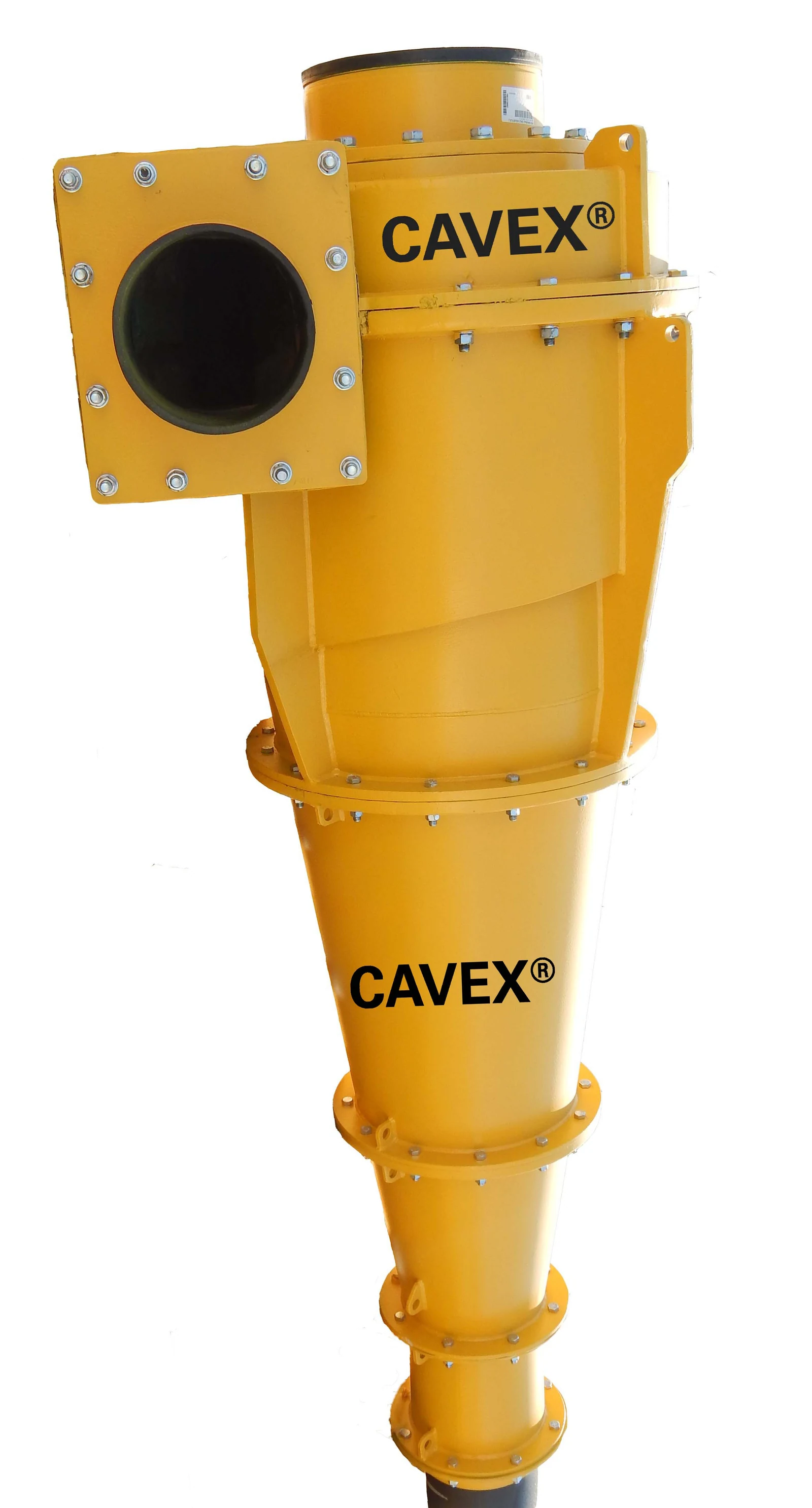
Weir Cavex 2 400 hydrocyclone, manufacturer image
Manufacturer image of a Cavex 2 hydrocyclone, showing the inlet head, housing sections, cylinder, cone and underflow outlet.
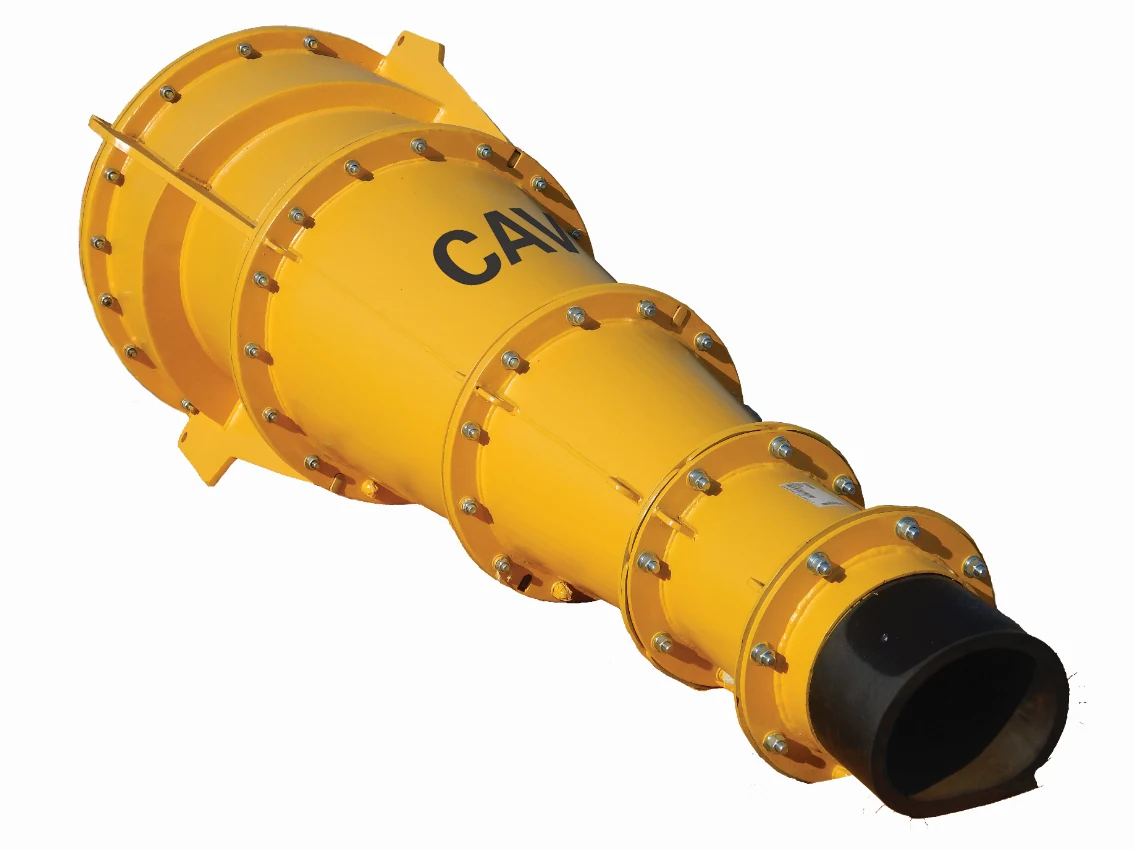
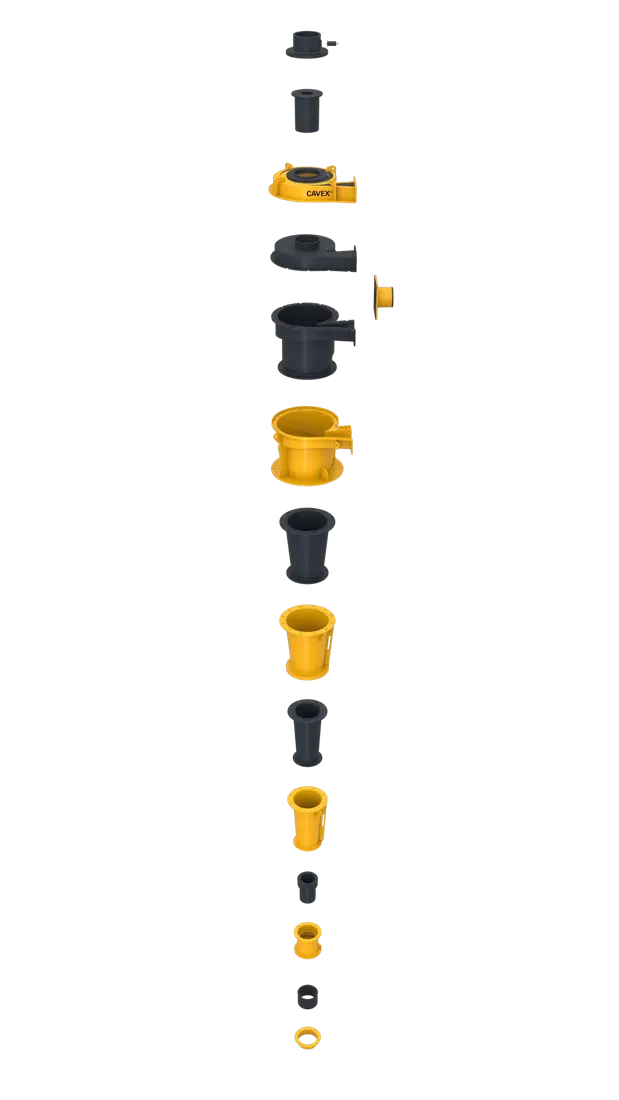
Weir Cavex 2 400 hydrocyclone, manufacturer exploded view
Cavex 2 manufacturer exploded view showing the assembly order of the inlet head, vortex finder, cylinder, cone, liners and spigot.
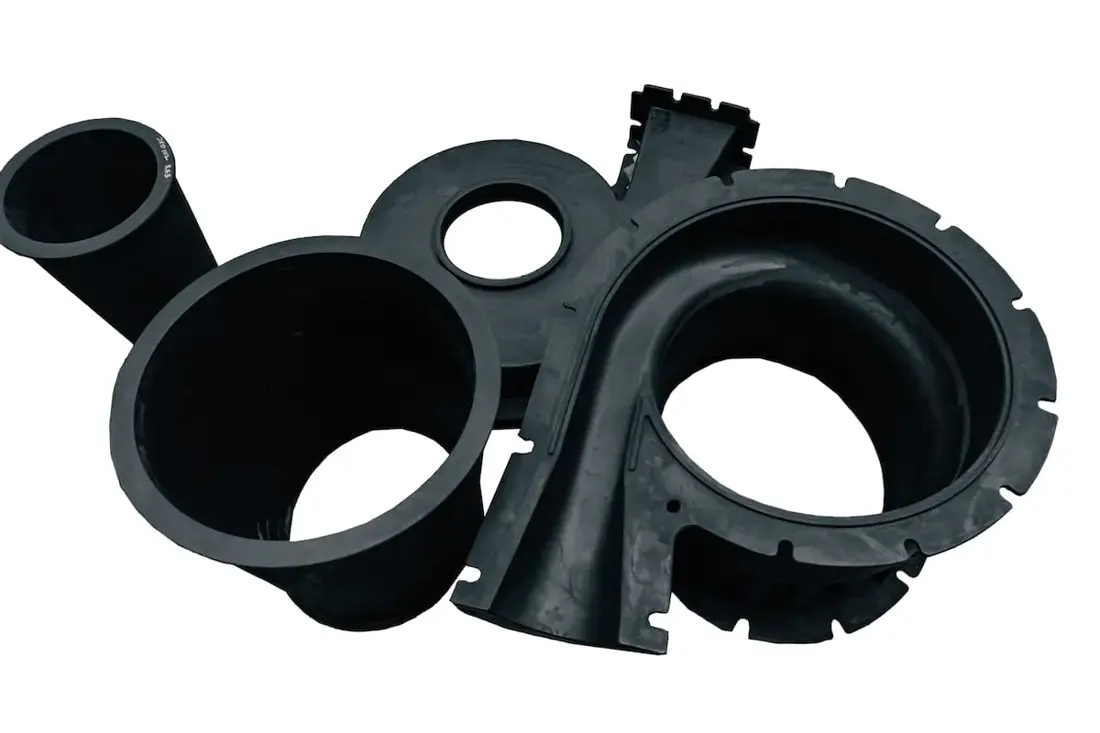
Weir Cavex rubber hydrocyclone liners, manufacturer photograph
Manufacturer photograph of Cavex rubber liners. Confirm profiles, grooves, interfaces and thickness against the specific series and nominal diameter.
OEM المعدات Reference

Confirm Series, Dimensions, Liners and Connections Together

This page identifies Cavex hydrocyclone wear parts and spares. First establish the machine from its complete series, nominal diameter, housing and liner construction, and site connections. Then confirm manufacture using the nameplate, general arrangement, used-part profile, flange holes, actual internal diameter and operating conditions.

7 Current published series
40–1,450 mm Published nominal diameter range
≤250 kPa Published maximum series pressure
12 Wear-part and spare-part categories
Standard Models and Key Dimensions

Standard Cavex Series and Key Dimensions

Series, nominal diameters, housings, liners, pressures and temperatures follow Weir's current official Cavex product pages.

Standard seriesNominal diameter rangeHousing and liner constructionPublished pressure / temperature range
Cavex 240–800 mmMetal or DMC housing; R55/Linatex rubber or monolithic ceramic lining0–250 kPa; 0–80°C
Cavex CVX40–1,200 mmCorrosion-resistant material, polyester or carbon-steel housing; rubber, ceramic or polyurethane lining0–250 kPa; 0–80°C
Cavex CVXA400–650 mmSolid high-chromium white-iron construction without a separate liner0–250 kPa; 0–80°C
Cavex CVXT250–1,450 mmSteel housing with ceramic tile lining0–250 kPa; 0–80°C
Cavex CVXU40–250 mmSolid polyurethane construction without a separate housing0–175 kPa; 0–70°C
Cavex DE250–650 mmMetal housing; rubber, monolithic ceramic or polyurethane lining0–250 kPa; 0–80°C
Cavex Dewatering150–800 mmMetal or DMC housing; rubber or ceramic lining≤100 kPa; 0–80°C

One series may have different combinations of cone angle, feed chamber, vortex finder and spigot. Manufacture still requires checks of the complete series, nominal diameter, feed rotation, liner type, flange holes, installed parts and site conditions.

قطع الغيار المستهلكة

Feed Chamber, Cylinder and Cone Liners, Overflow and Underflow قطع الغيار المستهلكة

Wear parts are organized along the slurry flow path. Material pages support preliminary selection; confirm final material, thickness and geometry against series, original construction, wear patterns and operating conditions.

Cavex 2 feed head and internal liners, manufacturer exploded view
01

Inlet Head and Feed Chamber Liner

Inlet Head & Feed Chamber Liner

The feed chamber receives high-velocity tangential slurry flow. Start here to confirm rotation, inlet cross-section and liner interfaces. Orders require series, nominal diameter, feed direction, housing holes and the current liner profile.

Material selection: Depending on series, options include moulded rubber, monolithic ceramics or polyurethane. Confirm material and thickness against slurry abrasiveness, particle size, pressure and original construction.

View the common part page →
Cavex rubber cylinder and feed chamber liners, manufacturer photograph
02

Cylinder and Upper Liner

Cylinder & Upper Liner

The upper cylinder liner receives the swirling feed and protects the housing. Sectioning, grooves, flanges and thickness vary by series; outside diameter alone does not establish interchangeability.

Material selection: Rubber absorbs impact and resists slurry abrasion; ceramics suit stable, highly abrasive service; polyurethane is used in small-diameter and fine-classification series.

View the common part page →
Cavex 2 cone and lower liner, manufacturer exploded view
03

Cone and Lower Liner

Cone & Lower Liner

Cone liners progressively narrow the flow field while enduring continuous sliding wear. Check cone angle, length, upper and lower diameters, flange holes, section count and assembly order for each section.

Material selection: Abrasion, impact, temperature and blockage risk jointly determine the material. Rubber, ceramics and polyurethane cannot be substituted without reference to the specific series and construction.

View the common part page →
Cavex 2 overflow pipe and vortex finder, manufacturer exploded view
04

Overflow Pipe and موجه الدوامة

Overflow Pipe & موجه الدوامة

The vortex finder determines the effective overflow diameter and insertion depth, affecting the separation cut and short-circuit flow. Check outside and inside diameters, length, flange and retention structure.

Material selection: Typical options include wear-resistant rubber, polyurethane or ceramic structures. Confirm against series, dimensions and the actual wear location.

View the common part page →
Cavex spigot and rubber lining, manufacturer photograph
05

Apex, Spigot and Insert

Apex, Spigot & Insert

Weir identifies the Cavex spigot as a high-wear location. Changes in bore diameter affect underflow pattern and classification. Confirm series, profile, connection, actual bore and wear allowance when ordering.

Material selection: Rubber, polyurethane or ceramic wear structures may be used by series. Colour, appearance or the worn bore of an old part is insufficient to identify a model.

View the common part page →
Cavex CVX 700 inlet and overflow connections, manufacturer image
06

Inlet Nozzle and Overflow Pipe Liners

Inlet Nozzle & Overflow Pipe Liner

Inlet nozzles, overflow pipes and connecting liners experience local high-velocity erosion and connect to site piping. Check orientation, flange standard, hole pattern, bore, length and sealing faces.

Material selection: Select rubber, polyurethane or ceramic liners against slurry, pressure, temperature and piping interfaces. Confirm seals separately against the fluid and grooves.

View the common part page →
قطع الغيار

Housing, Connections, Sizing Components and Cluster Spares

Cavex has no rotating parts. Its spares focus on housing sections, feed heads, sizing inserts, connectors, seals and cluster interfaces.

Cavex 2 housing, cylinder and cone sections, manufacturer exploded view
01

Housing, Cylinder and Cone Sections

Housing, Cylinder & Cone Sections

Support the lining and maintain the flow-path geometry. Check metal or DMC housing, cone angle, section length, flange outside diameter, hole pattern, rotation and assembly order.

Material selection: Housing material and corrosion protection depend on the series and fluid. CVXA uses solid high-chromium white iron and must not be treated as a rubber-lined metal housing.

View the common part page →
Cavex 2 feed head and inlet connection, manufacturer image
02

Feed Head, Inlet Connection and Nozzle

Feed Chamber, Inlet & Nozzle

The feed head establishes the tangential inlet and rotation. Provide inlet direction, nozzle bore, flange holes, pressure rating and site piping photographs together.

Material selection: Confirm pressure-retaining housing, wear liner and seals separately. One material description cannot define the whole assembly.

View the common part page →
Cavex 2 vortex finder and insert, manufacturer exploded view
03

موجه الدوامة and Sizing Inserts

موجه الدوامة & Size Insert

Set the effective overflow opening for different classification requirements. Check insertion depth, external retention, current bore and wear condition together.

Material selection: Rubber, polyurethane, ceramic or composite structures may be used by series. Dimensional and geometric compatibility must be established before material substitution.

View the common part page →
Cavex spigot and liner, manufacturer photograph
04

Spigot and Apex Size Kits

Spigot & Apex Size Kit

Restore or adjust the underflow opening. Confirm whether the item is a body, liner or insert, and whether the different sizes share the same mounting interface.

Material selection: Wear materials must provide both service life and bore stability. Confirm material and dimensions against the Cavex series and operating conditions.

View the common part page →
Cavex CVX flanged housing and fasteners, manufacturer image
05

Quick-Release Clamps, Flanges and Fasteners

Quick-release Clamps, Flanges & Fasteners

Some sizes use quick-release connections. Check clamp type, flange outside diameter, hole spacing, bolt grade, quantity, seals and pressure requirements.

Material selection: Confirm fasteners and clamps against pressure, corrosion protection and repeated assembly requirements. Select seals for the fluid, temperature and flange grooves.

View the common part page →
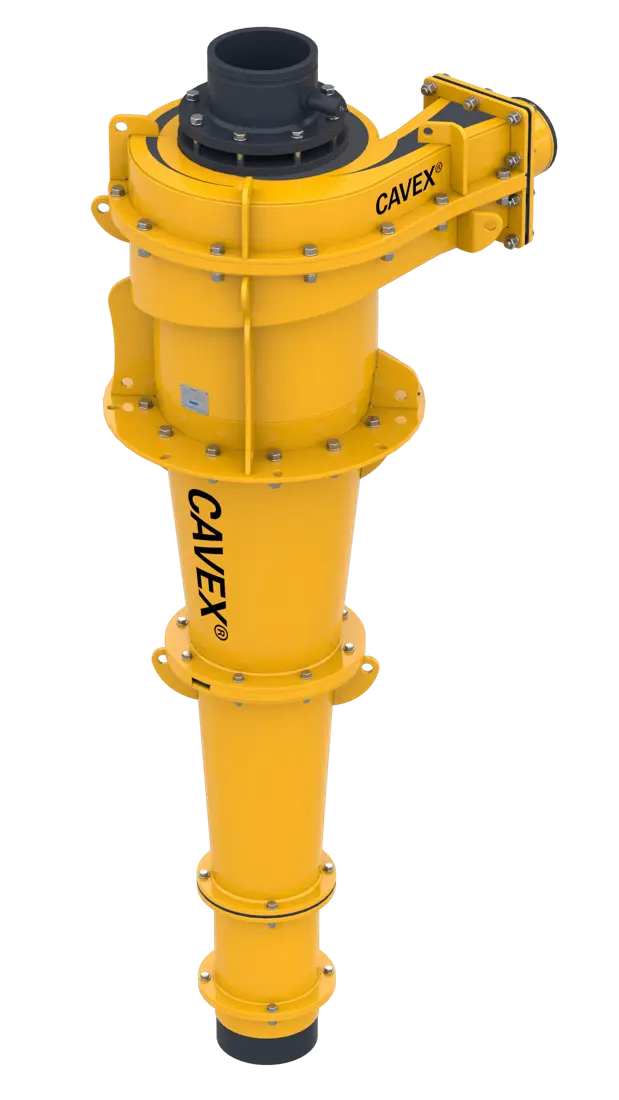
Complete Weir Cavex CVX hydrocyclone, manufacturer image
06

Complete Cyclone and Mounting Interfaces

Complete Cyclone & Mounting Interface

A site may stock complete cyclone units to match its installation. Even at the same nominal diameter, feed rotation, flanges, brackets, manifolds, valves and maintenance access may differ.

Material selection: For a complete unit, separately confirm materials, corrosion protection and acceptance requirements for the pressure housing, wear liner, seals and connectors.

View the common part page →

Is Cavex diameter alone enough to identify liners and spigots?

No. Confirm the complete series, feed rotation, cone angle, housing and liner revisions, vortex finder, spigot bore, flange holes and site conditions. One diameter may have several configurations.

Can Cavex rubber, ceramic and polyurethane liners be interchanged directly?

Material names alone are insufficient. Verify liner profile, thickness, grooves or bonding method, housing fit, slurry abrasiveness, particle size, pressure and temperature together.

Why are unverified Cavex OEM part numbers omitted?

Numbers without traceable manufacturer catalogues, drawings or installation records are not published. Submit the nameplate, series, nominal diameter, used-part photographs, dimensions or known drawing references for further review.

Submit Cavex Series, Diameter, Liner, Drawing References or Used-Part التفاصيل

Provide the complete series, nominal diameter, feed rotation, housing and liner types, vortex finder and spigot dimensions, drawing references, used-part photographs, flange holes and slurry conditions. We use these for identification, material assessment, manufacturing coordination, quality control and delivery.

Submit التفاصيل for a Quote

رقم الهاتف: +86 156 3797 3199
zzx@anranst.com

خدمات صنع في الصين

من التقييم الفني إلى تسليم المنتج بالكامل

توفر شركة ANRANST للعملاء العالميين تقييمات هندسية، واختيار التصنيع الصيني، ومراقبة الجودة، وتسليم الأجزاء النهائية لقطع الغيار الصناعية المقاومة للتآكل حسب الطلب، ويمكنها أيضًا دعم قطع الغيار الصناعية الأخرى حسب الطلب.

01

مراجعة الرسومات والهندسة

قم بمراجعة أسطح التزاوج وأبعاد الواجهة، وقم بتقييم جدوى المواد والمعالجة الحرارية والتصنيع.

02

تحديد المادة والمعالجة الحرارية

تُحدَّد درجات المواد وعمليات المعالجة الحرارية لكل طلب على حدة، وتُثبَّت في الاتفاقية الفنية وتُتابَع أثناء الإنتاج.

03

ضبط الجودة

يشمل ذلك تأكيد الرسم، ومراقبة المواد والعمليات، وتتبع الإنتاج، وتنسيق عمليات الفحص والقبول.

04

تسليم المنتج النهائي

تنظيم عمليات التصنيع والتحقق من الجودة والتعبئة والتغليف وتسليم المنتجات النهائية الكاملة لتشكيل حلقة إمداد قابلة للتنفيذ.

قم بتزويدنا بالنماذج الحالية، والرسومات، وأرقام الرسومات، وأرقام الأجزاء، والمواد، أو معلومات ظروف التشغيل، وسنقوم بتحديد التحقق الفني ومسار التوريد وفقًا لذلك.

إرسال طلب