thyssenkrupp كسارات أسطوانية لامركزية ERC

Identify models, principal dimensions, wear parts and drive spares for legacy and current ERC installations. FLS now carries this mining product line.

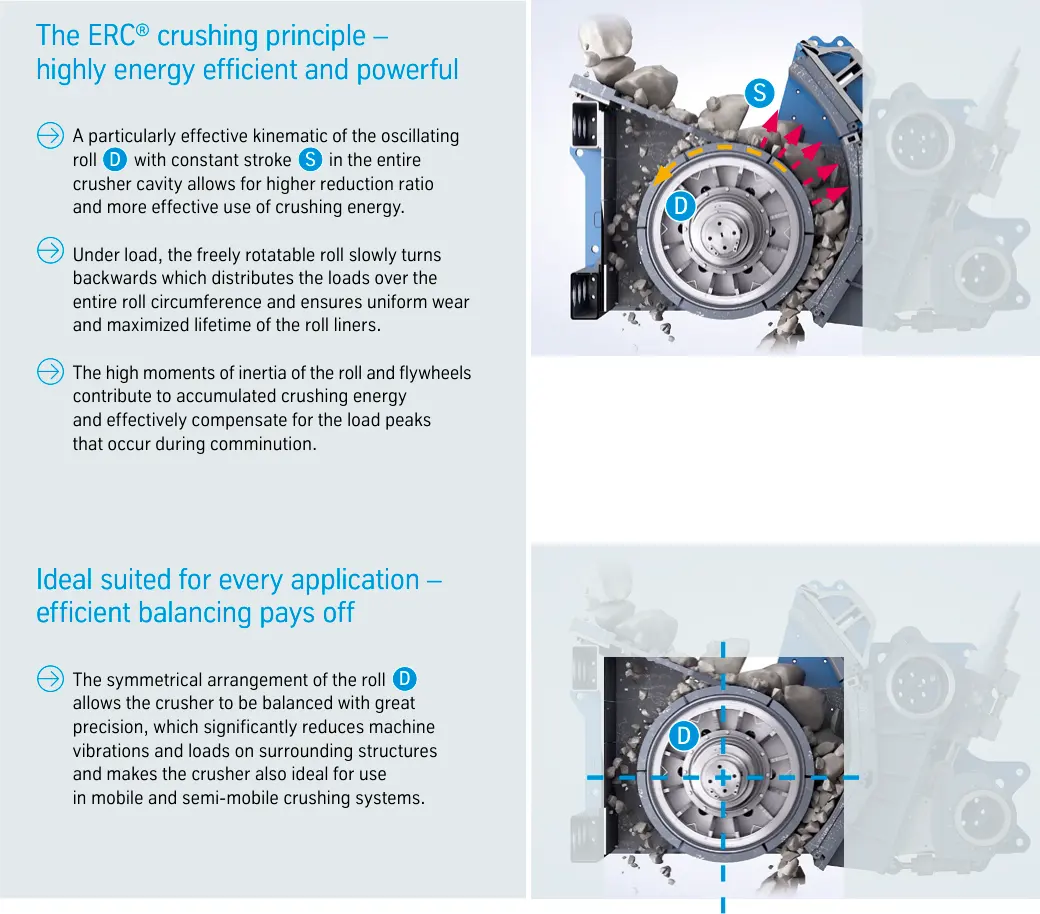
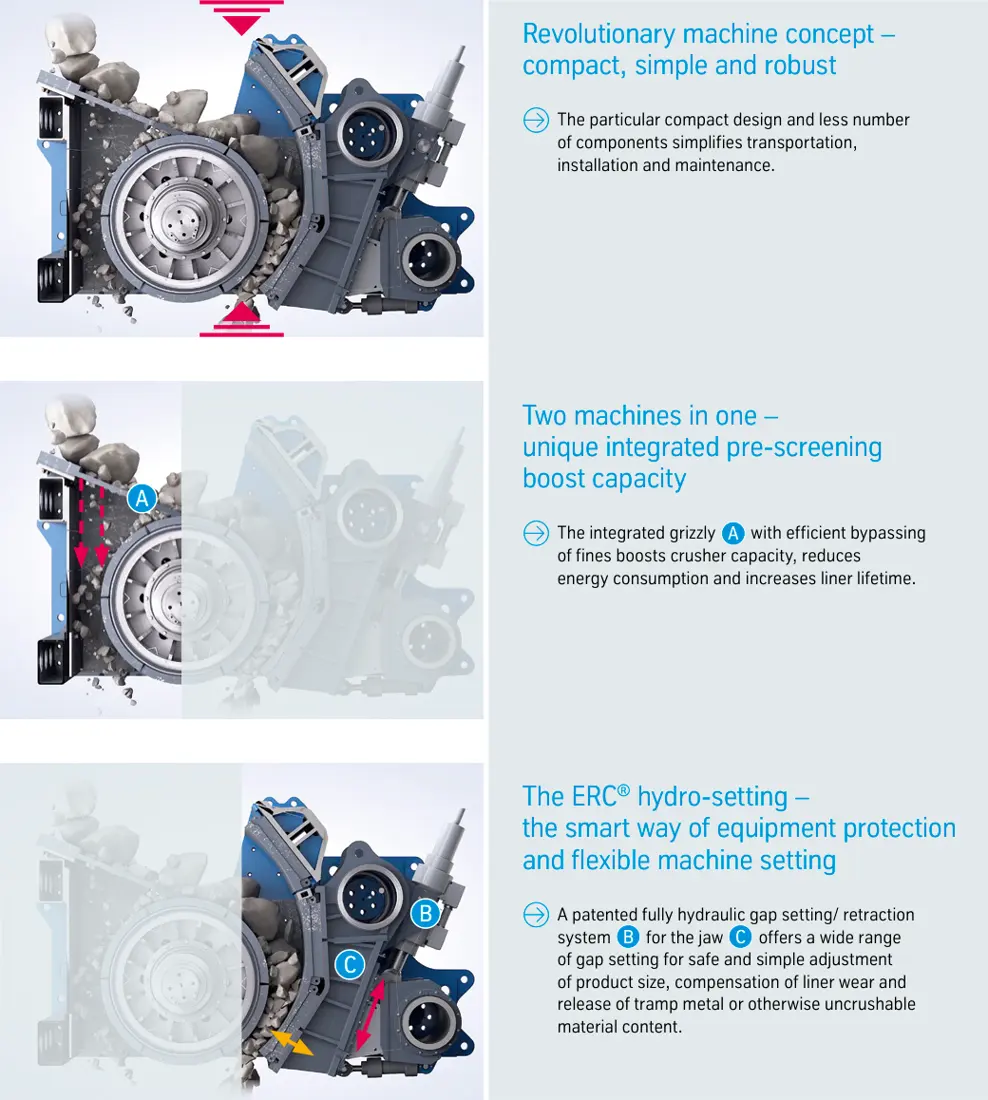
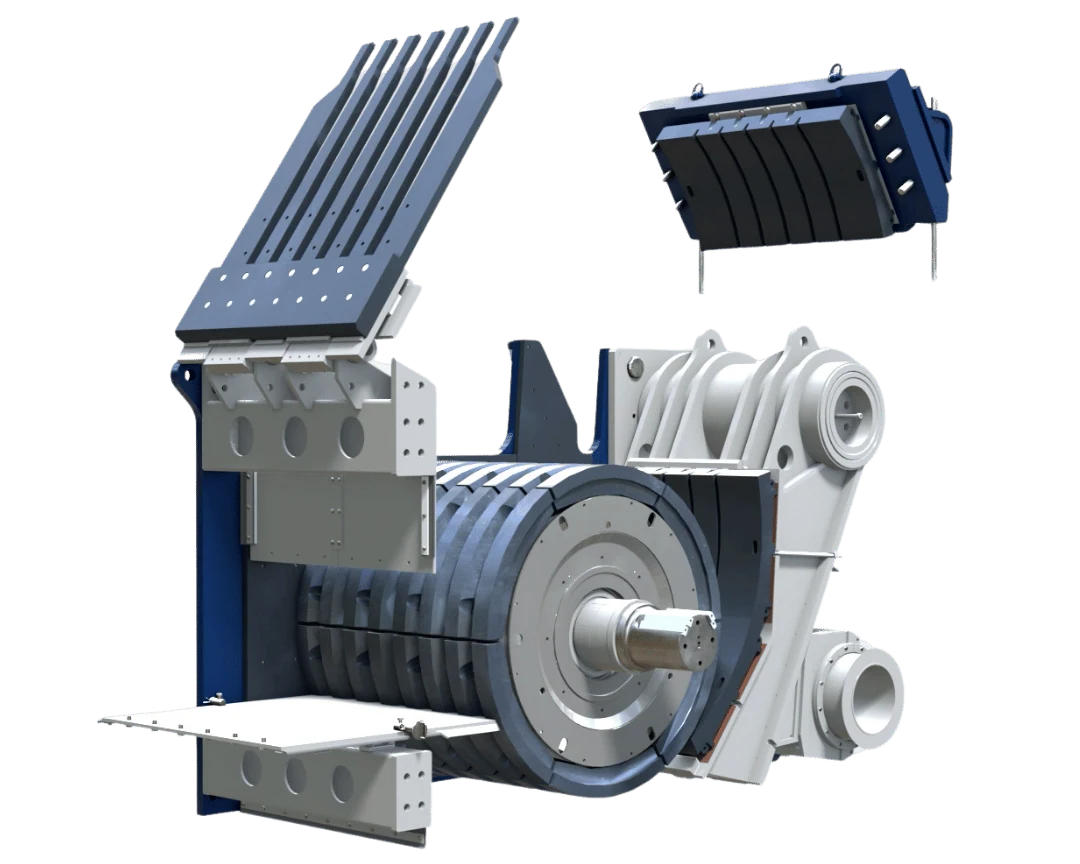
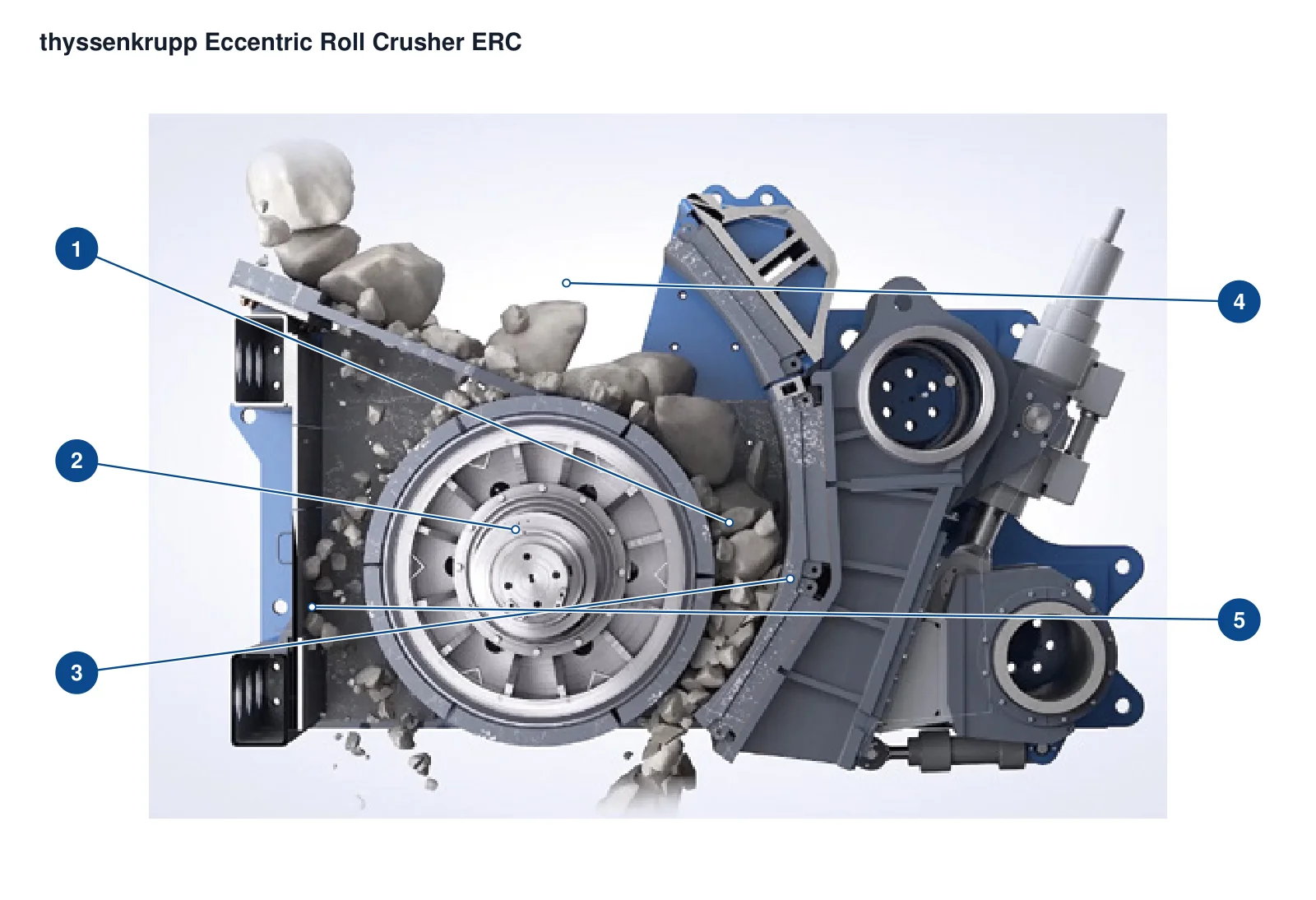
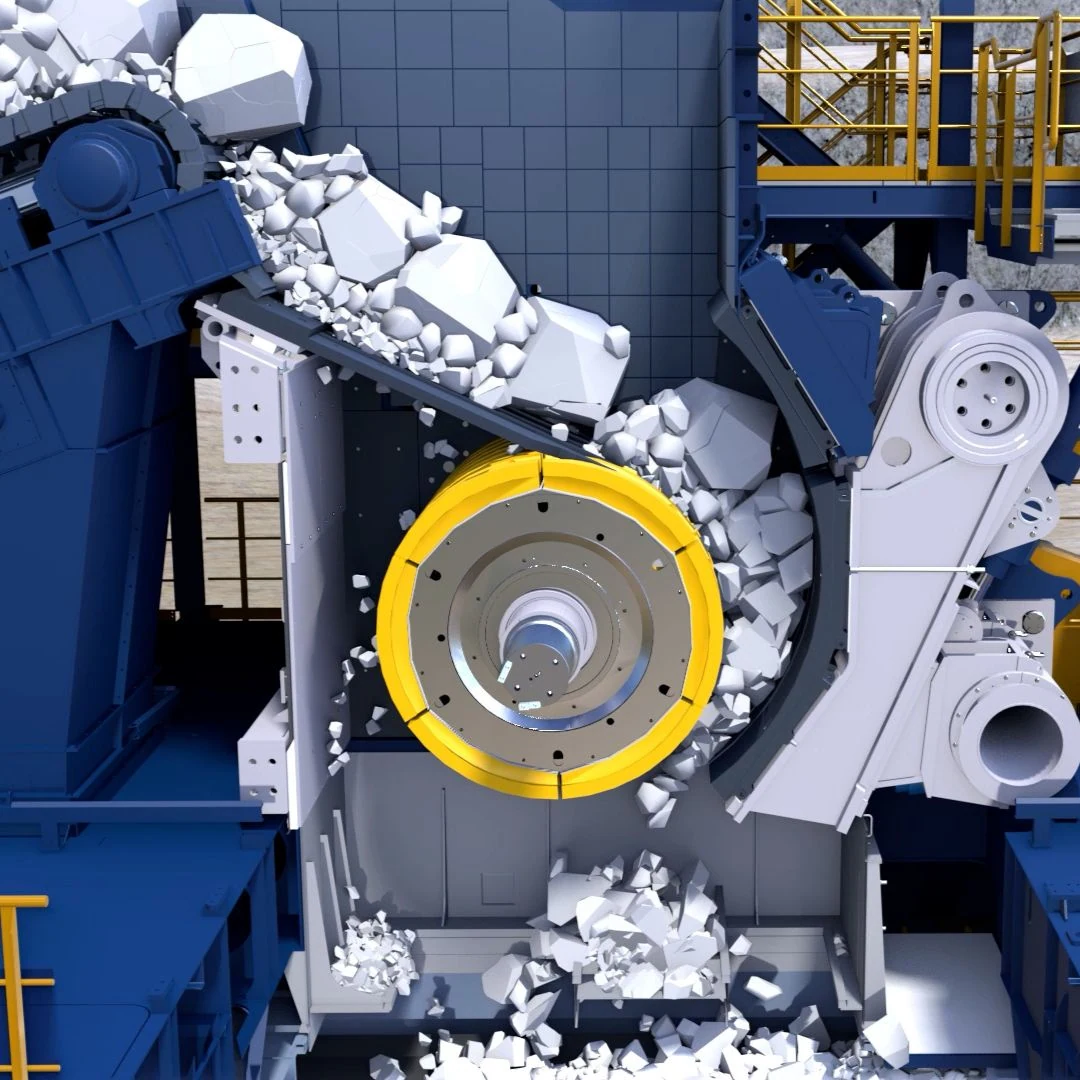
OEM ERC arrangement: integrated grizzly, eccentric crushing roll, counter jaw, hydraulic gap setting and belt/flywheel drive.
OEM cutaway identifies the grizzly, roll, jaw, hydraulic support and drive positions.
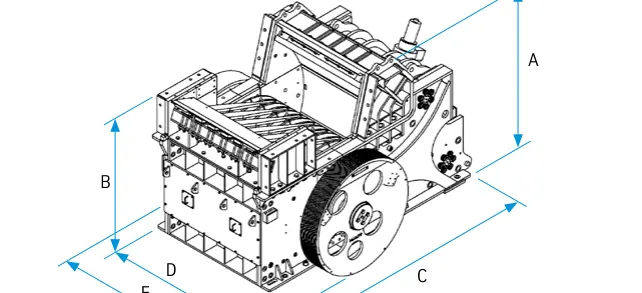
OEM principal dimension definitions; check A–E values against the full ERC model.
OEM المعدات Reference

Models, chamber parts and material selection in one place

ERC combines a static grizzly and eccentric-roll primary crusher in a compact frame. This page covers models, dimensions, part positions, material links and enquiry requirements for spares; project capacity figures are not universal manufacturing specifications.

ERC 18-14–25-34 OEM published standard model range
1800–2500 mm Published roll diameter range
100–300 mm Published CSS range
2022 Mining Technologies became part of FLS
Standard Models and Key Dimensions

ERC models and dimensions for parts identification

The table follows the five standard models in the thyssenkrupp ERC brochure. Capacity varies with material, feed grading and CSS. Manufacture requires full model, serial number and drawing revision.

Standard modelRoll diameter / widthFeed opening and discharge settingInstalled power / reference weight
ERC 18-14Diameter 1800 mm / width 1400 mmFeed opening 1000 mm; CSS 100–220 mm160–300 kW; approx. 83 t
ERC 22-20Diameter 2200 mm / width 2000 mmFeed opening 1200 mm; CSS 120–260 mm300–450 kW; approx. 138 t
ERC 25-25Diameter 2500 mm / width 2500 mmFeed opening 1280 mm; CSS 120–260 mm450–600 kW; approx. 185 t
ERC 25-30Diameter 2500 mm / width 3000 mmFeed opening 1280 mm; CSS 140–300 mm500–700 kW; approx. 215 t
ERC 25-34Diameter 2500 mm / width 3400 mmFeed opening 1280 mm; CSS 140–300 mm600–800 kW; approx. 240 t

The first model-number group represents scaled roll diameter and the second scaled width. This helps preliminary identification but does not replace the nameplate or installation and part drawings.

قطع الغيار المستهلكة

Chamber wear parts, positions and material references

Identify roll liners, segments, counter jaws, grizzly bars and side liners by impact and wear location. Each card links to the relevant component and material pages.

Roll liner / crushing element
01

Roll liner / crushing element

Roll Liner / Crushing Element

Mounted around the eccentric roll, these form the chamber with the counter jaw. Confirm diameter, width, segmentation, fixing interfaces and wear profile against the full ERC model and installed drawings.

Material selection: Screen manganese or wear-resistant alloy steel for heavy impact, compression and abrasion. Final material, hardness, heat treatment and NDT follow the original drawing and duty.

View the common part page →
Roll shell segment
02

Roll shell segment

جزء غلاف البكرة

Segments surround the roll. Eccentric motion and slow reverse rotation distribute wear around its circumference. Check segment count, circumferential position, fixing holes and adjacent interfaces together.

Material selection: Materials must combine impact toughness, surface wear resistance and fixing-zone strength. Assess solid alloy steel or local composite reinforcement.

View the common part page →
Fixed jaw / counter jaw
03

Fixed jaw / counter jaw

Fixed Jaw / Counter Jaw

Opposite the roll, the jaw forms a continuous crushing gap. Its curvature, thickness, supports and hydraulic-setting interfaces depend on model and wear-compensation position.

Material selection: Assess manganese or wear-resistant alloy steel for large hard-rock impact, compression and sliding wear, then confirm drawing material, properties and heat treatment.

View the common part page →
Integrated grizzly bars
04

Integrated grizzly bars

Integrated Grizzly Bar

The static grizzly above the chamber bypasses fines. Confirm bar gaps, length, orientation, supports and replacement interfaces for the model and target feed grading.

Material selection: Impact and rubbing act on the working face. Assess wear plate, alloy steel or local hardfacing while controlling gaps and structural strength to the original drawing.

View the common part page →
Chamber side liners
05

Chamber side liners

Side Liner / Cheek Plate

These protect chamber sides and adjacent housing. Similar appearance does not establish compatibility of profiles, thickness, countersunk holes, edge overlaps or left/right parts.

Material selection: Select wear plate or cast wear parts for lateral compression, flying-material erosion and edge wear; check machining and welding restrictions.

View the common part page →
Feed and discharge area liners
06

Feed and discharge area liners

Feed / Discharge Area Liner

These cover feed impact points, bypass passages and discharge transitions. Confirm zones by feed direction, drop height, lump size, liner holes and downstream chute structure.

Material selection: Do not assume the same material for inlet impact and discharge sliding wear. Assess wear plate, rubber composites or local reinforcement by position.

View the common part page →
قطع الغيار

Eccentric shaft, hydraulic and drive spares

Drive and support components are distinct from wear parts. Confirm eccentric shafts, bearings, bushes, hydraulic adjustment, pulleys and flywheels against interfaces and loads.

Eccentric shaft assembly
01

Eccentric shaft assembly

Eccentric Shaft Assembly

The eccentric shaft produces constant-stroke roll oscillation and is a primary load-bearing drive part. Confirm shaft diameter, eccentricity, fits, bearing seats and end connections together.

Material selection: Check shaft material, forging ratio, heat treatment, mechanical properties, ultrasonic inspection, surface quality and tolerances against the drawing and loads.

View the common part page →
Roll bearings and bushes
02

Roll bearings and bushes

Roll Bearing & Bushing

These support the eccentric shaft and rotating roll under high radial load, impact and slow oscillation. Confirm type, clearance, bush dimensions, lubrication and seals from installation records.

Material selection: Buy rolling bearings to the original type. Select copper alloys or other drawing-specified bush materials for fits, loads, lubrication and temperature rise.

View the common part page →
Hydraulic gap setting and retraction
03

Hydraulic gap setting and retraction

Hydraulic Gap Setting & Retraction

The system adjusts the jaw gap, compensates liner wear and retracts for uncrushable material. Confirm bore, stroke, trunnions, seals and pressure rating for the model.

Material selection: Confirm cylinders, rods, pins, seals and pipes separately against drawings, pressure and environment. Appearance alone does not prove interchangeability.

View the common part page →
Pulleys, flywheels and V-belt drive
04

Pulleys, flywheels and V-belt drive

Pulley, Flywheel & V-Belt Drive

The OEM design uses a motor, V-belts and a high-inertia flywheel. Confirm diameters, grooves, taper bushes, bores, keyways, balance grade and guards from installed interfaces.

Material selection: Specify cast steel, ductile iron or alloy steel and inspections for torque, fatigue, dynamic balance and fits.

View the common part page →

Is ERC 25-30 enough to identify a roll liner?

No. Confirm serial number, liner segments, fixings, jaw configuration, wear-compensation position, drawing number and revision.

Why do legacy ERC nameplates relate to both thyssenkrupp and FLS?

ERC originated in thyssenkrupp Mining Technologies, which joined FLS in 2022. Both legacy installation identity and current business succession must be retained.

Can you quote without an OEM part number?

Identification can start from the full model, serial number, installed drawings, worn-part photos, measurements and material/duty details. Traceable drawings and technical approval are required before manufacture.

Submit full ERC model, nameplate, drawing number or worn part

Provide model, serial number, CSS, liner segmentation, drawing numbers, photos, dimensions, materials and duty. We coordinate identification, material assessment, manufacture, quality control and delivery.

Submit التفاصيل for a Quote

رقم الهاتف: +86 156 3797 3199
zzx@anranst.com

خدمات صنع في الصين

من التقييم الفني إلى تسليم المنتج بالكامل

توفر شركة ANRANST للعملاء العالميين تقييمات هندسية، واختيار التصنيع الصيني، ومراقبة الجودة، وتسليم الأجزاء النهائية لقطع الغيار الصناعية المقاومة للتآكل حسب الطلب، ويمكنها أيضًا دعم قطع الغيار الصناعية الأخرى حسب الطلب.

01

مراجعة الرسومات والهندسة

قم بمراجعة أسطح التزاوج وأبعاد الواجهة، وقم بتقييم جدوى المواد والمعالجة الحرارية والتصنيع.

02

تحديد المادة والمعالجة الحرارية

تُحدَّد درجات المواد وعمليات المعالجة الحرارية لكل طلب على حدة، وتُثبَّت في الاتفاقية الفنية وتُتابَع أثناء الإنتاج.

03

ضبط الجودة

يشمل ذلك تأكيد الرسم، ومراقبة المواد والعمليات، وتتبع الإنتاج، وتنسيق عمليات الفحص والقبول.

04

تسليم المنتج النهائي

تنظيم عمليات التصنيع والتحقق من الجودة والتعبئة والتغليف وتسليم المنتجات النهائية الكاملة لتشكيل حلقة إمداد قابلة للتنفيذ.

قم بتزويدنا بالنماذج الحالية، والرسومات، وأرقام الرسومات، وأرقام الأجزاء، والمواد، أو معلومات ظروف التشغيل، وسنقوم بتحديد التحقق الفني ومسار التوريد وفقًا لذلك.

إرسال طلب