
Industrial chains & sprockets
Industrial Chains and Sprockets
Drive parts for apron feeding, vertical lifting and drag conveying
Heavy-duty industrial chains require more than a visual match. Links, pins, bushings, rollers, attachments and sprockets form a meshing system. Pitch, width, tooth profile, centreline, heat treatment and lubrication must be compatible.
Main ProductsLinks, pins, bushings, rollers, connectors and sprockets
Equipment typesApron feeders, bucket elevators, scraper conveyors and drag chain conveyors
Main LoadsHeavy traction loads, shock loading at startup, articulation wear and tooth contact
Identification requirementsFull model, chain reference, pitch, drawing, mating sprocket and wear records
System scopeChain geometry Pitch, inner width, pin diameter, bushing diameter, rollers and attachment holes Sprocket geometry Tooth count, pitch circle, tooth profile, hub, bore and key connection Installation relationships Centre distance, twin-chain synchronisation, shaft alignment, take-up travel and guides Operating conditions Load, speed, impact, lubrication, dust and corrosion
Check chains and sprockets as a matched meshing system
Chain pitch elongation, pin-and-bushing wear and sprocket tooth-space wear interact. Measure the mating component before replacing only the chain or sprocket, to avoid pitch mismatch, impact engagement and rapid wear.
Apron feeder tractor chains, elevator conveyor chains and drag chains differ in structure and operation. Tensioners, drive and tail shafts, flights and bucket attachments are associated parts that require checks within the same drive system.
Apron Feeder
Heavy-duty tractor chains, pins, bushings, sprockets and tensioners
Apron feeders handle heavy loads of large, abrasive or wet and sticky material. Check the chain system together with rollers, pans and the drive shaft.
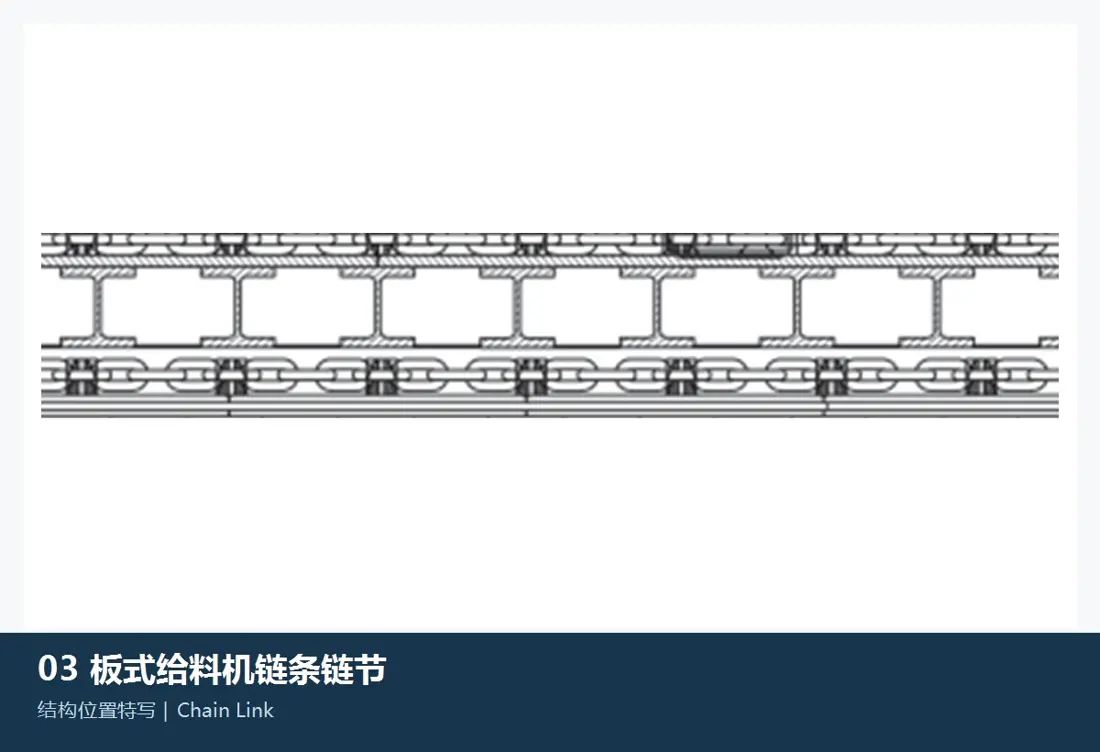
Chain Link
Heavy-duty chain bodies that pull the pans. Check chain type, pitch, left/right chain, attachment interfaces and original heat treatment.
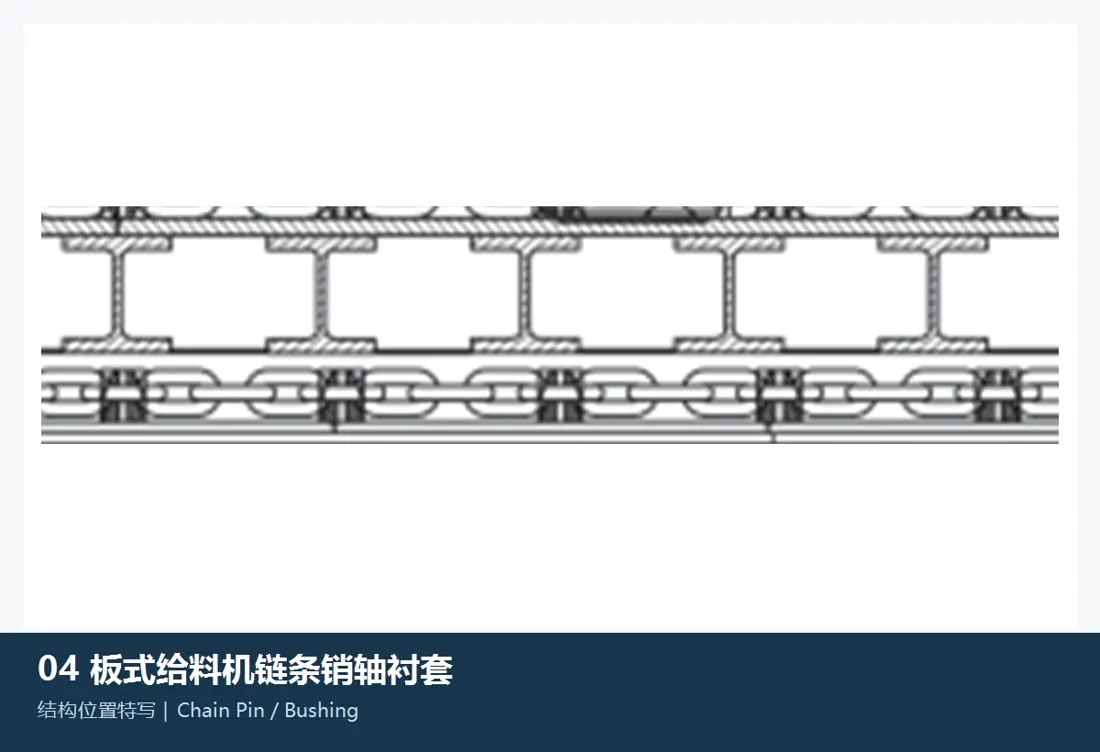
Chain Pins / Bushings
Form the link articulation. Surface wear resistance, core load capacity, fits, sealing and lubrication must all meet requirements.
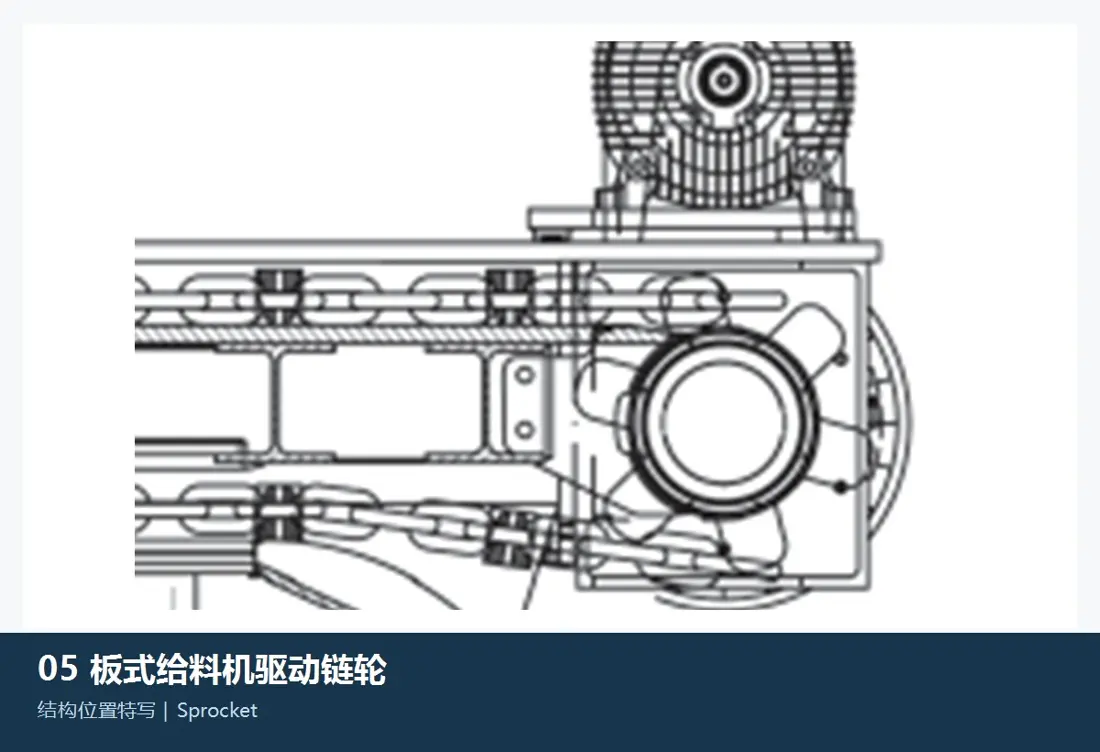
Drive Sprockets / Traction Wheels
Transmit drive-shaft torque to the chain. Check tooth count, pitch circle, split design, hub and alignment on both sides.
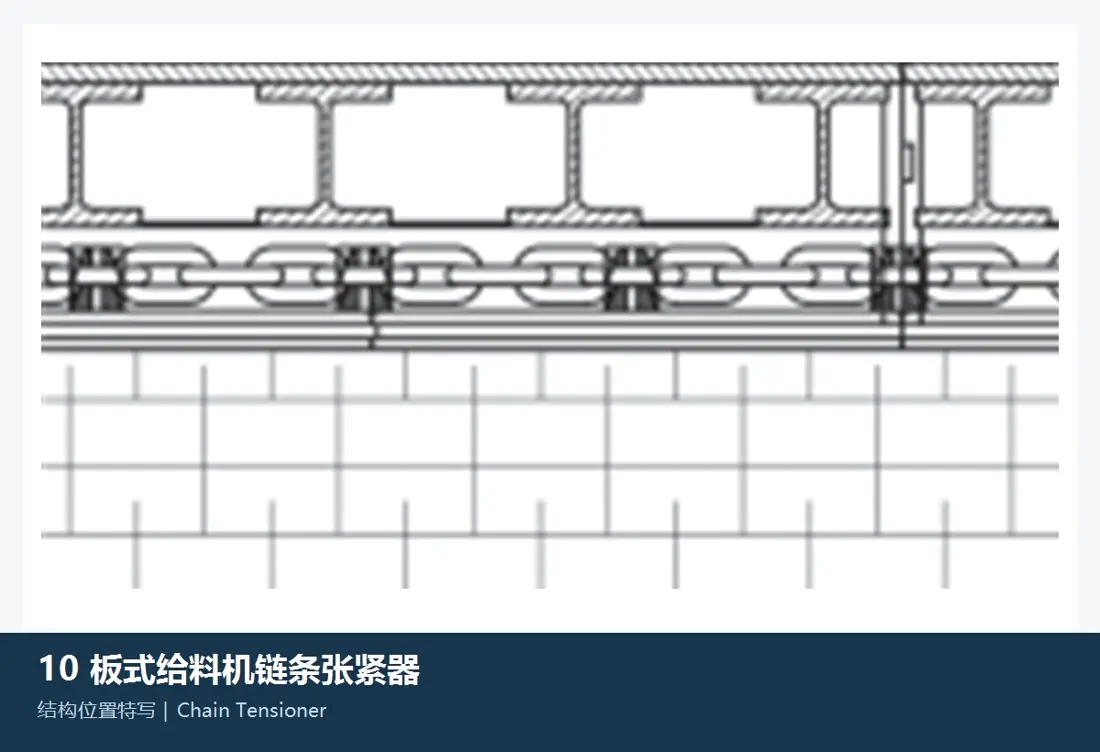
Chain Tensioner
Maintain the required tension and tail position. Check take-up travel, synchronisation on both sides, guides and travel limits against the machine design.
Lifting and Drag Conveying
Bucket elevator and drag conveyor chain systems
Vertical lifting and horizontal drag conveying use different attachments and return arrangements, with different impact and dust exposure.
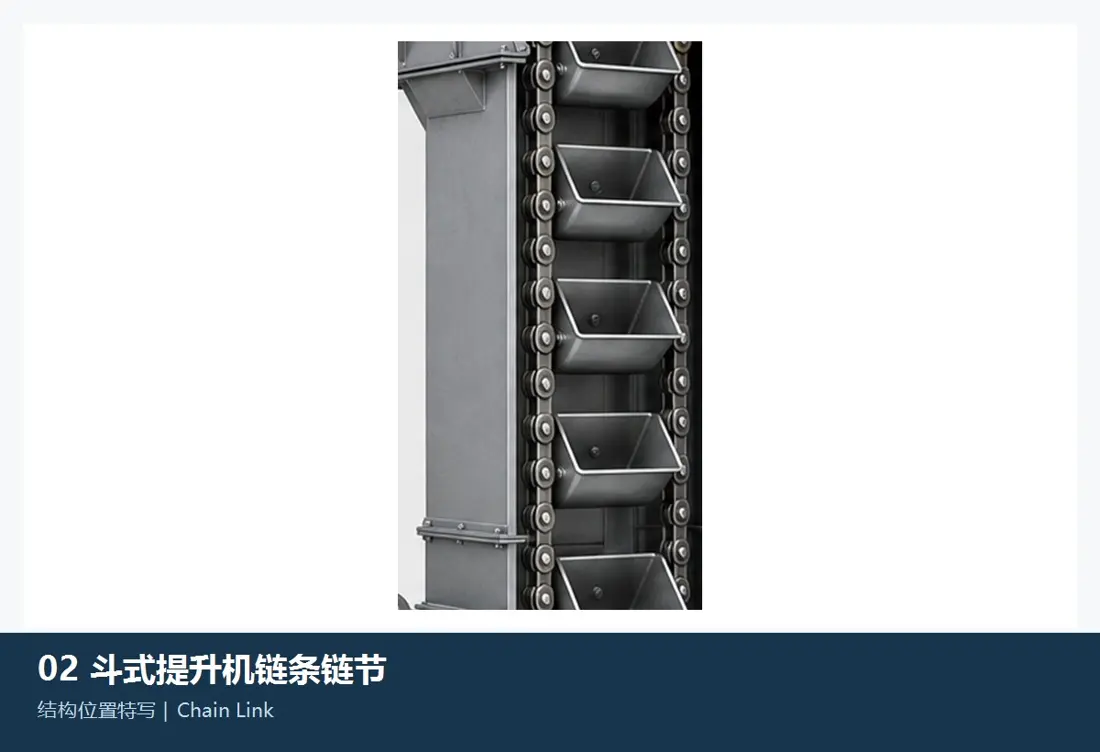
Bucket Elevator Chain Links
Carry cyclic traction loads from buckets and material. Check single/twin-chain arrangements, bucket attachments, pitch and sprockets.
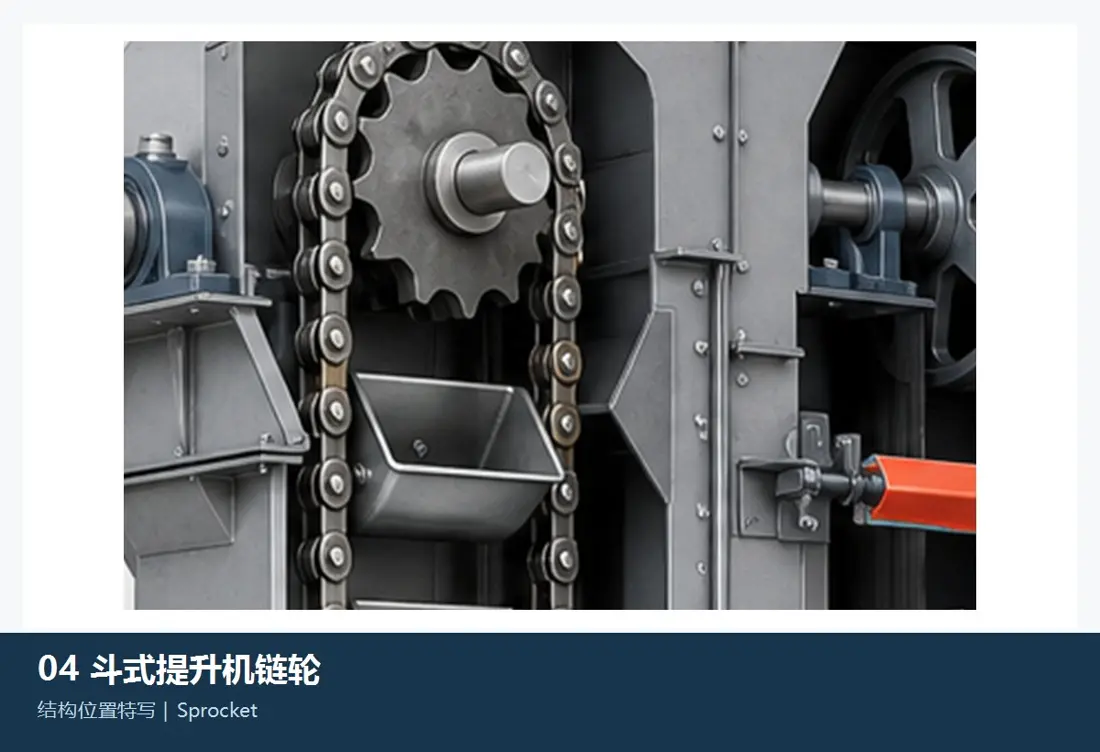
Bucket Elevator Sprockets
Head drive or tail guide sprockets. Match tooth profile, split design, shaft bore, key and chain wear condition.
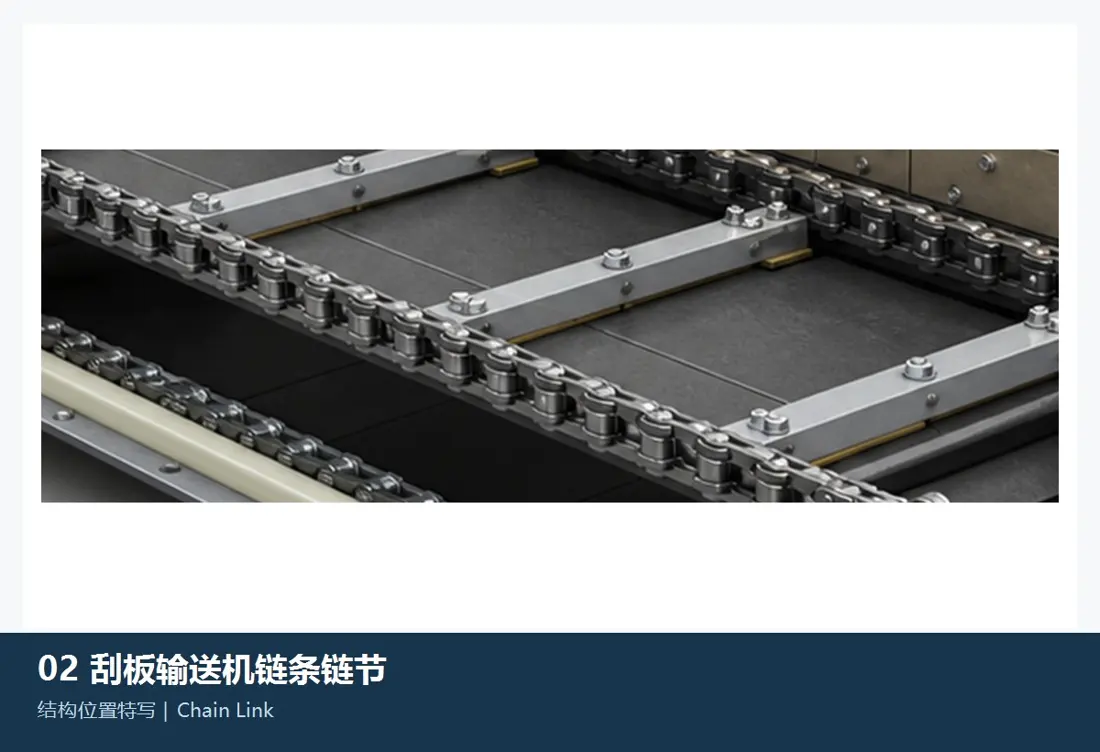
Drag Conveyor Chain Links
Pull flights and material through the trough. Check chain type, connectors, flight spacing, wear guides and return arrangement.
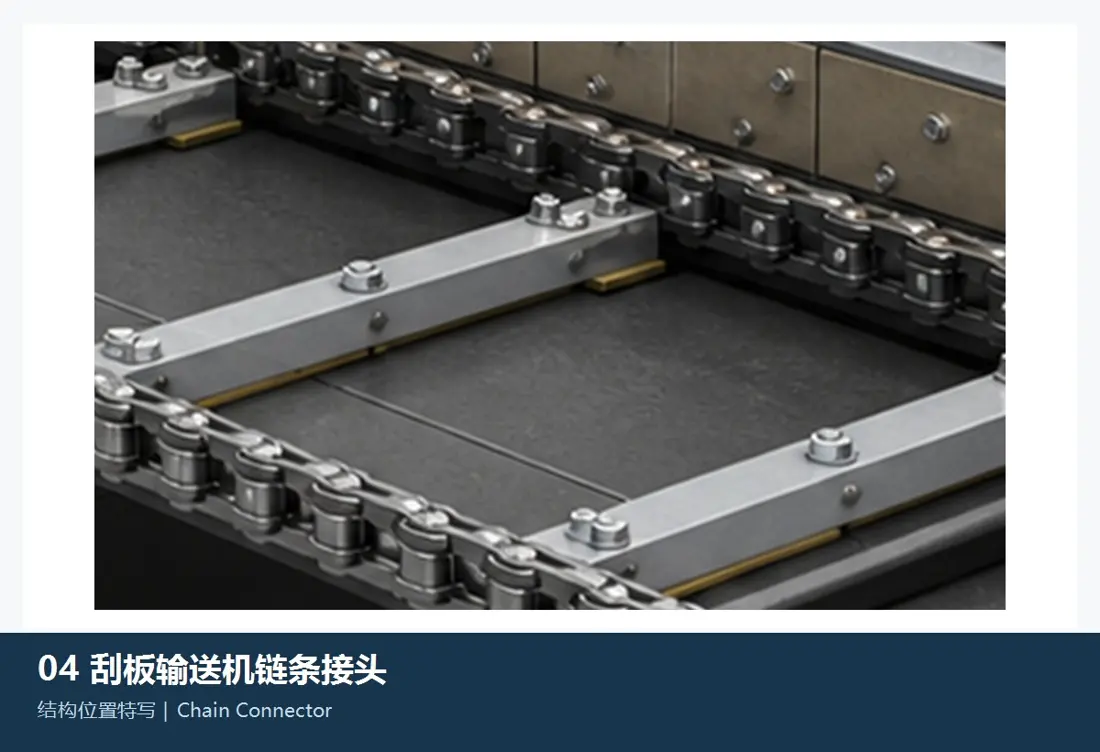
Chain Connectors
Join chain sections and allow disassembly. Match shape, locking, orientation, strength and link fit.
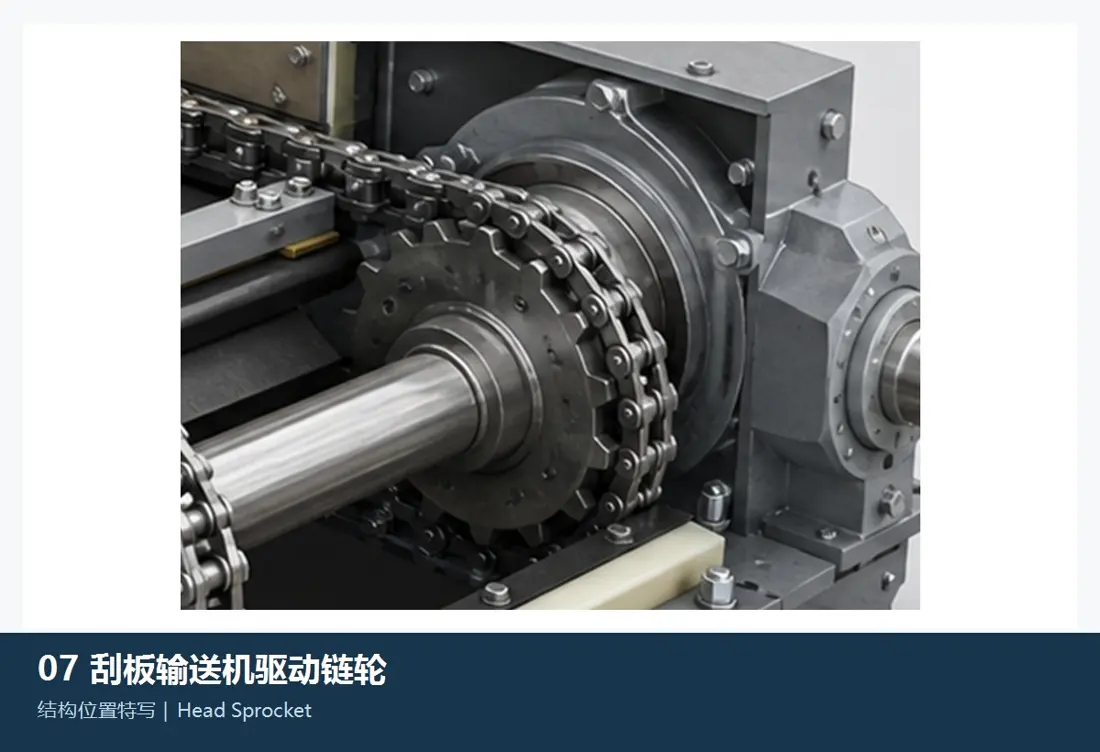
Head Drive Sprockets
Align with the drive shaft, chain and housing centreline. Check tooth-space wear, shaft bore, key and split connections.
Drag Chain Conveyor Flight
Chain attachments, separate from the links themselves. Check chain attachment holes, trough, temperature and abrasive duty together.
Materials and Processes
Different parts in one chain system require different surface and core properties
Confirm steel grade, hardness and heat treatment for the chain type, part position, loads and drawings.
Matching and Failure Analysis
Use wear locations to assess chain–sprocket interaction
An abnormality in links, pins, bushings or sprockets changes load distribution through the chain system.
| Symptoms | Priority checks | Associated Risks |
|---|---|---|
| Pitch elongation | Pin-and-bushing wear, lubrication, dust ingress, loading and sprocket tooth spaces | Impact engagement, tooth jumping and rapid tooth-root wear |
| Faster wear on one chain | Twin-chain synchronisation, shaft alignment, centre distance, uneven pan/flight loading and guide rails | Mistracking, attachment cracking and local overload |
| Uneven sprocket tooth wear | Chain pitch, shaft alignment, tooth profile, hub and bearing clearance | Concentrated loading and drive vibration |
| Pin or bushing spalling | Hardened layer, lubrication, fit, contamination, surface defects and impact | Stiff articulation, increased clearance and fatigue fracture |
| Loose connectors | Assembly orientation, locking structure, hole pattern, material and repeated disassembly | Chain separation, detached flights and equipment damage |
Inquiries and Quality Control
Information for Chain and Sprocket Supply
Provide in-service measurements of both chain and sprocket to support a matched replacement assessment.
Equipment and chain reference
OEM, full model, serial number, chain model, left/right chain and installation position.
Chain dimensions
Pitch, inner and outer widths, pin and bushing diameters, rollers, attachments and section length.
Sprocket dimensions
Tooth count, pitch circle, outside diameter, tooth profile, hub, shaft bore, key and split arrangement.
Materials and heat treatment
Base material, hardening method, surface and core requirements, case depth and inspection method.
System condition
Centre distance, take-up travel, shaft alignment, sprocket wear, twin-chain synchronisation and guides.
Operating conditions
Load, speed, starts/stops, feed material, dust, temperature, lubrication and current service life.
Lining selection: Metso and FLS apron feeder literature treats heavy-duty chains, pins, bushings, sprockets, main shafts and take-up systems as related components. FLS specifications also show different chain pitches and sprocket pitch diameters for different feeder sizes. Confirm replacements using the full model and installation drawings. Metso Apron Feeder Parts · FLS Apron Feeder
Related Equipment and Parts
Equipment, Parts, Materials and Drawings
Find the part by OEM model or general equipment structure, then check drawing, dimensions and materials.
Apron Feeder Chains, pans, rollers, drives and tensioning systems. Apron Feeder Chain Links Model, drawing, pitch, material and installation checks. Drag Conveyor Chain Links Relationships between connectors, flights, head and tail sprockets, and the trough. OEM Brands & Models Identify the chain system by brand and full equipment model.