Cane Knife Station

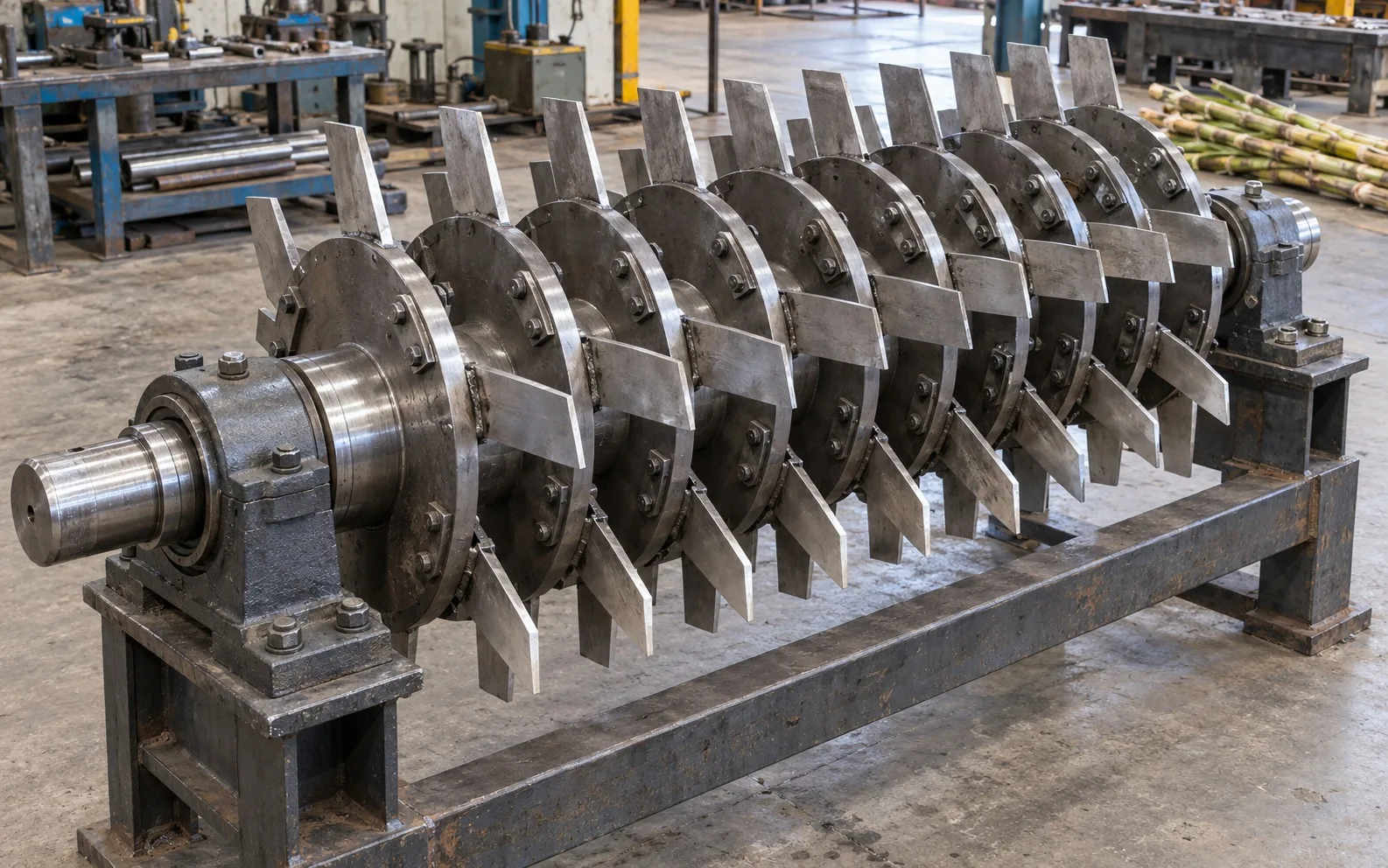
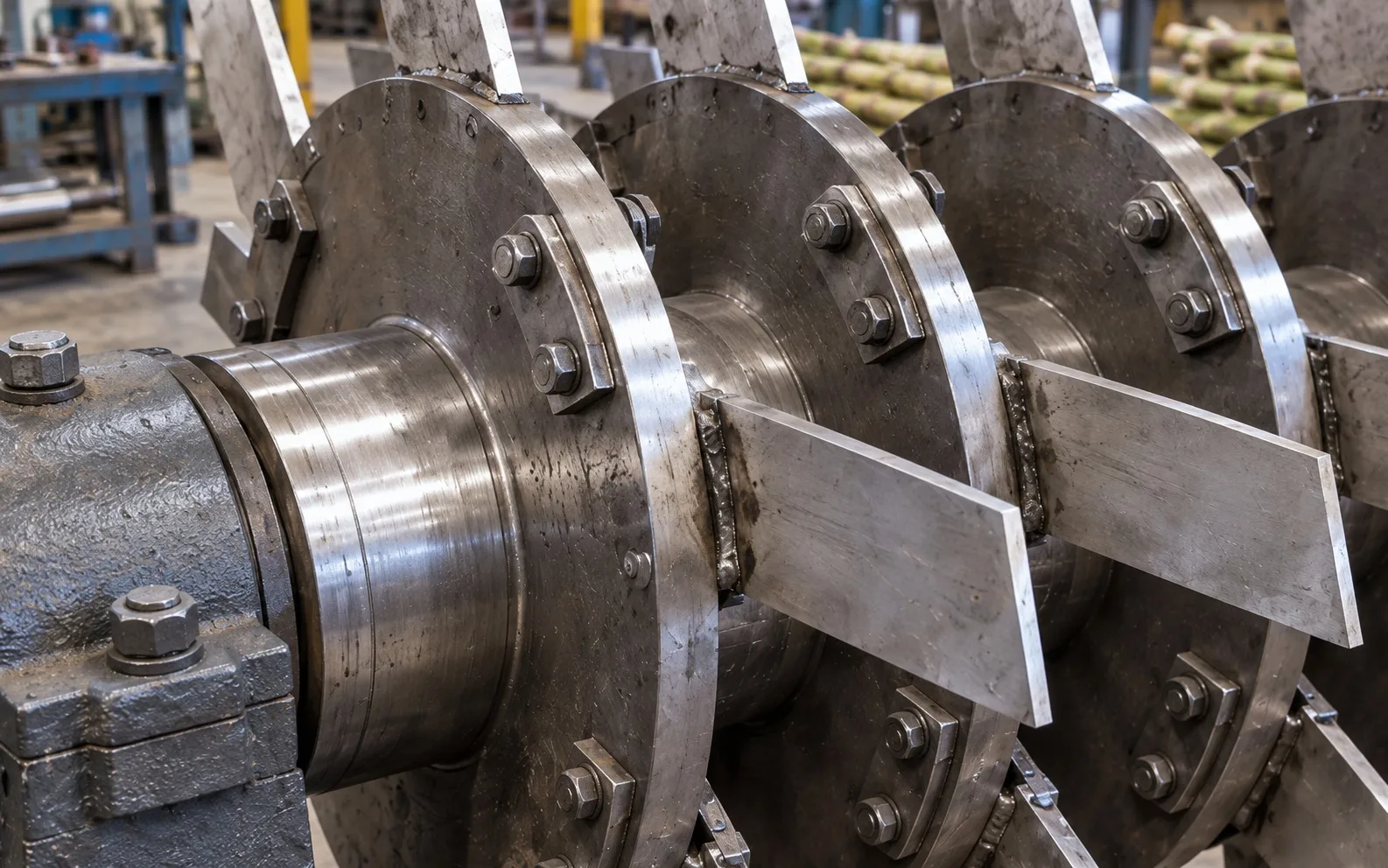
Installed before a shredder or mill, a cane knife station uses rapidly rotating blades to cut whole cane into shorter pieces and open the rind. Blade edges, blade holders, housing liners and feed and discharge chutes are the main wear areas. Knife discs, the main shaft and the bearing system are critical to rotor reliability.

Cane knife station

Equipment Section View

Cane knife station section view showing component positions

Installed before a shredder or mill, a cane knife station uses rapidly rotating blades to cut whole cane into shorter pieces and open the rind. Blade edges, blade holders, housing liners and feed and discharge chutes are the main wear areas. Knife discs, the main shaft and the bearing system are critical to rotor reliability.

Equipment Parts

Part Identification and Technical Details

Explore part names, images, material options and technical requirements. Select a card to open the corresponding replacement part page.

Major Components and Assemblies

Major Components and Assemblies

Individual and Maintenance Parts

Individual and Maintenance Parts

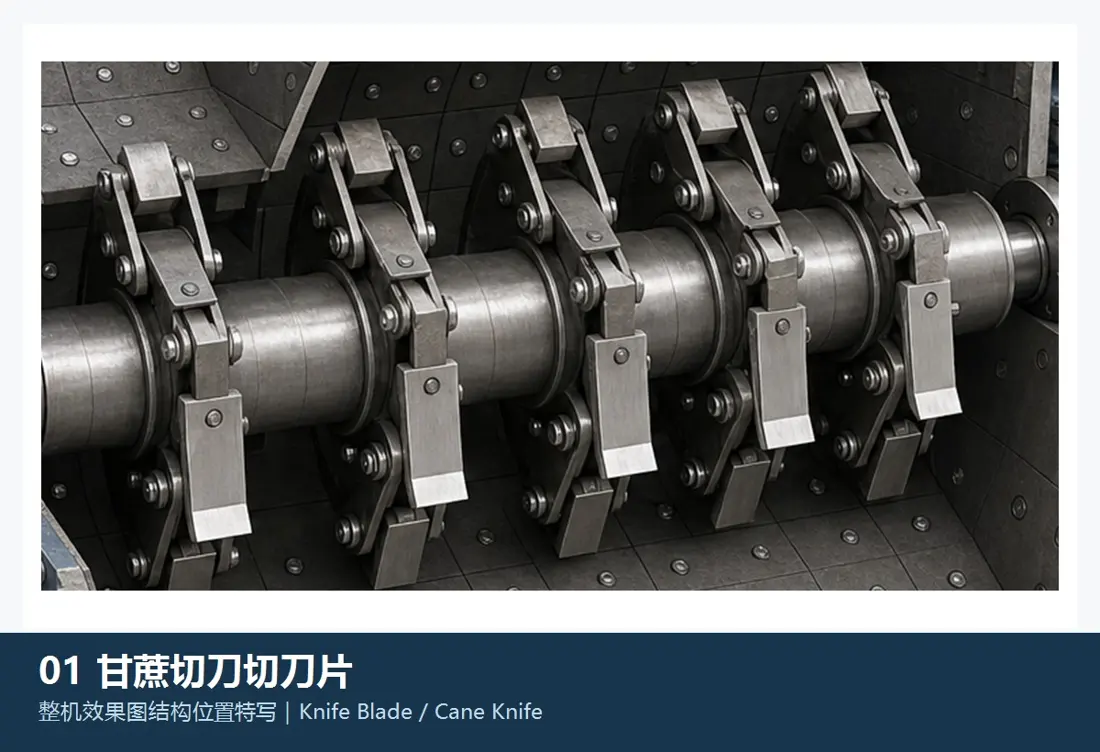
Cane knife blade
01

Cane Knife Blade

42CrMo, 5CrNiMo, 9CrSi or D2/SKD11; cutting edges may use Fe-Cr-C hardfacing or carbide inserts

Technical Requirements
Approximately 45–55 HRC after through quenching and tempering; high-alloy cutting edge approximately 55–62 HRC; retain toughness in the blade back
Blade holder
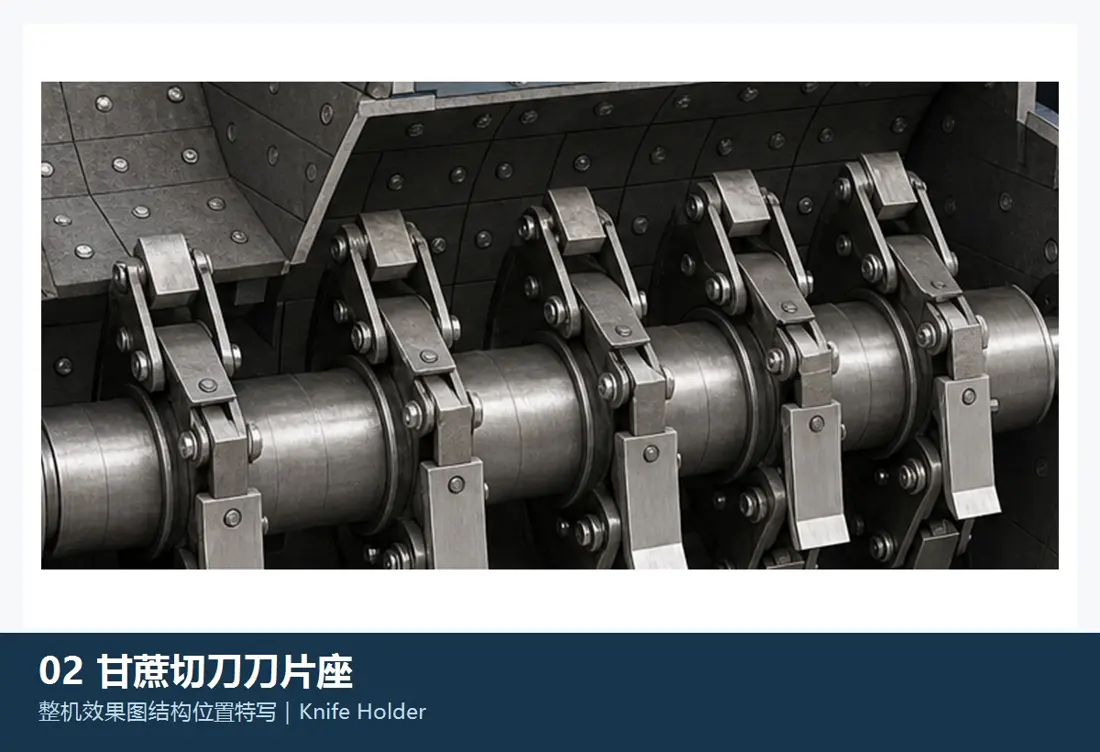
02

Blade Holder

42CrMo, 35CrMo or low-alloy cast steel

Technical Requirements
Approximately 28–40 HRC after quenching and tempering, with tensile strength typically ≥850 MPa; bolt holes must be free of cracks
Knife disc
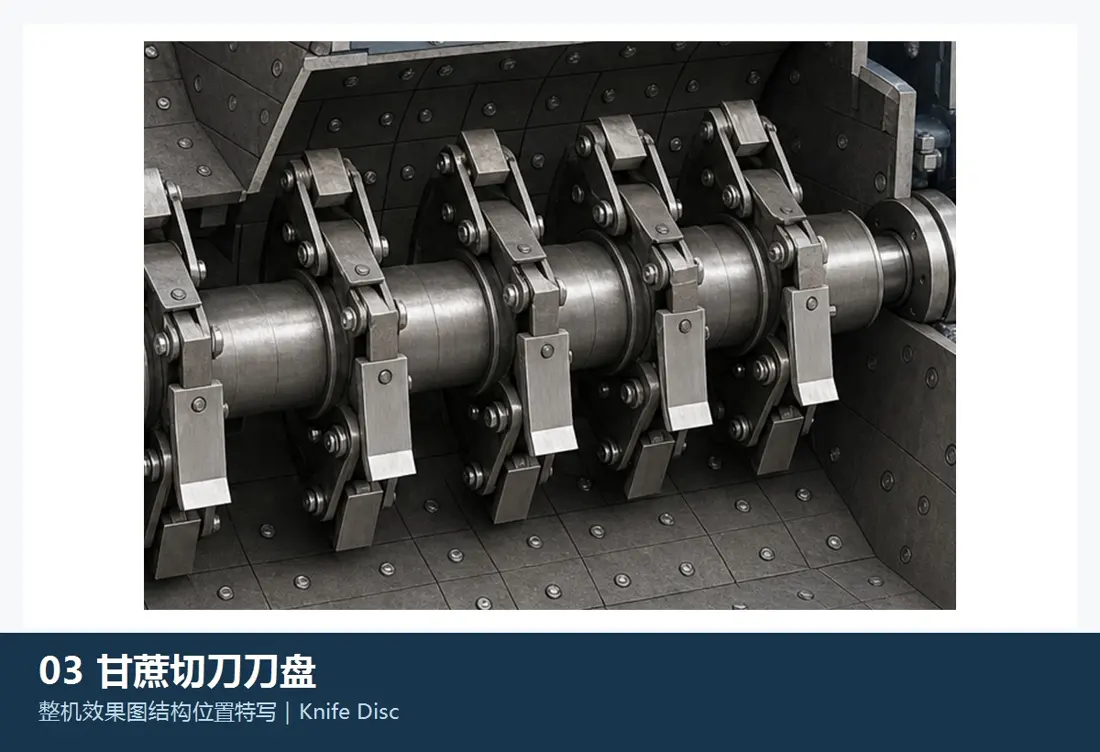
03

Knife Disc

Q355, grade 45 steel or 42CrMo

Technical Requirements
Approximately 220–320 HBW; welded knife discs require non-destructive testing and the complete rotor requires dynamic balancing
Main Shaft
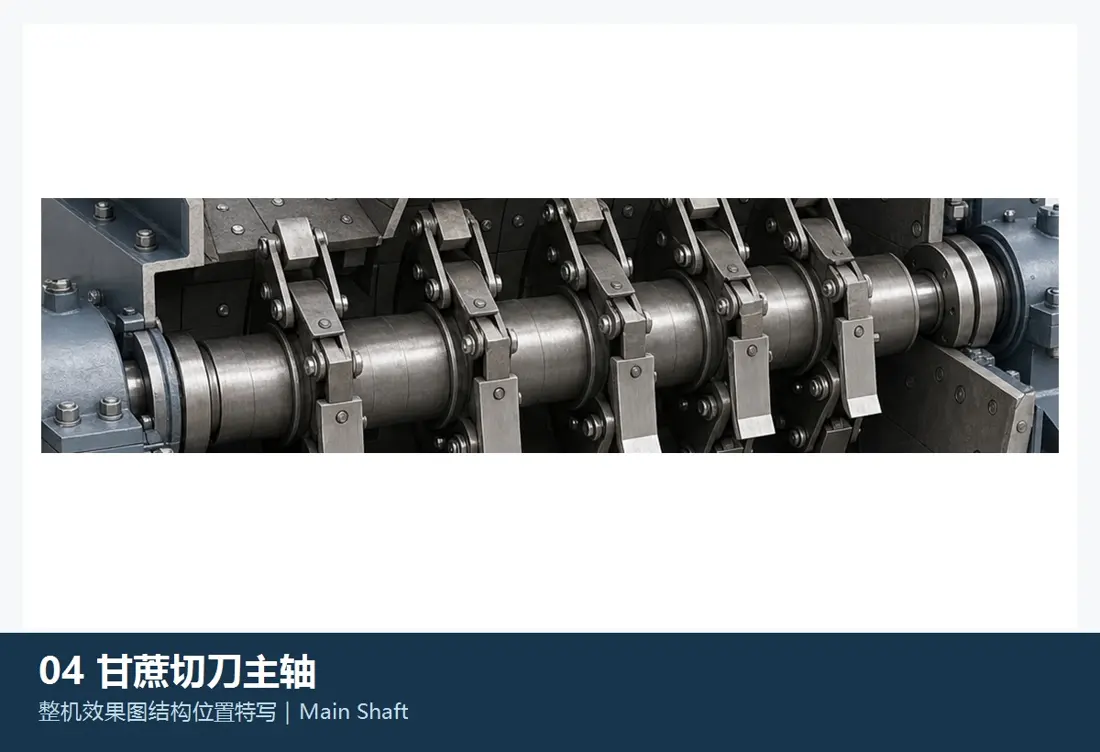
04

Main Shaft

Quenched and tempered 42CrMo / 34CrNiMo6 steel

Technical Requirements
Tensile strength approximately 900–1100 MPa; inspect shaft shoulder fillets, keyways and journals for defects
Bearings and Bearing Housings
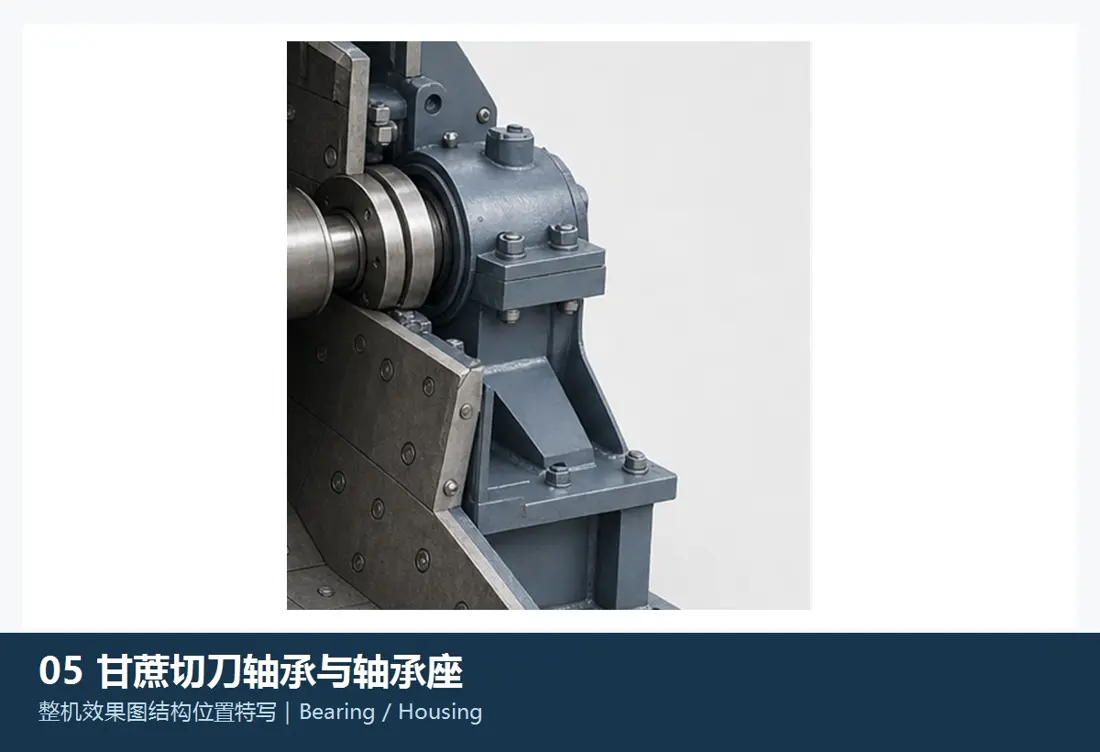
05

Bearing / Bearing Housing

GCr15; QT500-7 ductile iron or cast steel bearing housing

Technical Requirements
Bearing raceways approximately 58–64 HRC; bearing housing tensile strength approximately ≥500 MPa
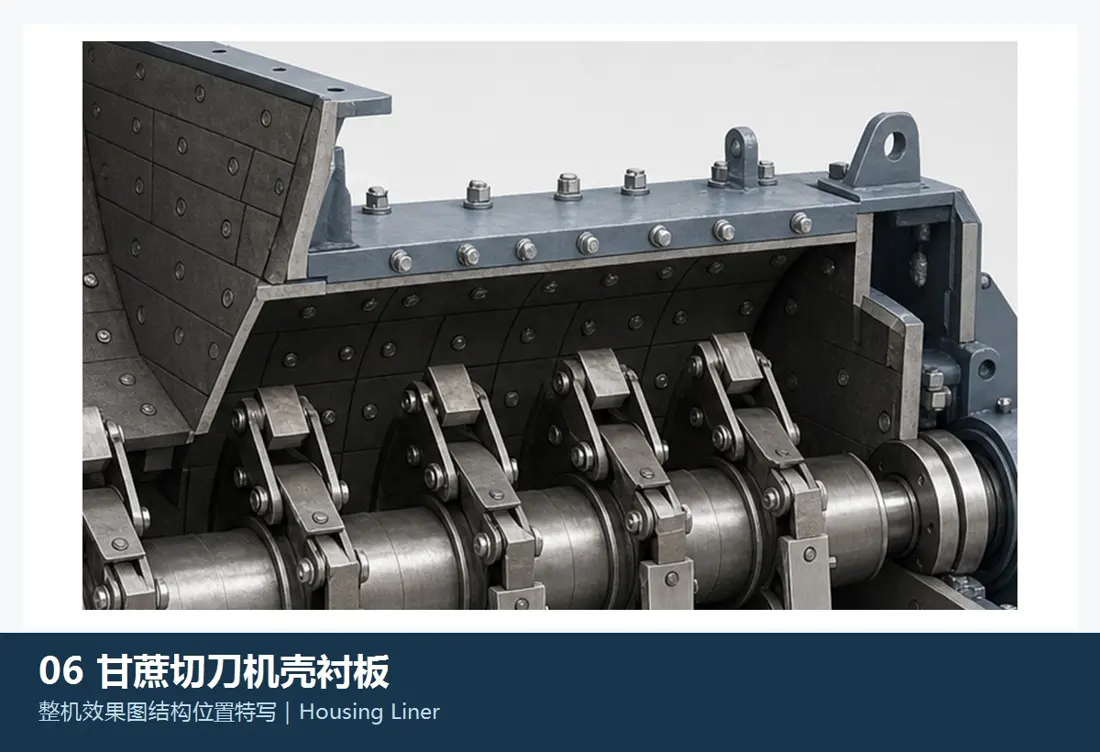
Housing liner
06

Housing Liner

NM400/NM450 or high-chromium composite wear plate

Technical Requirements
Wear-resistant steel approximately 370–480 HBW; high-chromium working layer approximately 55–65 HRC
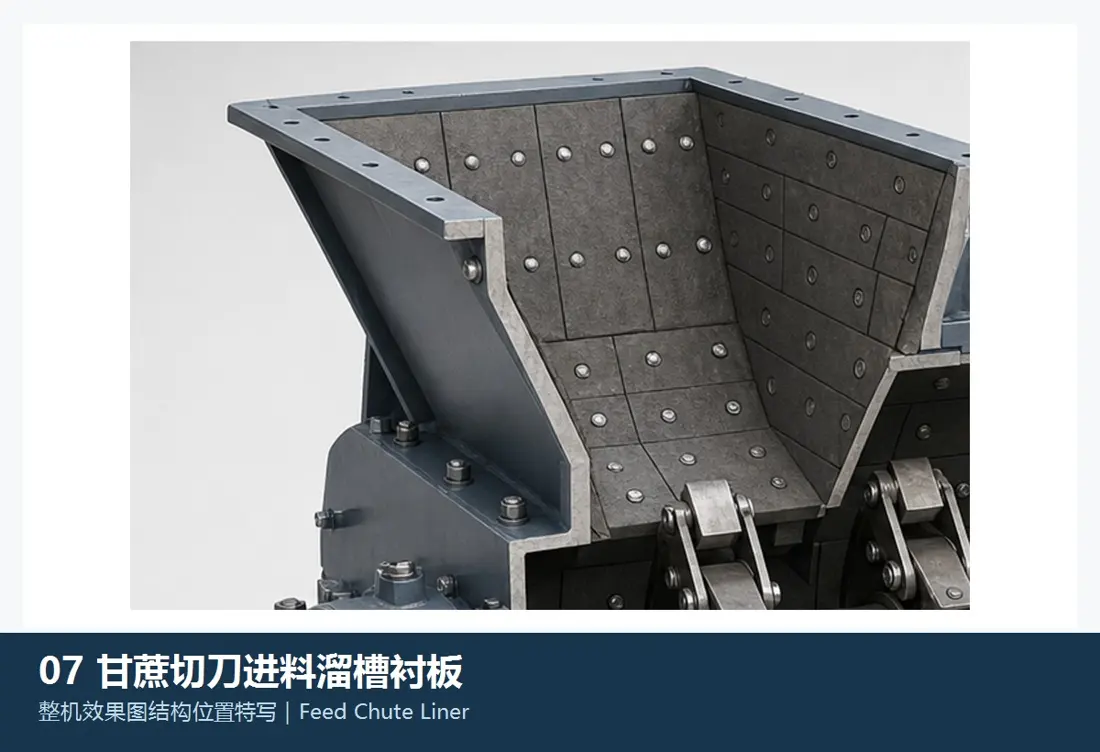
Feed Chute Liner
07

Feed Chute Liner

NM400/NM450 or rubber-steel composite plate

Technical Requirements
Use tough wear-resistant steel in feed impact zones; fasteners should resist loosening and allow easy replacement
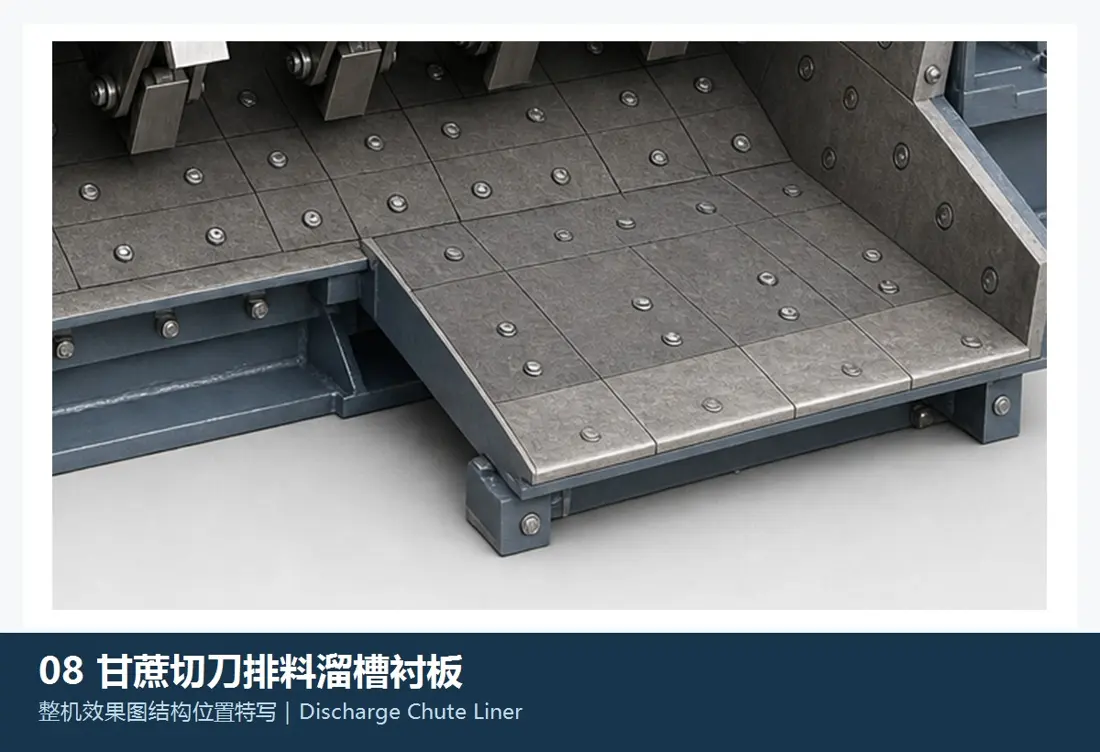
Discharge Chute Liners
08

Discharge Chute Liners

NM400, UHMW-PE, rubber or polyurethane

Technical Requirements
Steel plate approximately 370–430 HBW; polyurethane approximately 85–95 Shore A; resistance to buildup is important with wet cane

Materials for similarly named parts may differ by OEM, machine model and operating conditions. Confirm the machine model, OEM drawing number and measured dimensions before ordering or manufacture.

Materials for similarly named parts may differ by OEM, machine model and operating conditions. Confirm the machine model, OEM drawing number and measured dimensions before ordering or manufacture.

Discuss Your Cane Knife Wear Parts

Provide the machine model, operating conditions and target service life so our engineers can recommend materials and prepare a quotation.

Send Operating Details for a Quote

Or contact us directly: +86 156 3797 3199
zzx@anranst.com

Manufacturing Services in China

From Technical Assessment to Finished-Part Delivery

ANRANST provides customers worldwide with engineering assessment, production at certified foundries to drawing, quality control and finished-part delivery for custom wear parts and industrial spares, with scope to support other custom industrial parts.

01

Drawing and Engineering Review

We review mating surfaces and interface dimensions and assess material, heat treatment and manufacturing feasibility.

02

Material and Heat-Treatment Specification

Material grades and heat-treatment processes are specified order by order, confirmed in the technical agreement and tracked through production.

03

Quality Control

Drawing confirmation, material and process control, production tracking, inspection and acceptance coordination.

04

Finished-Part Delivery

We coordinate manufacturing, quality confirmation, packaging and delivery of complete finished parts in a workable, closed-loop supply process.

Provide the existing model, drawings, drawing or part numbers, materials or operating conditions so we can identify the appropriate technical review and supply route.

Submit an Enquiry