
Pulper

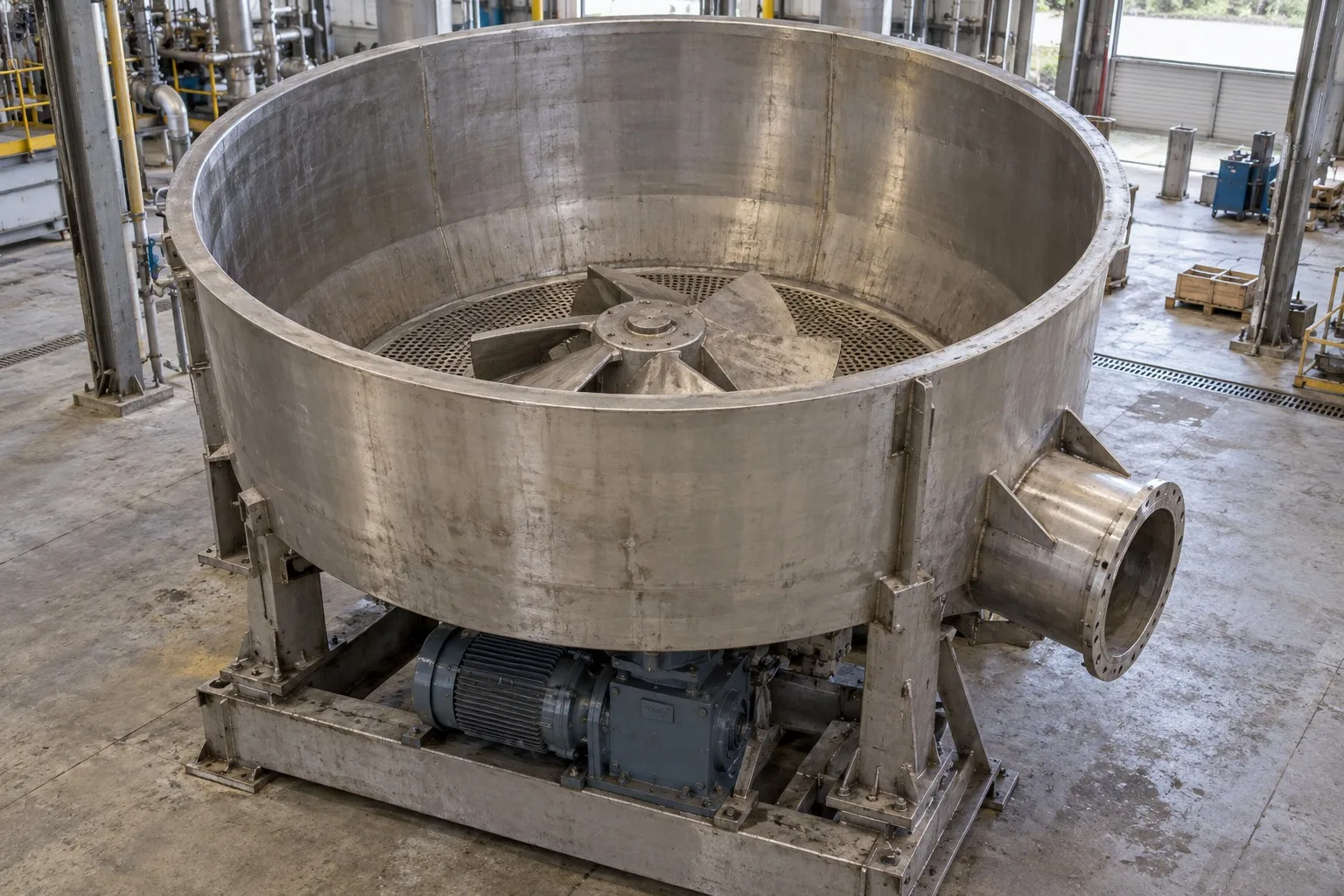
A pulper uses a rotor at the bottom or side of its tub to create circulation and shear, breaking recovered paper down into pulp. Rotor blades, screen plates, screen openings, tub walls and bottom liners are exposed to contaminant impact and stock erosion. The ragger removes tangled contaminants such as wire and plastic strips.
Pulper

Equipment Section View

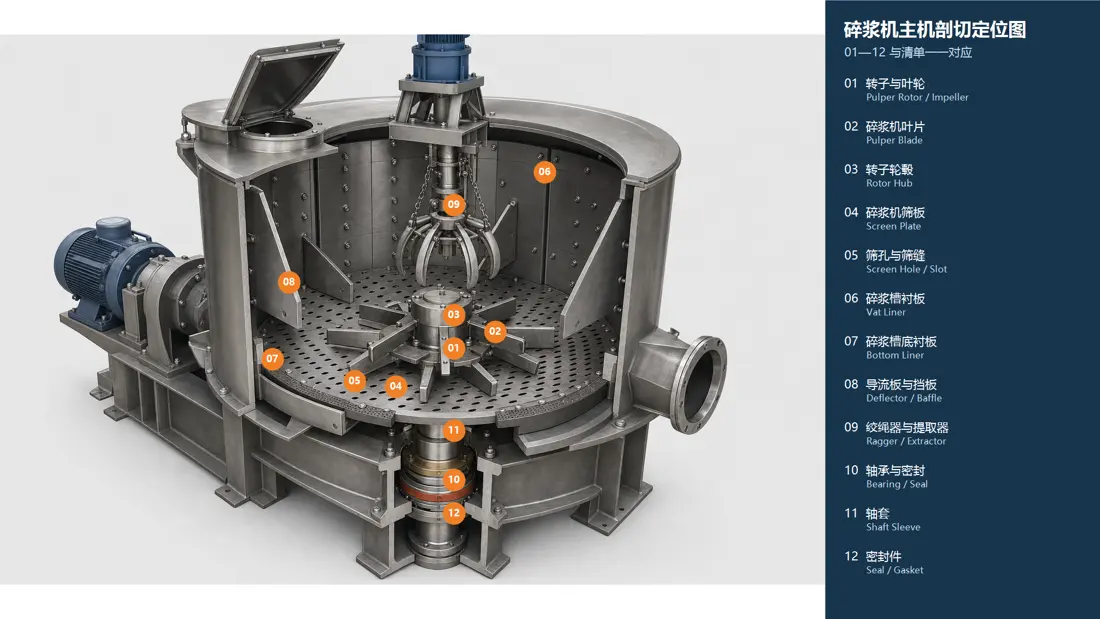
Pulper section view showing component positions

A pulper uses a rotor at the bottom or side of its tub to create circulation and shear, breaking recovered paper down into pulp. Rotor blades, screen plates, screen openings, tub walls and bottom liners are exposed to contaminant impact and stock erosion. The ragger removes tangled contaminants such as wire and plastic strips.

Equipment Parts

Part Identification and Technical Details

Explore part names, images, material options and technical requirements. Select a card to open the corresponding replacement part page.

Major Components and Assemblies

Major Components and Assemblies

Individual and Maintenance Parts

Individual and Maintenance Parts

01

Rotor / Impeller

Technical Requirements
17-4PH approximately 35–44 HRC; requires impact and corrosion resistance and dynamic balancing
02

Blade

Technical Requirements
Substrate approximately 35–44 HRC; hard coating approximately 900–1200 HV
03

Rotor Hub

Technical Requirements
Control the strength of keyways, splines and threaded holes, and the concentricity of the hub
04

Screen Plates

Technical Requirements
Flatness, hole diameter, open area and installation clearance to OEM specifications
05

Screen Holes / Slots

Technical Requirements
Hole edges must be free of rollover and burrs; enlarged openings caused by wear affect contaminant removal
06

Pulper Tub Liner

Technical Requirements
Use stainless steel where corrosion dominates; wear-resistant steel approximately 370–430 HBW for heavy-contaminant impact zones
07

Tub Bottom Liner

Technical Requirements
Metal working layer approximately 50–62 HRC; avoid brittle fracture and cracking around bolt holes
08

Flow Guide Plate / Baffle

Technical Requirements
Smooth surfaces and continuous welds, with edges that prevent fiber buildup
09

Ragger / Rope Extractor

Technical Requirements
Load-bearing parts approximately 28–40 HRC after quenching and tempering; chains, gripping elements and connectors require fatigue resistance
10

Bearings / Seals

Technical Requirements
Bearing raceways 58–64 HRC; select seals for temperature, pH and contaminant particle size
11

Shaft Sleeve

Technical Requirements
Precision-ground sealing surfaces, corrosion resistance and easy replacement
12

Seals

Technical Requirements
EPDM for aqueous stock; FKM for elevated temperatures or oil; PTFE for chemical resistance

Materials for similarly named parts may differ by OEM, machine model and operating conditions. Confirm the machine model, OEM drawing number and measured dimensions before ordering or manufacture.

Materials for similarly named parts may differ by OEM, machine model and operating conditions. Confirm the machine model, OEM drawing number and measured dimensions before ordering or manufacture.

Equipment Manufacturers and Series

Discuss Your Pulper Wear Parts

Provide the machine model, operating conditions and target service life so our engineers can recommend materials and prepare a quotation.

Send Operating Details for a Quote

Or contact us directly: +86 156 3797 3199
zzx@anranst.com

Manufacturing Services in China

From Technical Assessment to Finished-Part Delivery

ANRANST provides customers worldwide with coordinated consulting, supplier sourcing, quality control and finished-part delivery for custom parts, wear parts and industrial spares from China, with scope to support other custom industrial parts.

01

Technical Advice

Equipment and part identification, drawing review, material selection and manufacturing feasibility assessment.

02

Supplier Introductions

Match requirements with suitable manufacturers in China and coordinate the exchange of technical information.

03

Quality Control

Drawing confirmation, material and process control, production tracking, inspection and acceptance coordination.

04

Finished-Part Delivery

Coordinate manufacturing, quality confirmation, packaging and delivery of complete finished parts.

Provide the existing model, drawings, drawing or part numbers, materials or operating conditions so we can identify the appropriate technical review and supply route.

Submit an Enquiry