
Pressure Screen

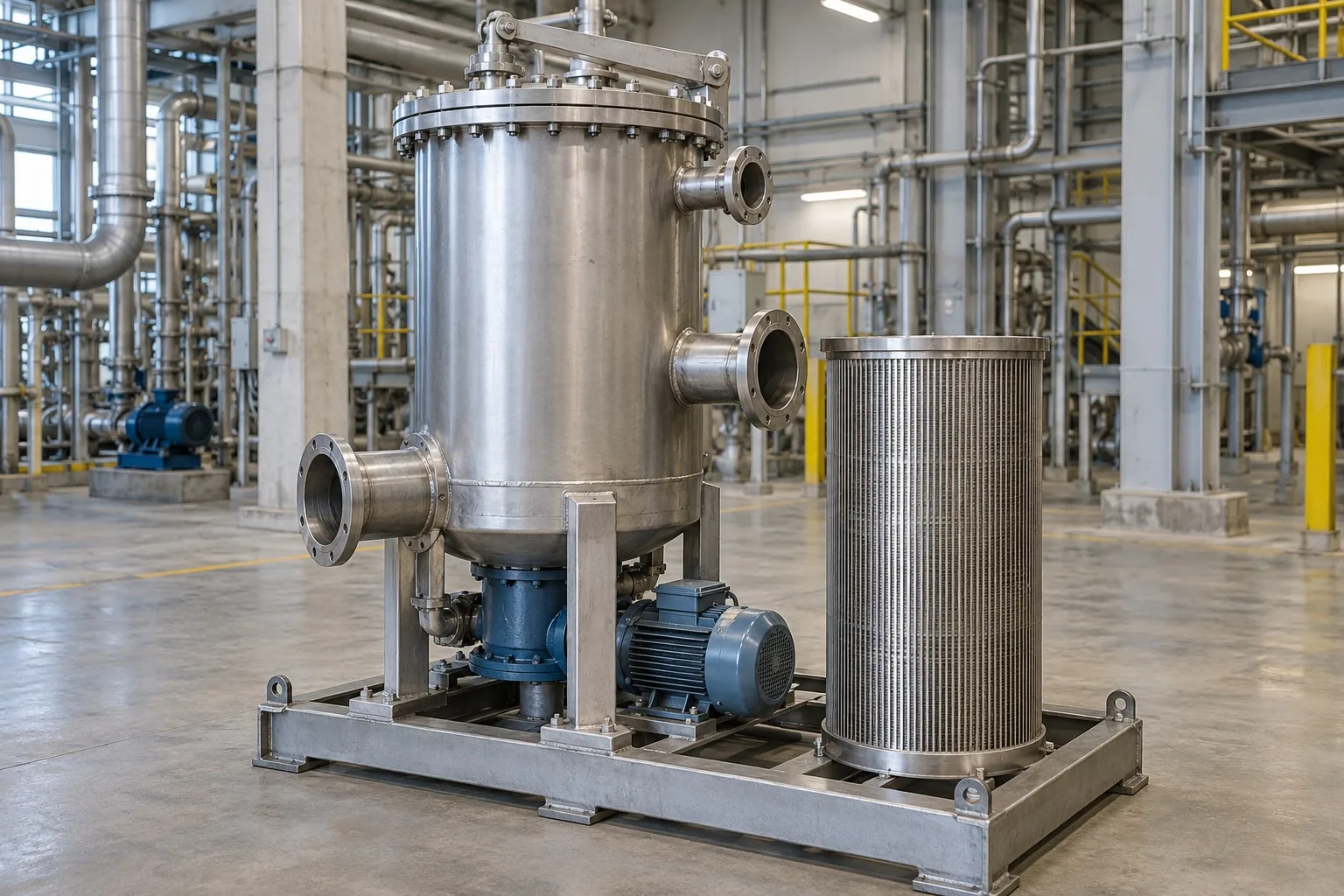
A pressure screen uses rotor foils to create alternating pressure pulses at the basket surface, allowing suitable fibres through the slots while limiting plugging. Main wear parts include screen baskets, wedge wires, rotor foils and tips. Nozzle liners, shaft sleeves, bearing seals and flange gaskets provide corrosion protection and sealing.
Pressure Screen

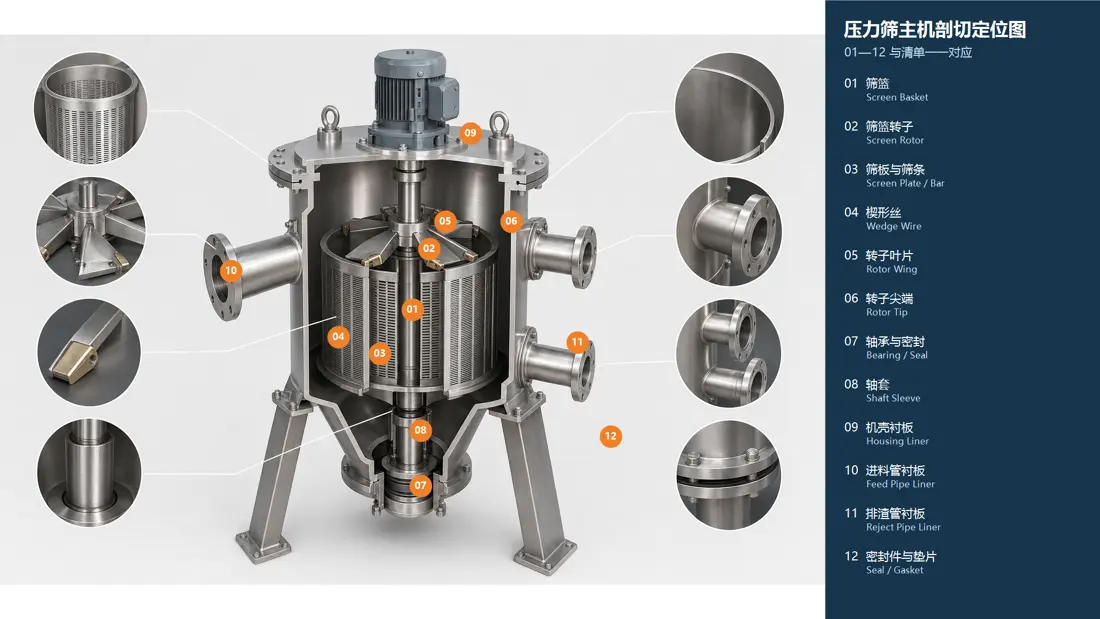
Equipment Section View

Pressure screen sectional reference diagram

A pressure screen uses rotor foils to create alternating pressure pulses at the basket surface, allowing suitable fibres through the slots while limiting plugging. Main wear parts include screen baskets, wedge wires, rotor foils and tips. Nozzle liners, shaft sleeves, bearing seals and flange gaskets provide corrosion protection and sealing.

Equipment Parts

Part Identification and Technical Details

Explore part names, images, material options and technical requirements. Select a card to open the corresponding replacement part page.

Major Components and Assemblies

Major Components and Assemblies

Individual and Maintenance Parts

Individual and Maintenance Parts

01

Screen Basket

Technical Requirements
Uniform slots and sound welds; 2205 typically has a yield strength of at least 450 MPa, subject to product specification.
02

Screen Rotor

Technical Requirements
Requires corrosion resistance and dynamic balancing; precipitation-hardening steel may be considered for heavily loaded rotors.
03

Screen plates / screen bars

Technical Requirements
Polish working surfaces to prevent fibre accumulation; specify slot width for the screening process.
04

Wedge Wire

Technical Requirements
Confirm screen-slot dimensions, tolerances and inspection methods against the actual basket drawing and screening duty.
05

Rotor blades

Technical Requirements
Typical substrate hardness: about 35–44 HRC; coating hardness: about 900–1200 HV. Confirm the specified material and treatment.
06

Rotor Tip

Technical Requirements
Approximately 900–1200 HV for the specified coating; prevent tip delamination and imbalance.
07

Bearings / Seals

Technical Requirements
Typical raceway hardness: 58–64 HRC; select seals for pH, temperature and cleaning agents.
08

Shaft Sleeve

Technical Requirements
Precision-grind seal mating surfaces; surface hardening to about 35–45 HRC is subject to the specified material and design.
09

Housing Liner

Technical Requirements
Requires resistance to pitting and crevice corrosion, with weld pickling and passivation as specified.
10

Feed Pipe Liner

Technical Requirements
Alumina ceramic with Al₂O₃ ≥92% may be considered for high-erosion tangential inlet zones.
11

Reject Pipe Liner

Technical Requirements
Consider erosion-resistant composite structures in heavy-contaminant reject zones.
12

Seals / gaskets

Technical Requirements
EPDM may suit water-based stock and alkaline media; FKM may suit higher-temperature and oil duties, subject to compound compatibility.

Materials for similarly named parts may differ by OEM, machine model and operating conditions. Confirm the machine model, OEM drawing number and measured dimensions before ordering or manufacture.

Materials for similarly named parts may differ by OEM, machine model and operating conditions. Confirm the machine model, OEM drawing number and measured dimensions before ordering or manufacture.

Equipment Manufacturers and Series

Request pressure screen wear parts

Provide the machine model, operating conditions and target service life so our engineers can recommend materials and prepare a quotation.

Send Operating Details for a Quote

Or contact us directly: +86 156 3797 3199
zzx@anranst.com

Manufacturing Services in China

From Technical Assessment to Finished-Part Delivery

ANRANST provides customers worldwide with coordinated consulting, supplier sourcing, quality control and finished-part delivery for custom parts, wear parts and industrial spares from China, with scope to support other custom industrial parts.

01

Technical Advice

Equipment and part identification, drawing review, material selection and manufacturing feasibility assessment.

02

Supplier Introductions

Match requirements with suitable manufacturers in China and coordinate the exchange of technical information.

03

Quality Control

Drawing confirmation, material and process control, production tracking, inspection and acceptance coordination.

04

Finished-Part Delivery

Coordinate manufacturing, quality confirmation, packaging and delivery of complete finished parts.

Provide the existing model, drawings, drawing or part numbers, materials or operating conditions so we can identify the appropriate technical review and supply route.

Submit an Enquiry