Mechanical Mill

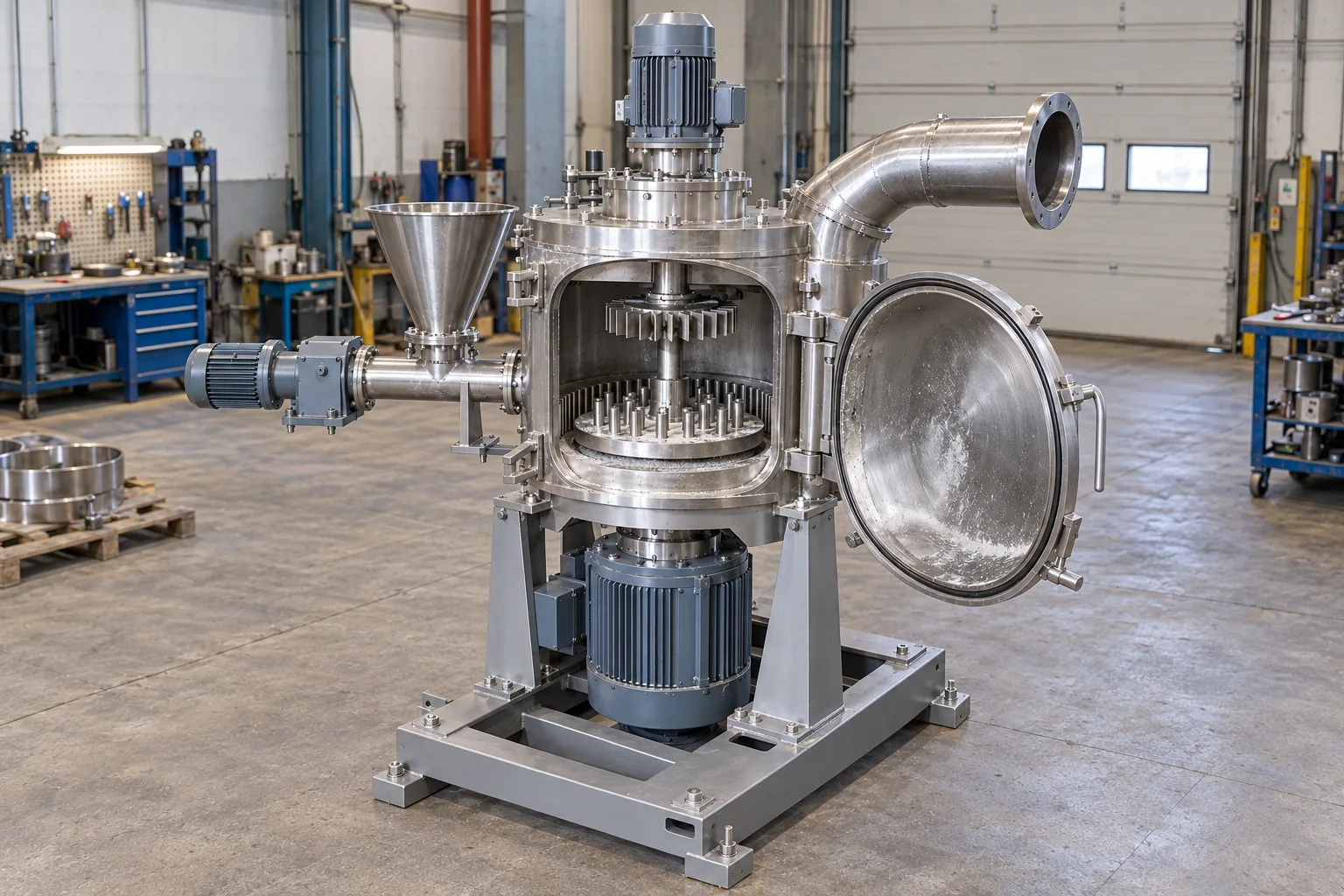
Mechanical grinding equipment. Grinding elements and classifier wheels face abrasive wear; select materials for feed hardness and required fineness.
Mechanical Mill

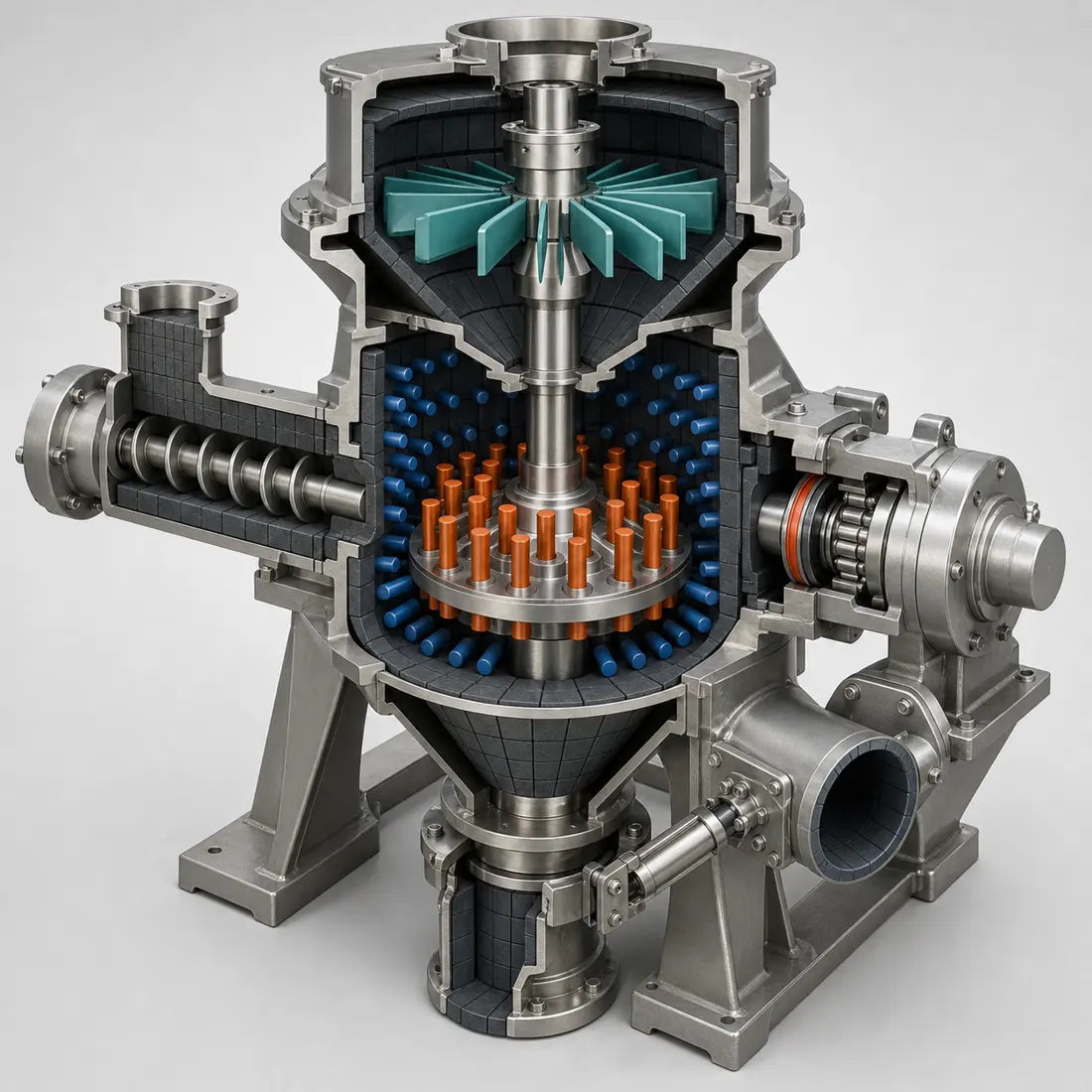
Equipment Section View

Mechanical Mill cutaway illustration
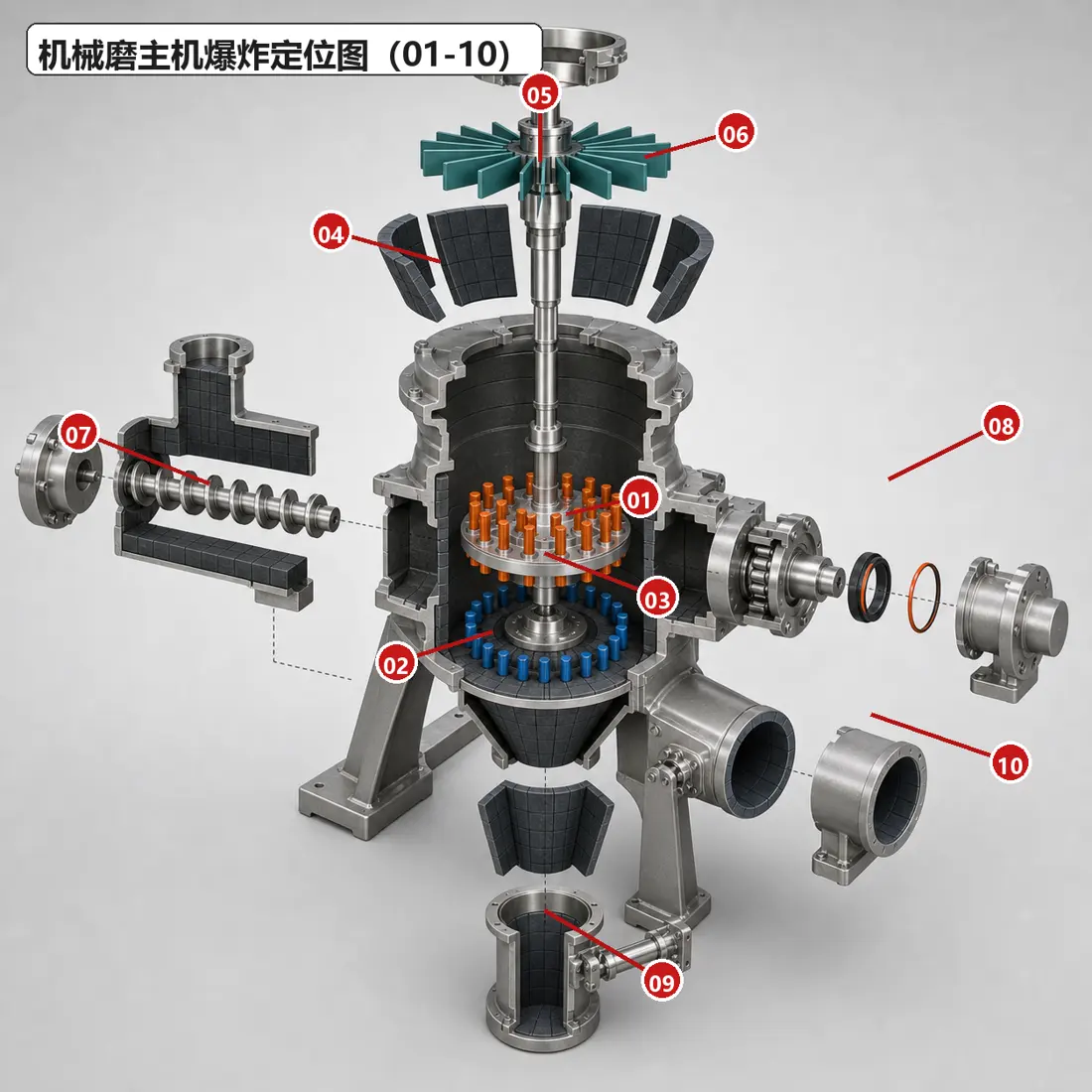
Mechanical Mill exploded part location diagram

Mechanical mills use high-speed rotors, pins or impact elements for impact, shear and attrition grinding. The illustrations below show a pin-type arrangement with dynamic classification and its wear parts. Select parts for other mechanical mill designs by the specific model.

Equipment Parts

Part Identification and Technical Details

Explore part names, images, material options and technical requirements. Select a card to open the corresponding replacement part page.

Major Components and Assemblies

Major Components and Assemblies

Individual and Maintenance Parts

Individual and Maintenance Parts

01

Rotor Pins / Pin Disc

Technical Requirements
Pins: approximately HRA 87-89, with a typical transverse rupture strength of at least 2,000 MPa, depending on grade. Pin discs require dynamic balancing and non-destructive testing.
02

Stator Pins / Stationary Disc

Technical Requirements
Cemented carbide: approximately HRA 87-90; quenched and tempered high-speed steel: approximately 60-64 HRC, depending on grade.
03

Rotor Disc / Rotor Body

Technical Requirements
17-4PH in H900/H1025 conditions: approximately 35-44 HRC. Control radial runout and residual mass unbalance.
04

Mill Shell Liner

Technical Requirements
Ceramic microhardness: approximately HV 1,000-1,400; Cr26 working surface: approximately 58-64 HRC, depending on grade and treatment.
05

Classifier Wheel

Technical Requirements
Metal wheels require dynamic balancing to G2.5 or a stricter specified grade. 17-4PH can reach approximately 35-44 HRC, depending on heat treatment.
06

Classifier Blade

Technical Requirements
Al₂O₃: approximately HV 1,000-1,600; SiC can reach approximately HV 2,000+, depending on grade. Control blade weight variation.
07

Feed Screw Liner

Technical Requirements
Hardox 400: typically 370-430 HBW; hardfacing layer: approximately 55-62 HRC, depending on the deposit specification.
08

Bearing Seals

Technical Requirements
FKM: a typical candidate hardness is 75±5 Shore A. Precision-grind sealing faces and control face runout.
09

Discharge Valve Liner

Technical Requirements
Cr26: approximately 58-64 HRC, depending on heat treatment. Avoid sharp-edge impact and unbonded areas in ceramic linings.
10

Nozzle / Air Inlet Liner

Technical Requirements
YG8: approximately HRA 89+. Check nozzle bore concentricity, surface finish and effective flow area against measurements of the original part.

Materials for similarly named parts may differ by OEM, machine model and operating conditions. Confirm the machine model, OEM drawing number and measured dimensions before ordering or manufacture.

Materials for similarly named parts may differ by OEM, machine model and operating conditions. Confirm the machine model, OEM drawing number and measured dimensions before ordering or manufacture.

Request a Mechanical Mill Wear Parts Proposal

Provide the machine model, operating conditions and target service life so our engineers can recommend materials and prepare a quotation.

Send Operating Details for a Quote

Or contact us directly: +86 156 3797 3199
zzx@anranst.com

Manufacturing Services in China

From Technical Assessment to Finished-Part Delivery

ANRANST provides customers worldwide with coordinated consulting, supplier sourcing, quality control and finished-part delivery for custom parts, wear parts and industrial spares from China, with scope to support other custom industrial parts.

01

Technical Advice

Equipment and part identification, drawing review, material selection and manufacturing feasibility assessment.

02

Supplier Introductions

Match requirements with suitable manufacturers in China and coordinate the exchange of technical information.

03

Quality Control

Drawing confirmation, material and process control, production tracking, inspection and acceptance coordination.

04

Finished-Part Delivery

Coordinate manufacturing, quality confirmation, packaging and delivery of complete finished parts.

Provide the existing model, drawings, drawing or part numbers, materials or operating conditions so we can identify the appropriate technical review and supply route.

Submit an Enquiry